How to Get .edu and .gov Backlinks (Without the Myths)

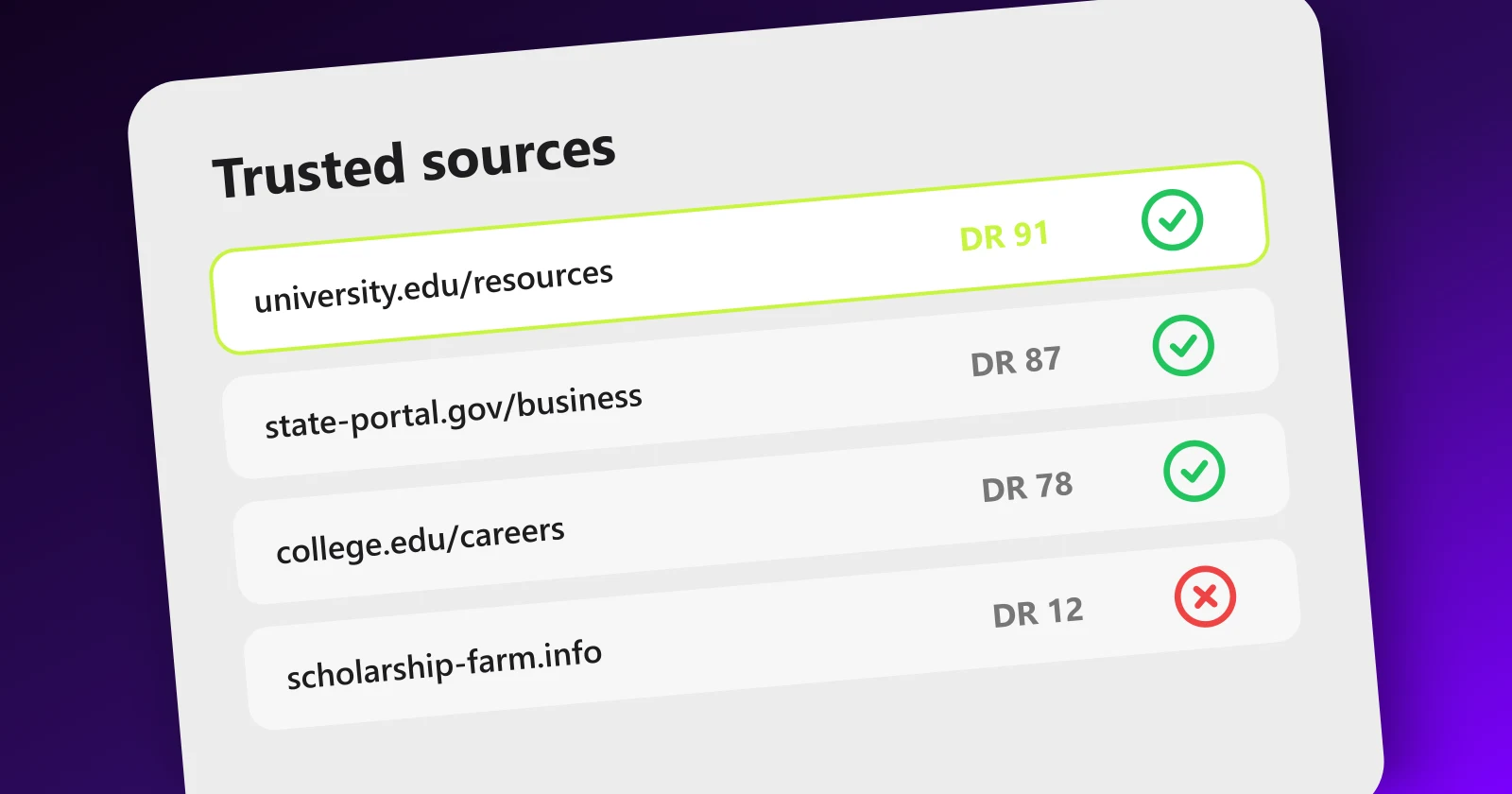
Ask any Facebook SEO group about .edu and .gov backlinks and you will watch two camps go to war. One insists these are magic links that Google trusts above all others. The other insists they are worthless mythology. Both are wrong, and the truth is more useful than either version.
We have watched this play out across the profiles of sites joining Meeeters: some invested months chasing university links, some bought "edu packages" they now regret, and a few earned genuinely great institutional links almost by accident. Here is the honest picture: what these links are worth, what actually gets them, and which popular tactics quietly stopped working years ago.
The myth versus the reality
The myth: Google gives .edu and .gov domains a special trust bonus, so any link from these TLDs is automatically more powerful than a .com link.
The reality: Google representatives have stated this plainly and repeatedly over the years: there is no TLD-based ranking bonus. John Mueller has answered the question more times than he probably cares to remember, and the answer never changes. A link is evaluated by the page it sits on: that page's authority, relevance, context and the way it links. The letters after the final dot are not a ranking input.
Why the myth survives anyway: because it is built on a real correlation. Universities and government bodies tend to own domains that are decades old, cited by thousands of other institutions, journalists and academics, and almost impossible to acquire for manipulation. So the average .edu domain genuinely does carry more authority than the average .com. The value is real; the mechanism is just ordinary link equity, not TLD magic.
This distinction matters practically. Once you understand there is no TLD bonus, three conclusions follow:
- A weak .edu page passes weak value. A forgotten student club page from 2011 with no internal links pointing at it is worth roughly what any orphaned page is worth: very little.
- Page-level context beats domain-level letters. A relevant editorial link from a strong .com in your niche will usually outperform an off-topic .edu resource listing. If you need a refresher on how link value actually flows, start with what a backlink is and what Domain Rating measures.
- Anyone selling "guaranteed DA90 edu links" is selling the myth, usually via comment spam or hacked subpages. More on that in the section on what to avoid.
One more calibration before the tactics: institutional links are trust and credibility assets as much as ranking assets. They appear in your backlink profile when journalists, editors and potential partners check who vouches for you, and a university or government citation answers a question no DR score answers. That reputational value is real, it just is not a secret ranking multiplier. Treat these links as the top layer of a profile strategy, priced accordingly in time and effort, and every decision below gets easier.
With expectations calibrated, here is what actually works.
What actually earns .edu backlinks
Every legitimate path to an .edu link answers one question: why would a university, whose website exists to serve students, faculty and alumni, point those people at you? If you cannot answer that, no outreach template will save you.
Scholarships: the honest take
The classic tactic: create a scholarship, email hundreds of financial aid offices, get listed on their external scholarships pages.
It worked so well around 2013-2016 that it broke itself. Financial aid offices got buried in pitches from mattress reviewers and CBD brands offering "$500 essay scholarships" that mysteriously required an essay about mattresses. Many universities responded by pruning their external scholarship pages, adding review requirements, nofollowing outbound links, or deleting the pages entirely. Google commented on the pattern directly, and scholarship pages built purely as link magnets fit the definition of a link scheme.
Our honest position: run a scholarship if you would run it without the links. If your company genuinely funds a $2,000 annual award in your field, awards it to a real student, publishes the winner, and keeps it going for years, listing it with relevant departments is legitimate and some listings will link. As a pure link tactic, the math has gone bad: real cost (the award plus administration), low placement rates, and a pattern Google knows intimately. A fake scholarship that never pays out is worse than useless, it is documented evidence of manipulation with your brand name on it.
Student and alumni resources
The most underused honest path. Universities maintain hundreds of resource pages: career services, student discounts, mental health resources, housing guides, entrepreneurship resources, department-specific tool lists, alumni benefits.
You earn a spot by being genuinely useful to that audience:
- Build something students actually use. A free tool, a genuinely deep guide, a student discount program with real savings. Not a thin blog post with "student" in the title.
- Find the specific page it belongs on. Search operators do the work:
site:.edu "resources" your-topicorsite:.edu inurl:resources "your niche". You want pages that already list external sites like yours. - Pitch the page maintainer, not a generic inbox. Resource pages usually credit a department or an office. A two-line email from a real person, explaining specifically why the resource fits that page, outperforms any template blast. Our outreach templates include a resource-page variant, but with institutions the customization is the whole game.
- If you are an alum, say so. Alumni-founded businesses get listed on entrepreneurship center pages, alumni spotlight features and career outcome stories constantly. This is the single easiest .edu link that exists, and most founders never claim it.
One more note on resource pages: attrition is real. Universities audit and prune these pages, staff turns over, and departments migrate CMSs on brutal schedules. Check your institutional links once or twice a year, and when one disappears, a polite note to the maintainer recovers it surprisingly often, the same reclamation logic as any lost backlink.
Local partnerships and sponsorships
Universities are anchored in their towns and document their community relationships. Sponsor a hackathon, a robotics team, a design competition, a career fair, a conference hosted on campus. Offer internships and get listed by career services. Host student projects: many programs require real-company projects and credit the partners publicly.
These links come with a cost, but the cost buys something real: talent pipeline, local visibility, actual goodwill. That is the pattern with every sustainable link tactic, and it is why we keep repeating across this blog that the best links are side effects of real activity. Note that sponsorship links are sometimes nofollowed, correctly so under Google's guidelines for paid relationships. A nofollow .edu link from a real partnership still drives referral visitors and often leads to followed editorial coverage in university news sections.
Research collaboration and data citations
The heavyweight option. Academics cite sources, and universities publish constantly: department news, faculty blogs, research pages, libraries' subject guides.
- Publish original data. Run a survey in your industry, publish the methodology and full results, keep the URL stable for years. Original statistics are the most cited content type on the internet, and academic citers are the most thorough linkers.
- Collaborate on research. Companies with interesting datasets partner with researchers who need them. The resulting papers, press releases and department news pages link to the company.
- Get into library subject guides. University librarians maintain curated guides of quality sources per subject. If you publish genuinely authoritative content in a field, a short note to the subject librarian is a legitimate pitch.
This path is slow and mostly available to sites that invest in original content. It is also the most durable: a citation in a subject guide can live for a decade.
What actually earns .gov backlinks
Government sites are harder than universities: fewer pages, more process, less autonomy per page owner. The realistic paths are almost all local.
Local business resources
City, county and state sites maintain pages for residents and businesses: "local business directory", "shop local", "resources for entrepreneurs", relocation guides. If you run a real local business, you often qualify for listings that big-brand competitors cannot get. Chambers of commerce (often .org, sometimes linked from .gov pages) are the adjacent play.
Tourism and destination pages
Official tourism sites list restaurants, hotels, venues, tour operators, event organizers. If your business touches tourism at all, the destination marketing organization for your area probably has a submission process. These are real, followed, editorially maintained links, and most eligible businesses have simply never applied.
Open data citations and public comment
Government agencies cite external analysis more than people expect: economic reports referencing industry studies, health departments linking to research partners, agencies crediting organizations that contributed to public consultations. If your company publishes serious analysis of public data (housing, employment, transport, energy), agency newsletters and report appendices are plausible citation sources. Slow, yes. Fake-able, no.
Partnerships and programs
Veteran-owned, women-owned and minority-owned business programs, workforce development partners, apprenticeship program participants, disaster-preparedness business networks: government programs list their participants. If you qualify for a program, join it for the program; the link is the receipt.
Finding the opportunities: search operators that do the work
Institutional sites are enormous, and the linkable pages are buried. Search operators surface them in minutes. The patterns we use when scouting for network members:
For universities:
site:.edu inurl:resources "your topic"finds resource pages by subject.site:.edu "useful links" OR "external resources" your-nichecatches the older page formats librarians still maintain.site:.edu inurl:careers OR inurl:career-services "industry"surfaces career pages that list employers and industry guides.site:.edu "guest speaker" OR "industry partner" your-fieldreveals departments that already work with companies like yours.site:.edu inurl:blog your-topicfinds faculty and department blogs, which behave like normal blogs: they respond to good pitches and cite good sources.
For government:
site:.gov "small business resources" your-cityandsite:.gov inurl:business your-regionfor local business pages.site:.gov "visit" OR "tourism" your-areafor destination pages.site:.gov your-industry statisticsshows which agencies publish in your field, and therefore which ones cite external analysis.
Two refinements make these lists useful instead of overwhelming. First, check each candidate page for recent updates: a resource page last touched in 2014 has no maintainer to answer your email. Second, look at who is already listed. If every entry is another university, you do not fit. If commercial sites like yours appear, the page accepts your kind, and your pitch has a precedent to point at.
Vet the page before you pitch
Because there is no TLD bonus, an institutional link is only as strong as the specific page it sits on. Before investing outreach effort, spend two minutes per candidate:
- Does the page have internal links pointing to it? Navigate from the department homepage: if you cannot reach the resource page in a few clicks, neither can equity.
- Is it indexed and does it rank for anything? A quick
site:search plus a check in any backlink tool. Orphaned pages on strong domains still pass close to nothing. - Are the outbound links followed? View source or use a browser extension. Plenty of institutional resource pages nofollow everything as policy. A nofollow listing can still be worth having for referral traffic and credibility, but you should know what you are pitching for.
- Is the maintainer identifiable? A named office or librarian means your email lands with a human who can act.
This filter typically cuts a list of 50 candidate pages down to 10 worth pitching, and those 10 convert far better than the 50 sprayed blind.
What to avoid
Every shortcut in this space is well-documented and worse than doing nothing.
Edu comment and forum spam. The classic "edu backlink packages" on freelance marketplaces are blog comments on abandoned university blogs and profile pages on forgotten forums. These pages have zero authority, the links are usually nofollow, and the pattern is textbook toxic profile filler. You would be paying to add spam to your own audit.
Expired edu subpages and subdomain hijacking. Some services find abandoned student projects or expired department pages and inject links. This is somewhere between a link scheme and computer misuse depending on the method. When universities clean house, the links vanish; if the pattern gets associated with your domain, you have bought yourself a real problem.
Buying edu links outright. Occasionally a student, an underpaid webmaster or a compromised account will sell placements. Beyond the ethics, these transactions have a habit of ending with mass link removals and, in publicized cases, manual actions. Everything in our guide on whether buying backlinks is worth it applies double here, because institutional sellers are the least stable counterparties imaginable.
Fake scholarships. Covered above, worth repeating in the avoid list: a scholarship that exists only as link bait, with no real winners, is documented manipulation plus a small fraud, attached permanently to your brand.
Realistic difficulty: what these links cost
Here is the comparison that should anchor your planning:
| Path | Realistic timeline | Real cost | Link strength | Scalable? |
|---|---|---|---|---|
| Alumni/founder listings | 2-6 weeks | Your time | Medium-high | No, one per founder |
| Student resource pages | 1-3 months | Genuinely useful asset + outreach | Medium-high | Slightly |
| Real scholarship | 3-12 months | Award money + administration | Medium | No |
| Local partnership/sponsorship | 1-6 months | Sponsorship budget | Medium (sometimes nofollow) | Slightly |
| Research/data citations | 6-24 months | Original research investment | High | Yes, compounds |
| .gov local/tourism listings | 1-4 months | Eligibility + paperwork | Medium-high | No |
| Bought/spammed edu links | Days | $50-500 wasted | Zero to negative | Unfortunately yes |
Read the timeline column honestly: these are relationship links. Nothing here is a campaign you run in a week. The right mental model is a slow background track: one or two institutional plays per quarter, running alongside your normal link building, not instead of it.
A realistic 90-day institutional plan
If you want to actually run this instead of bookmarking it, here is the quarter we would plan for a typical small business or SaaS:
- Weeks 1-2: claim what you already qualify for. Alumni listings for every founder, any government program you are eligible for (local business directory, tourism listing, certification programs). Zero creativity required, just paperwork.
- Weeks 3-4: build the prospect list. Run the search operators above, vet the pages, end with 10-15 real candidates and a named contact for each.
- Weeks 5-8: create or upgrade the linkable asset. Whatever your best candidates need: the student-relevant guide, the discount program, the local dataset. One asset, done properly, aimed at the pages you actually found, not a generic "ultimate guide" aimed at nobody.
- Weeks 9-12: pitch slowly and personally. Three to five emails a week, each one specific to the page and the person. Follow up once after two weeks, then let it go. Institutions answer on academic time.
A good quarter ends with two or three institutional links and a couple of warm relationships. That sounds small until you remember these links tend to stay for years and that almost none of your competitors will do the work. Repeat the cycle twice a year and within eighteen months you own an institutional layer most sites in your niche will never touch, earned at a pace no reviewer could ever object to.
Build the foundation first
The most common mistake with edu and gov links is sequencing. A site with 12 referring domains does not need a university link, it needs forty relevant, real-traffic editorial links so that its profile has a foundation. Institutional links are a bonus layer on top of a healthy profile, not a substitute for one. If you are early, start with the fundamentals in what is a backlink and build the boring, relevant base first.
That base is the part we built Meeeters to handle: the network matches you with relevant, traffic-vetted sites in your language, one placed editorial link earns one credit, and one credit gets you one verified backlink in return, from a site you never linked to. The exchange model removes the reciprocal pattern, and every link is verified over time to stay live and dofollow. It will not get you into a university library guide, but it builds the profile that makes every institutional pitch more credible, because the first thing a careful editor does is look at who else links to you.
Want to know where you stand before chasing any of this? Run a free SEO analysis: it maps your current referring domains, and your first verified backlink through the network is one placed link away.
Frequently asked questions
Quick answers to the questions people ask most about this topic.
Not because of the TLD. Google treats a link from a .edu the same way it treats any link: by the authority, relevance and context of the specific page. In practice many .edu domains are old, trusted and heavily linked, so their links are often strong, but a link from a forgotten .edu subpage is worth less than one from a strong relevant .com.
Rarely. Universities have been flooded with SEO-motivated scholarship pitches for a decade, many now ignore them or route them through review processes, and Google has directly commented on the pattern. If you run a real scholarship you would fund anyway, list it. Creating a fake one purely for links is a waste of money and a reputation risk.
Hard, and that is the point. Most realistic paths are local: small business resource pages, tourism and relocation guides, open data citations, and official partnerships. Expect months of relationship building, not a campaign you can run in an afternoon.

I built Meeeters to make link building safe and simple: real, relevant backlinks with no reciprocal footprint and no black-hat shortcuts. Questions about your site? Write to me directly.
Email us