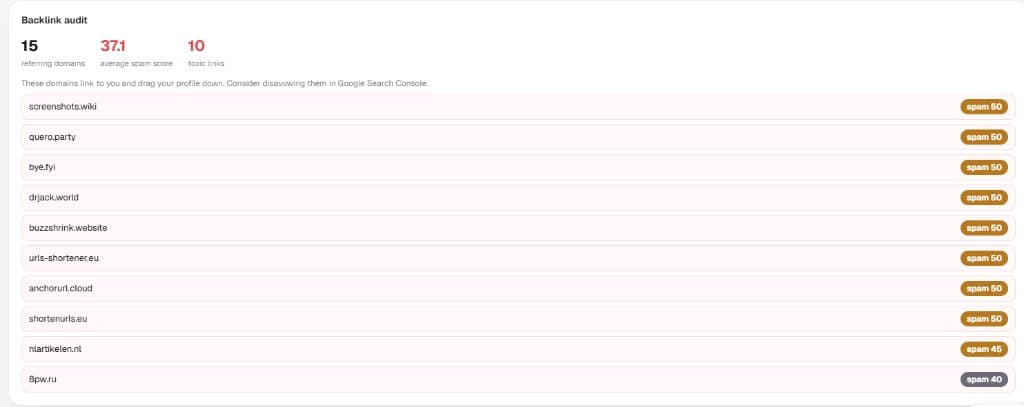
Backlink Spam Checker: Real Risk, Toxic Links, and a Disavow-Ready Export
Run a backlink spam check in seconds: toxicity score, prioritized toxic links, disavow export, and competitor comparison. No credit card, no tool-hopping.
Practical link building and SEO playbooks from the Meeeters network. No fluff, just what actually works.
An AI tool for SEO content writing is not a magic button. It works when you feed it a clear brief, a target keyword, and editorial guidelines, then edit for accuracy, tone, and E-E-A-T. Step-by-step method, common mistakes, and how to measure success by rankings, not word count.
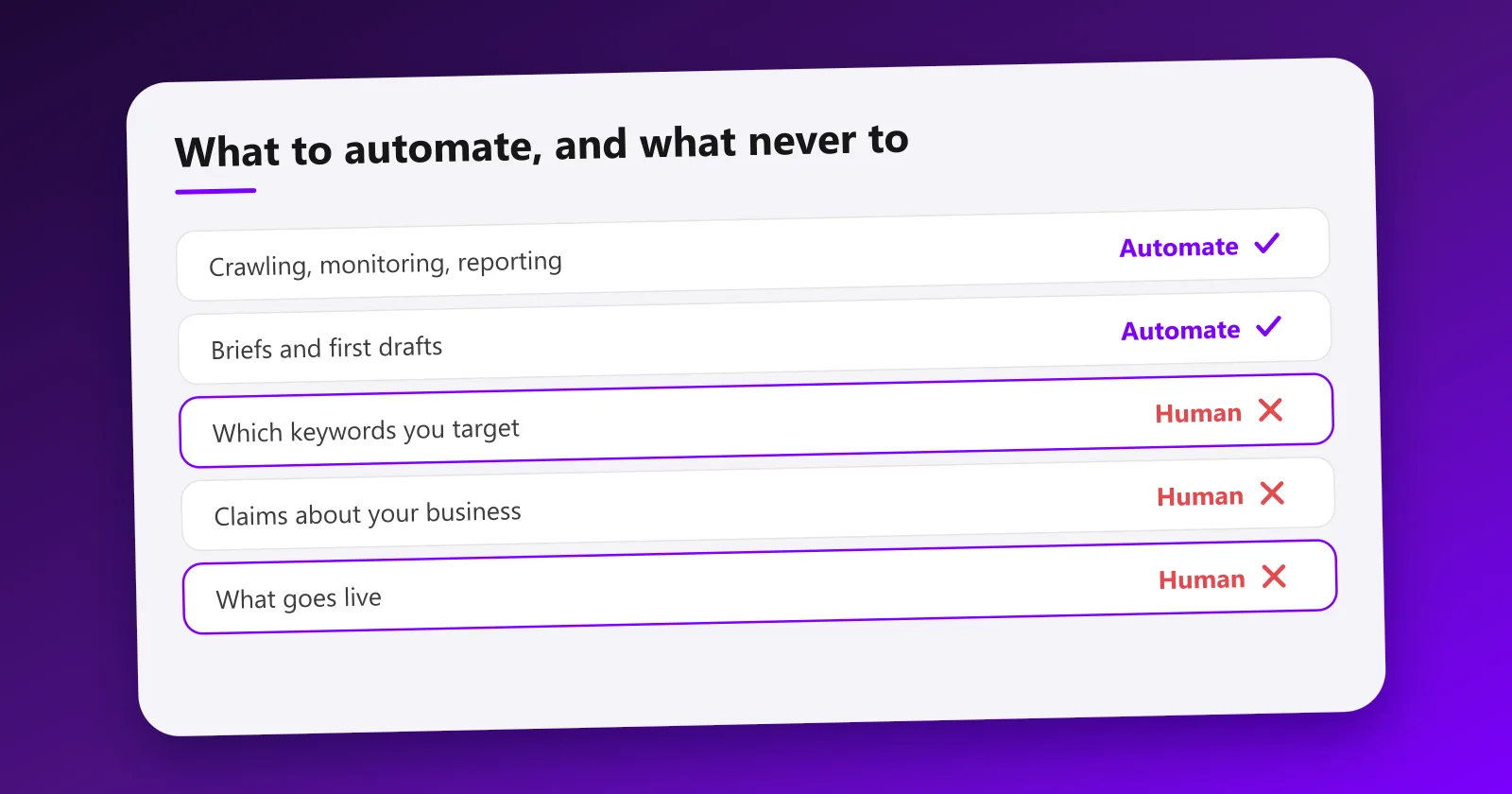
The line is not between big tasks and small ones. It is between collecting information and deciding what it means. Three things to never hand to a machine, and everything you can automate today without risk.
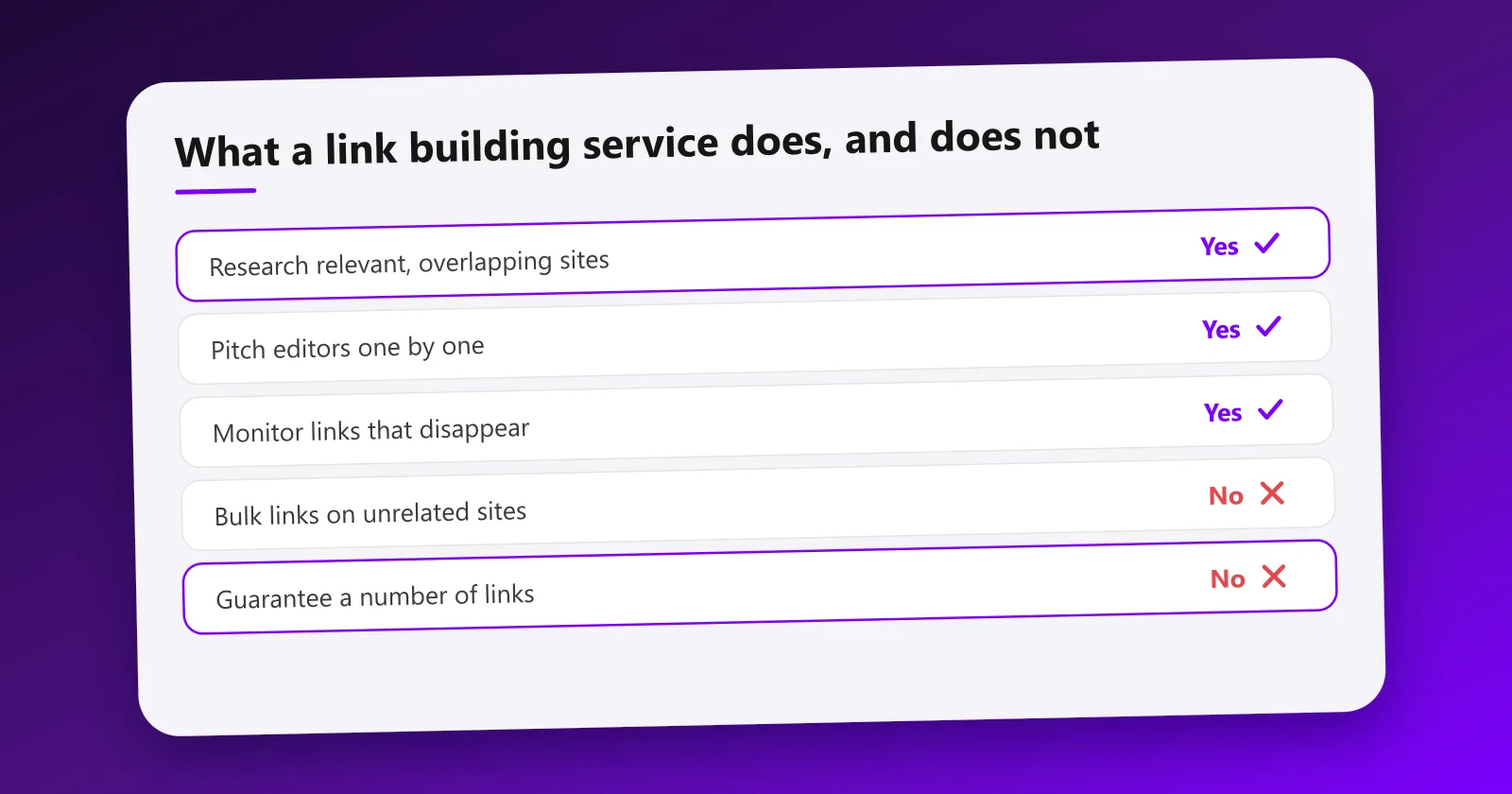
A link building service earns and places backlinks from relevant sites. What it actually does, the six-step process, the mistakes that waste the budget, and when it is worth hiring one.
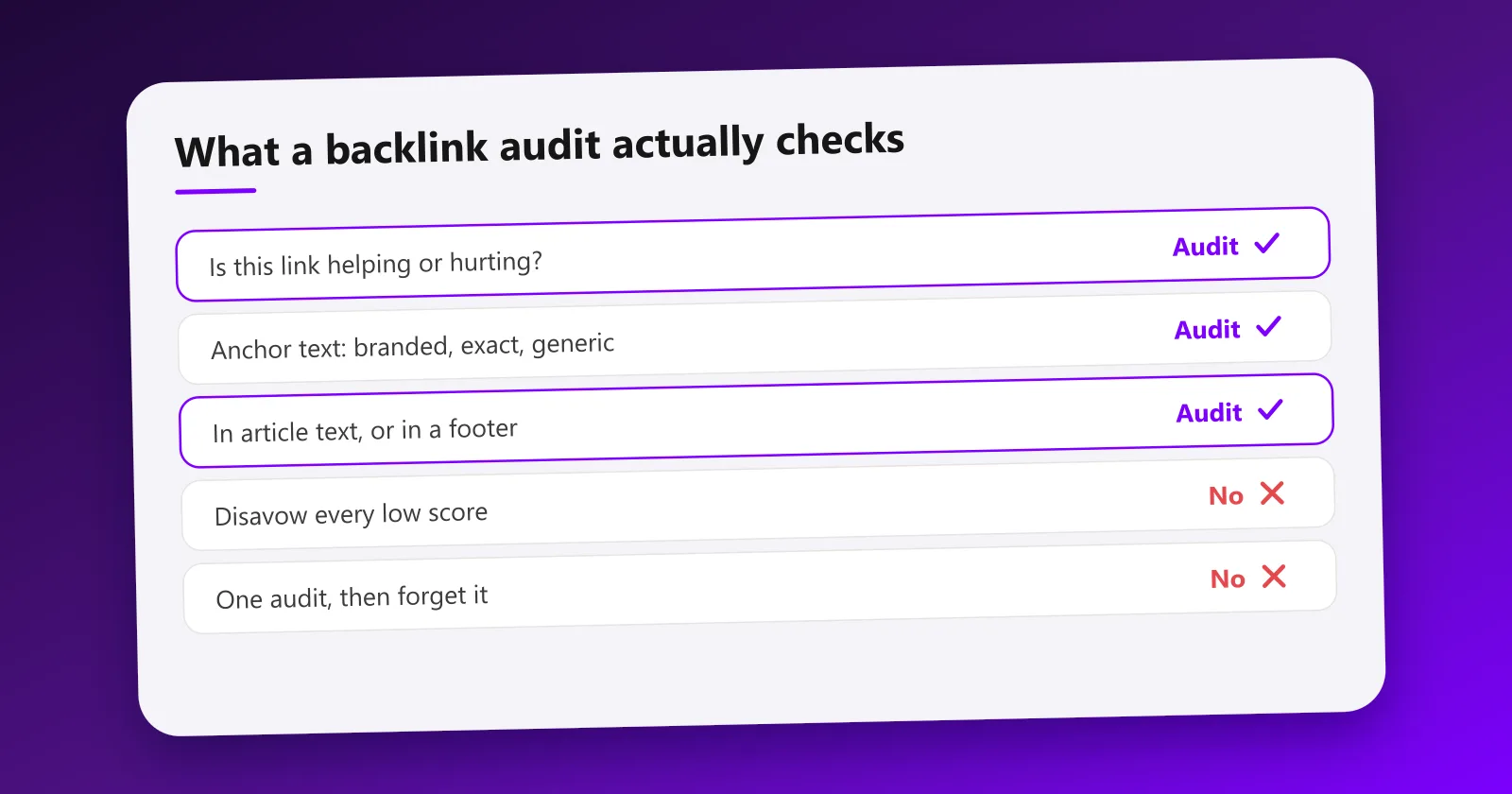
A backlink audit examines all links pointing to your site, identifies toxic links, and reveals ranking opportunities. Learn what it covers and why it matters.
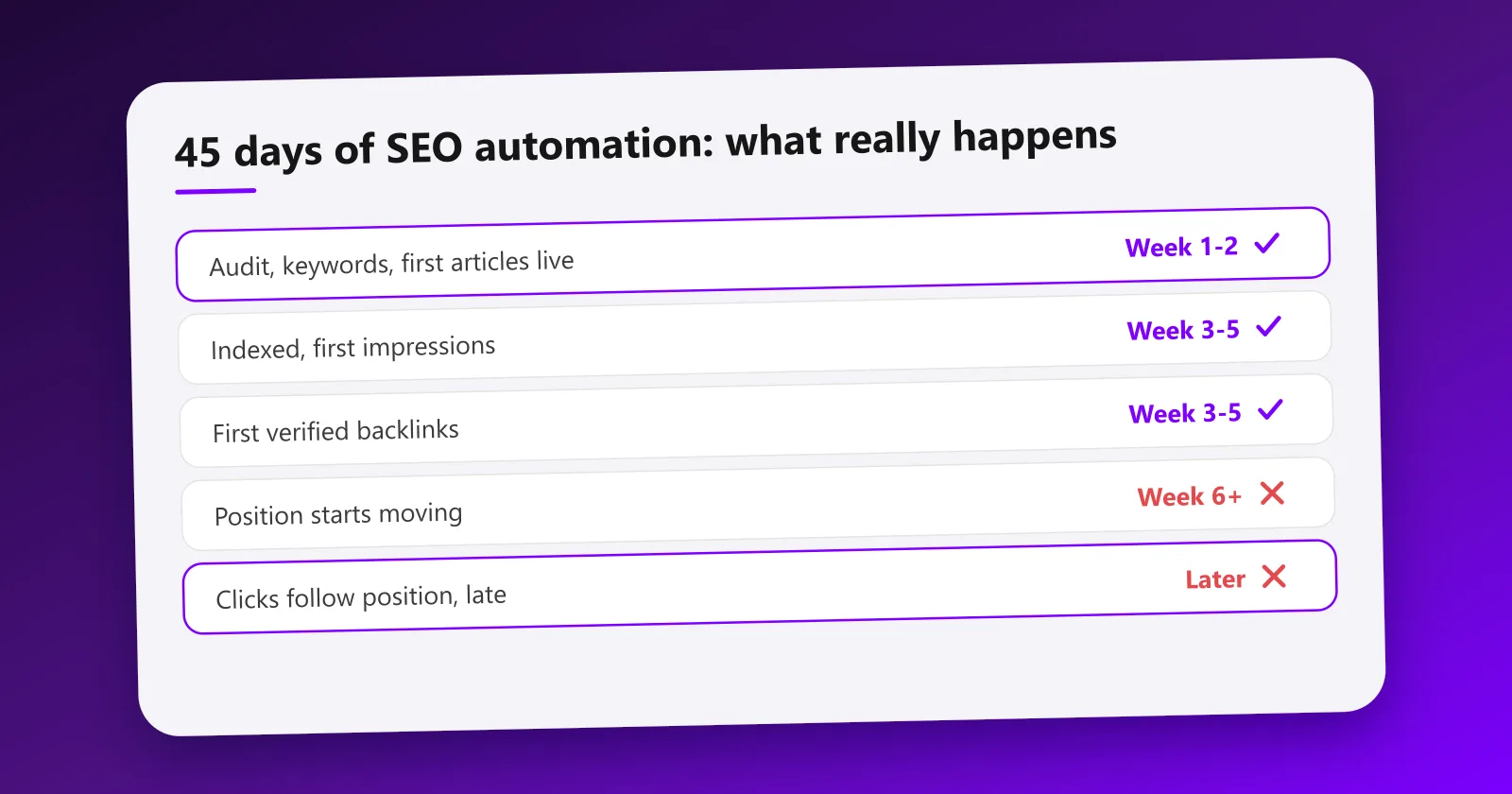
What you really get in the first 45 days of automated SEO: the machine built, first pages indexed, first verified links. Not the traffic. With our own numbers, including the member whose impressions fell.
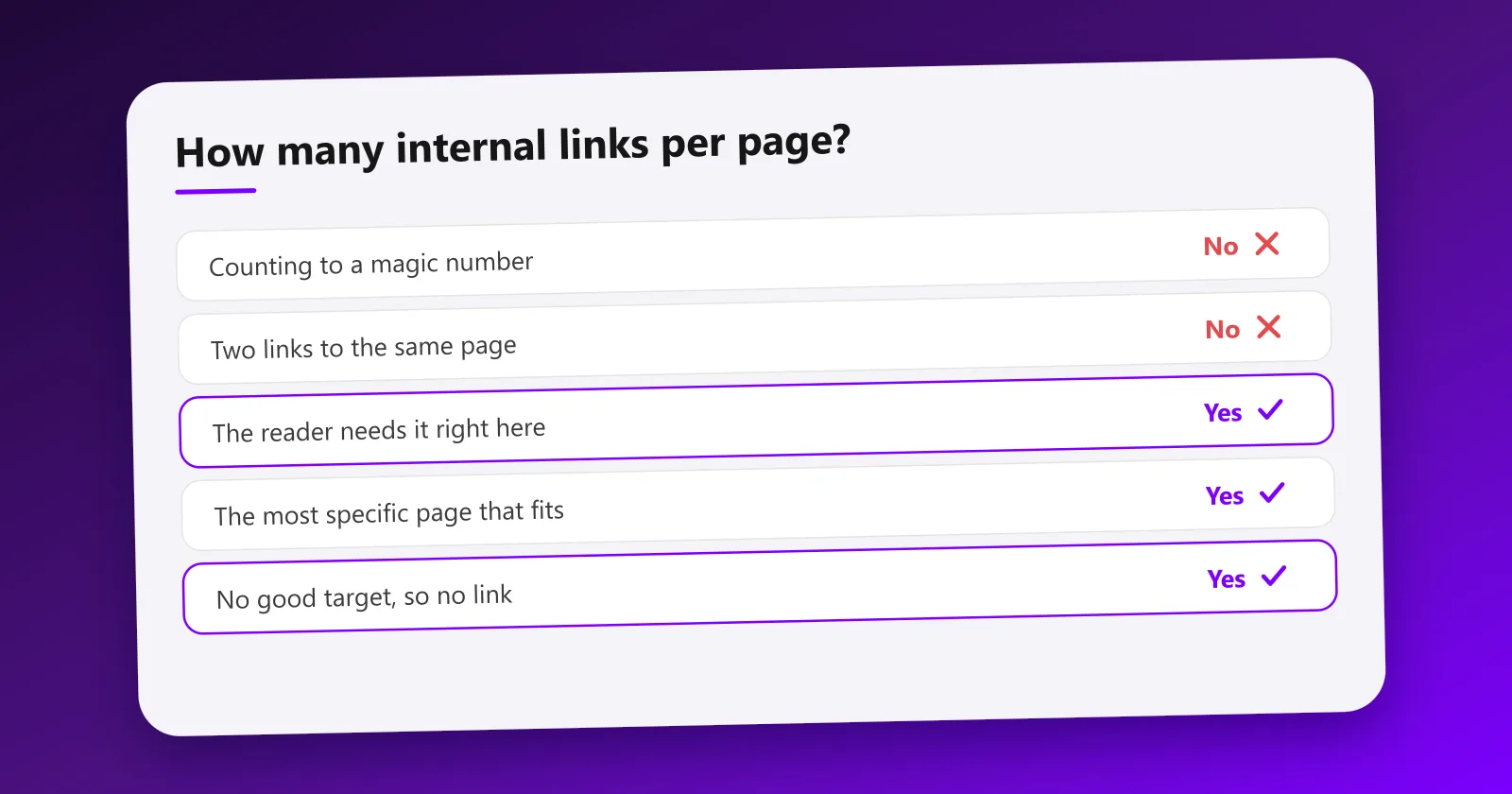
Does adding a fifteenth internal link weaken the other fourteen? Technically yes, practically almost never. What actually degrades with link count, and the rule that replaces counting.
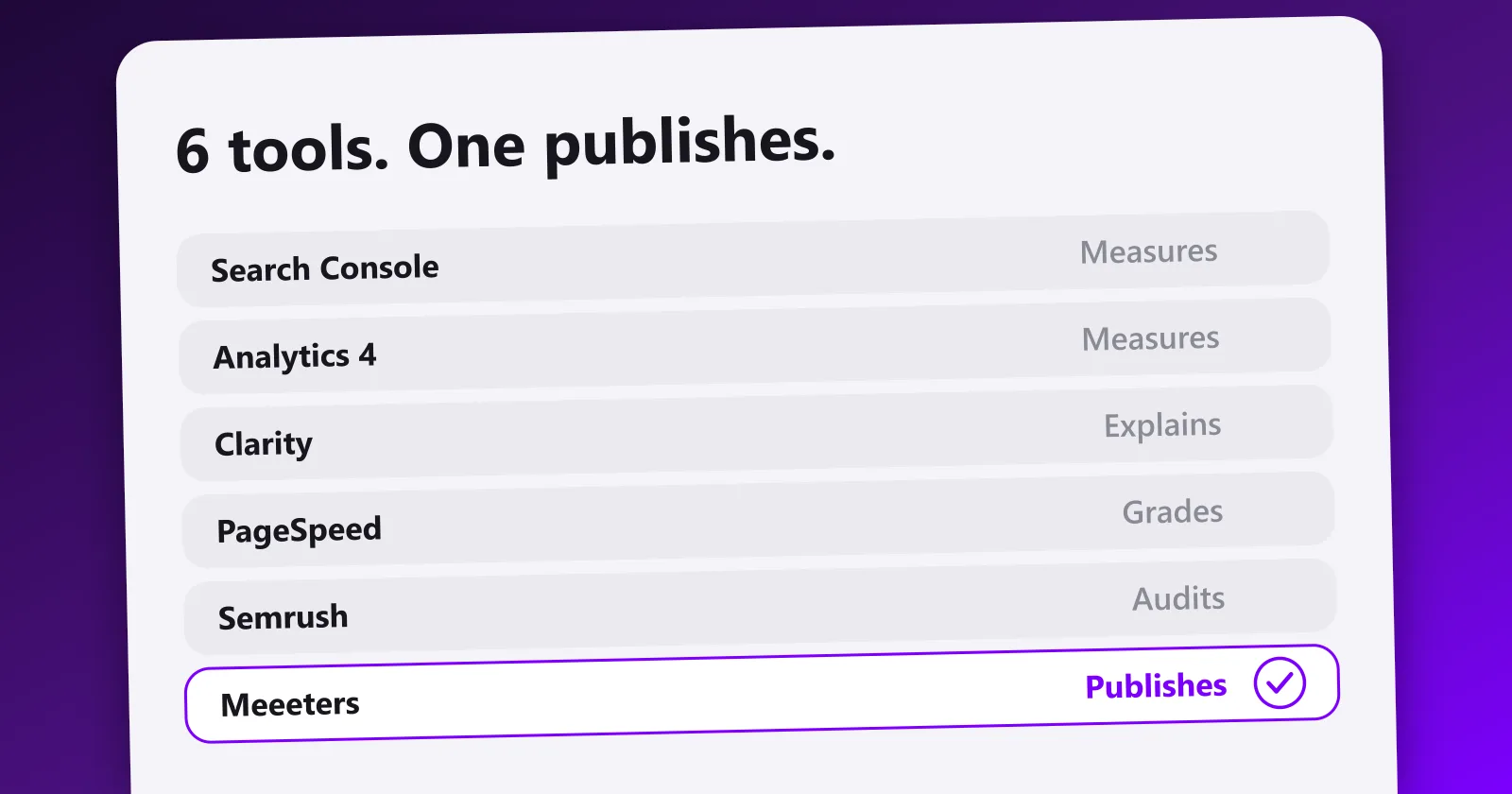
Not a ranking of thirty tools. The six SEO tools open in my tabs every week, what each one is for, what each one refuses to tell you, and the order to add them in. Five are free.
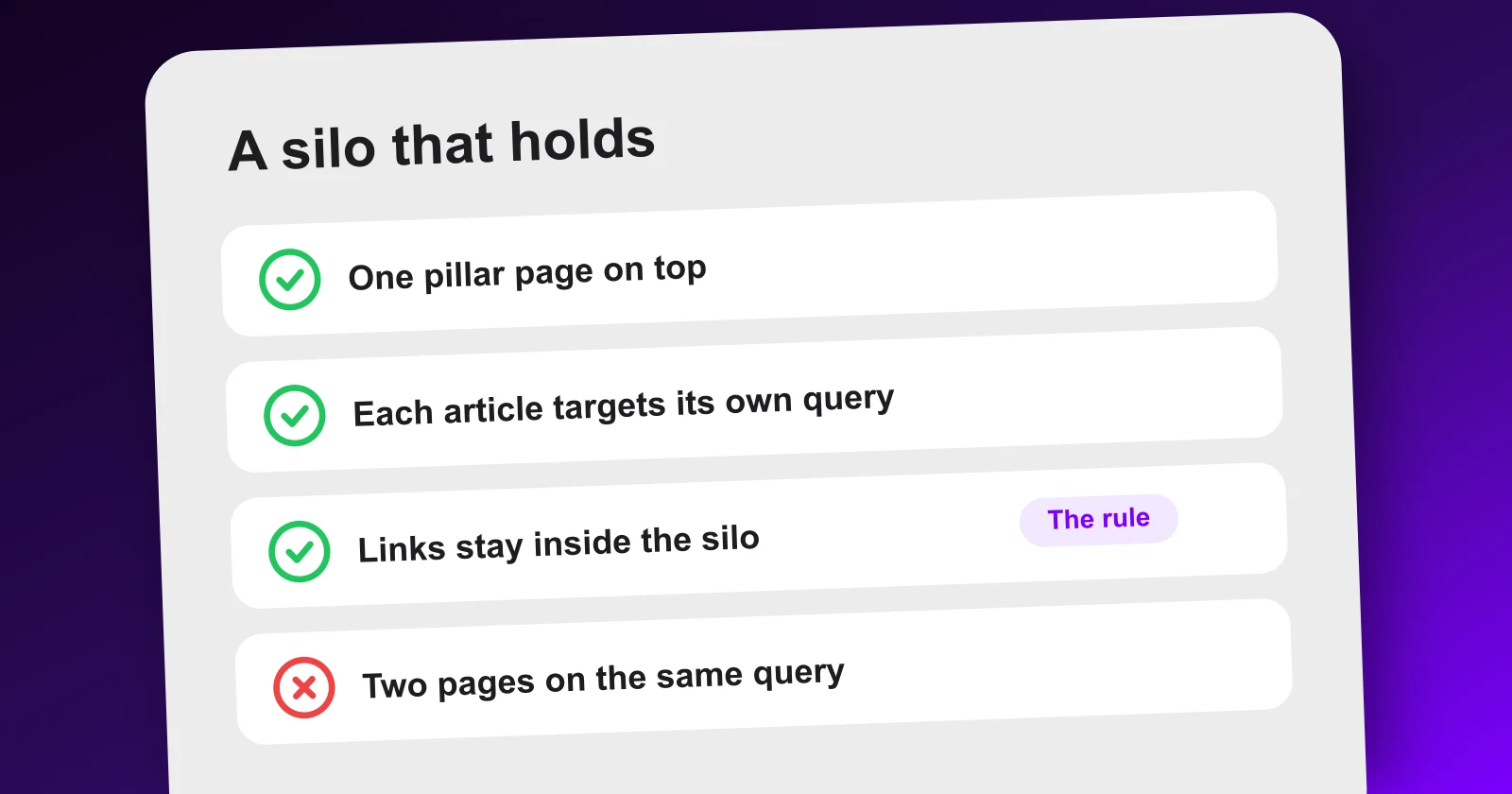
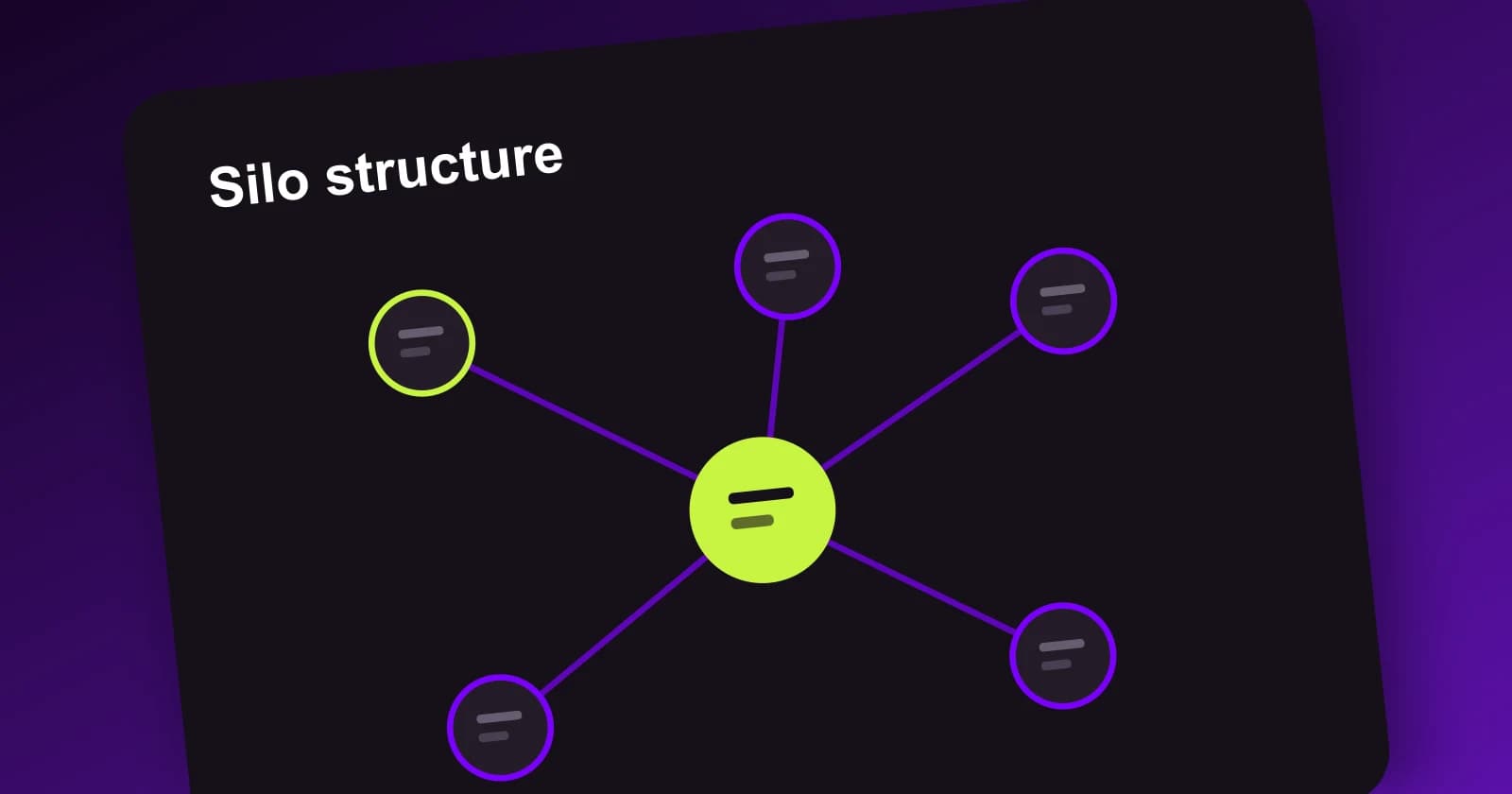
A semantic silo is a pillar page, articles that each target their own query, and links that stay inside the group. Here is how to decide what belongs, and what breaks a silo.
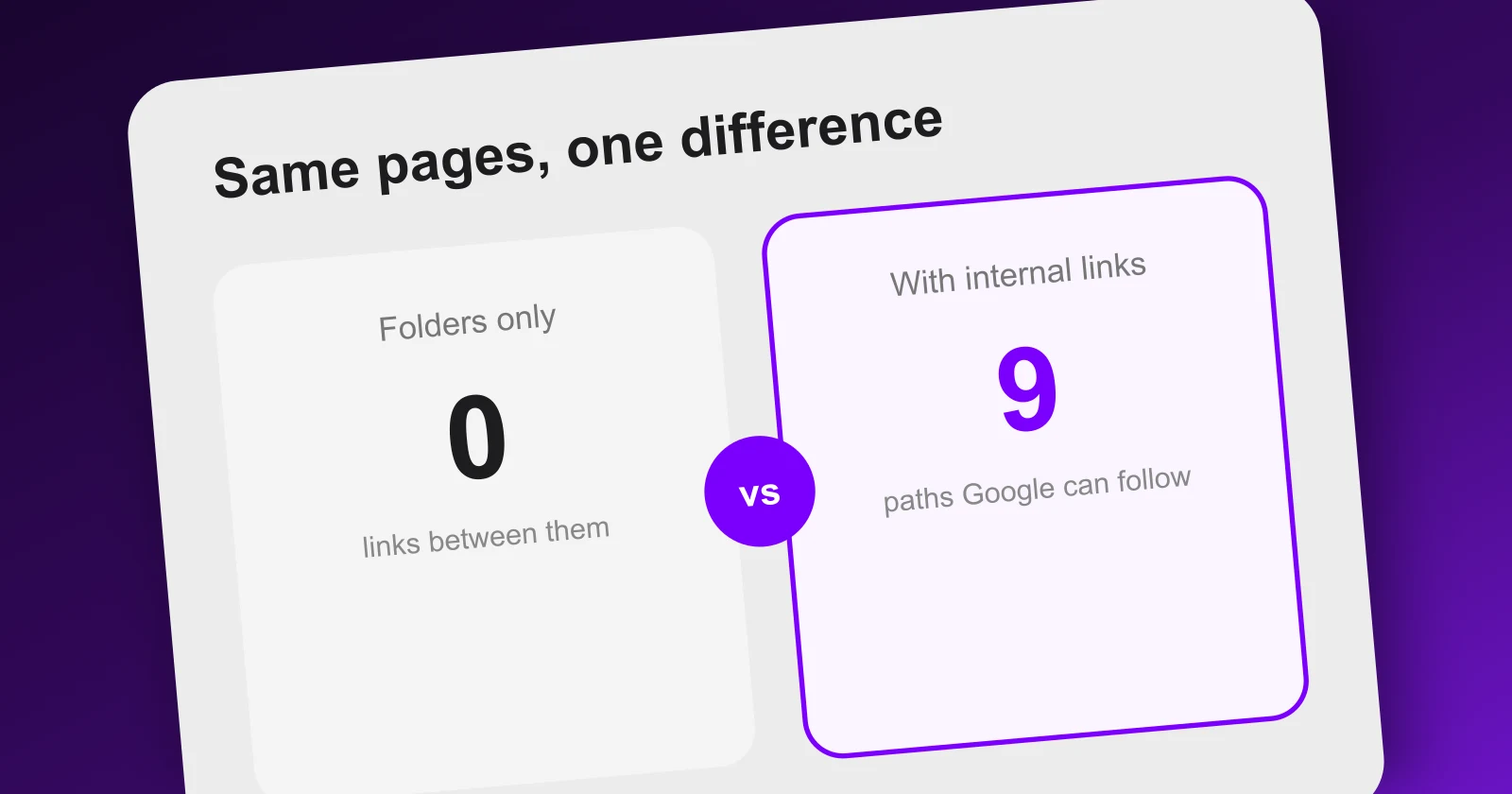
Folders decide where a page lives. Links decide whether Google ever reaches it. Most sites have a tidy architecture and almost no internal linking, and cannot tell the difference.
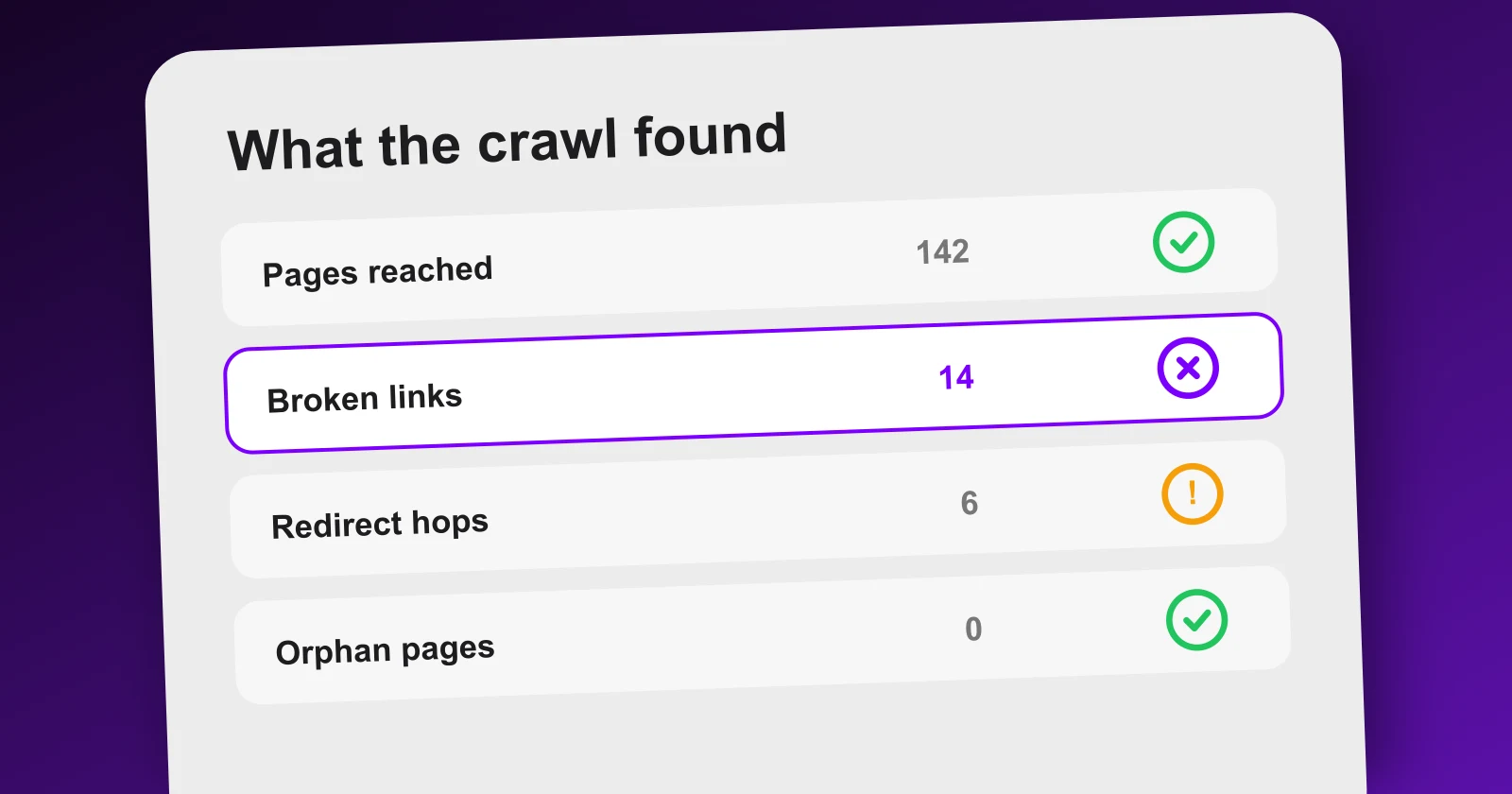
Crawl budget is not a number you optimise. It is the result of how fast your site answers and how much of it is worth fetching. Here is what a healthy crawl looks like.
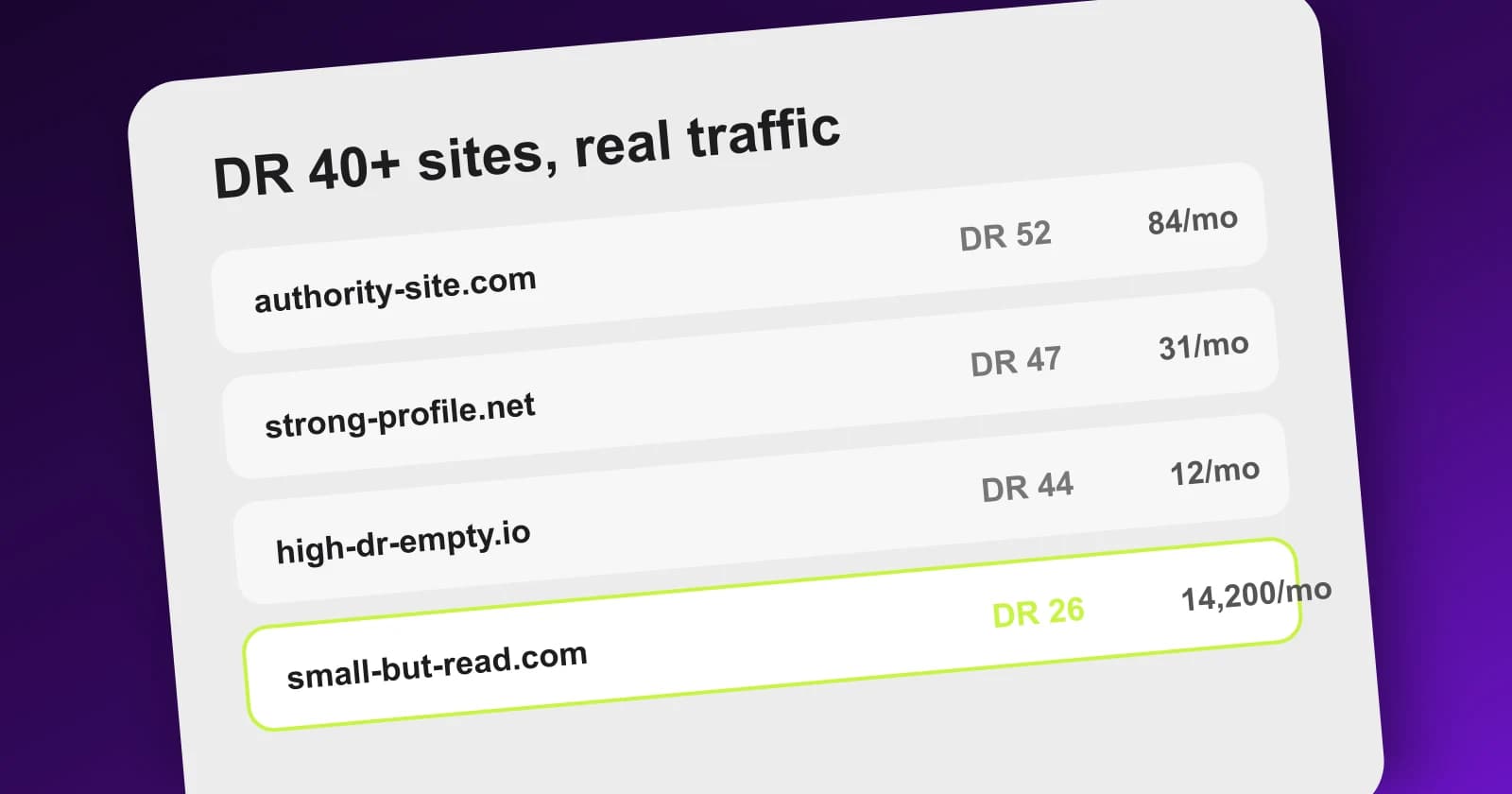
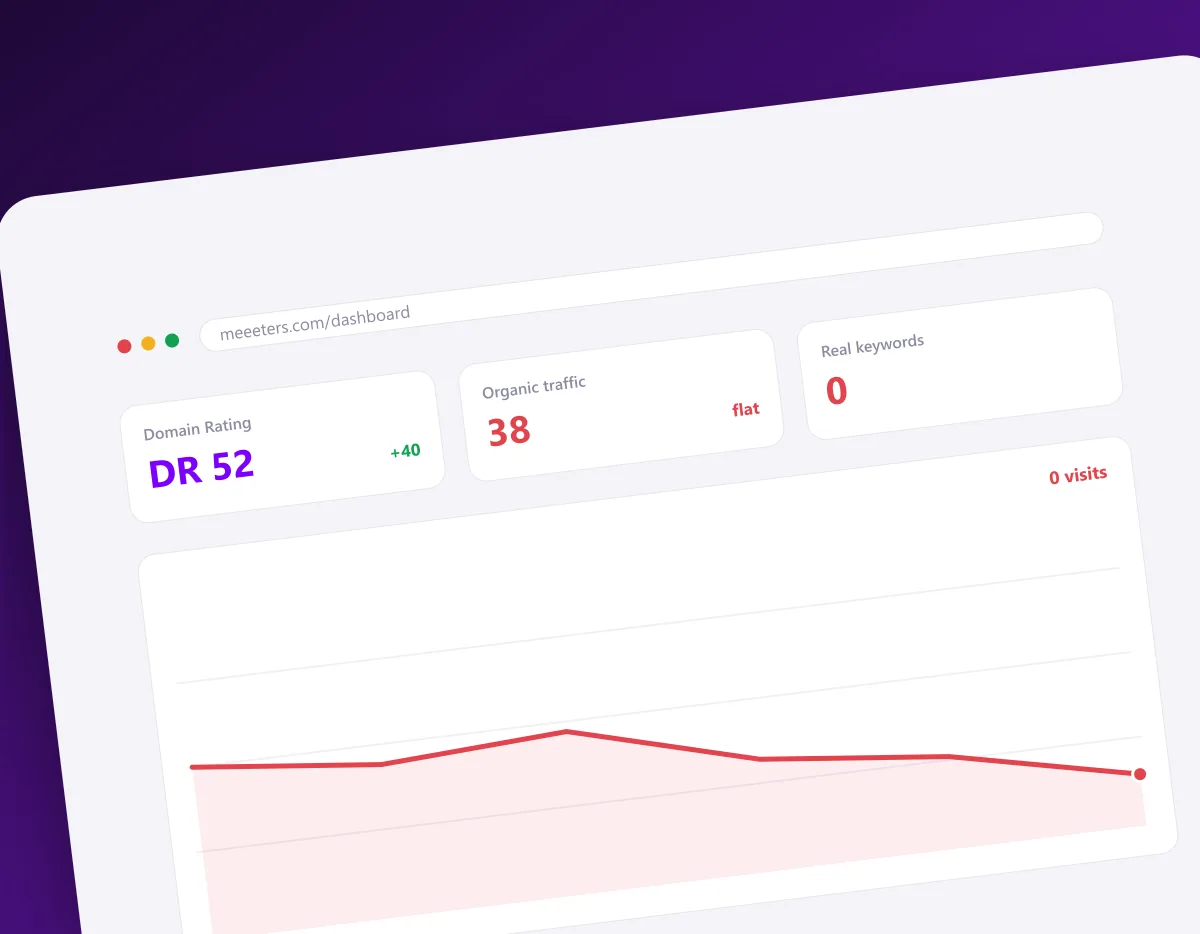
We measured domain rating and real organic traffic across 596 websites. The correlation is 0.16, close to nothing. 15% of DR 40+ sites get under 100 visits a month.
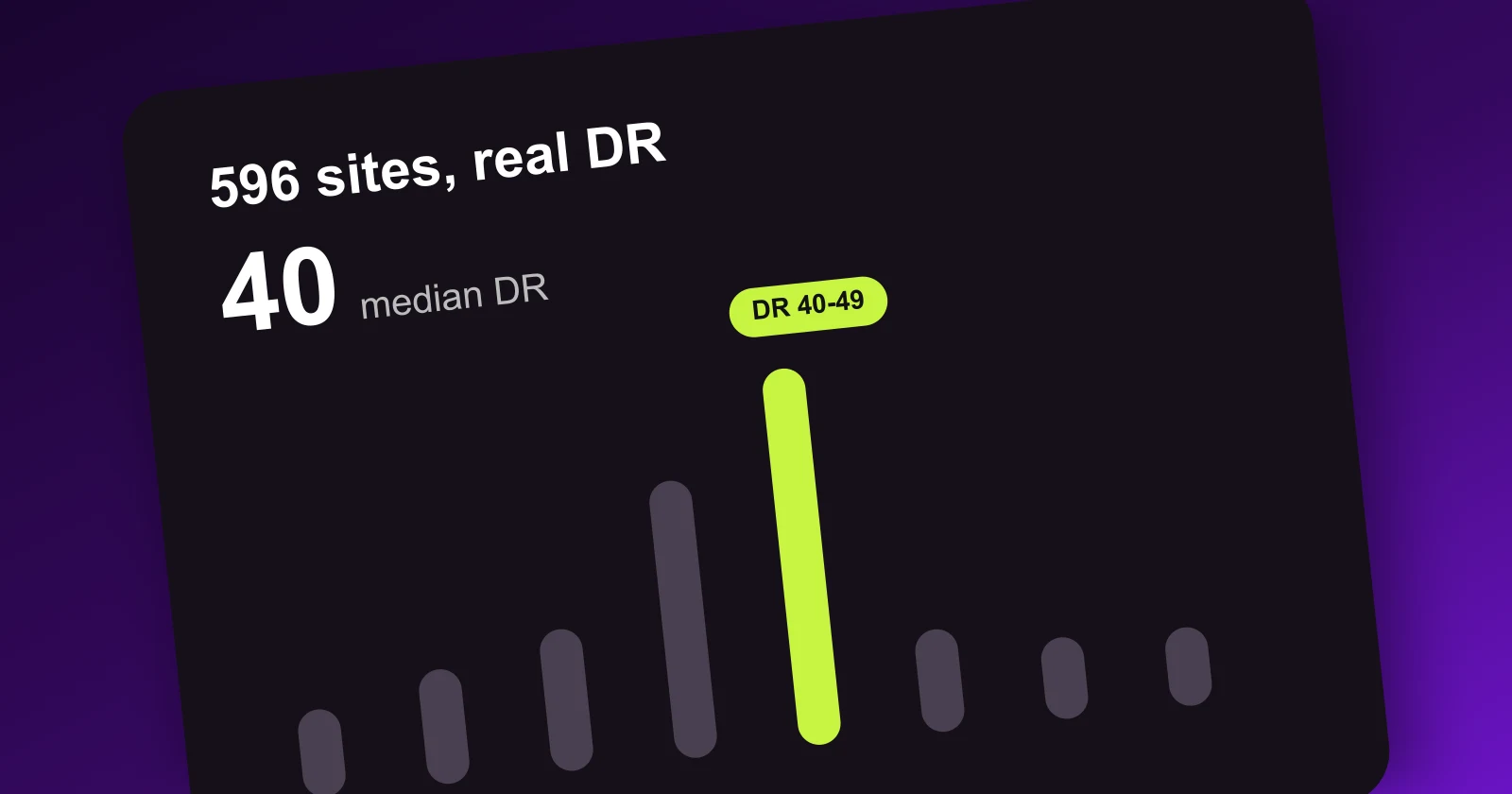
We measured the domain rating of 596 real websites. The median is 40, only 5% reach 50, and 1% pass 60. Here is the full distribution and what counts as a good DR.
Why indexing takes time, why Google chooses what to index, and 12 concrete ways to get your pages crawled and indexed faster, each with the exact action and why it works.
A silo structure groups your content into tight topical clusters so Google understands what you are an authority on. 12 rules to build silos that rank, each with the exact action and why it matters.
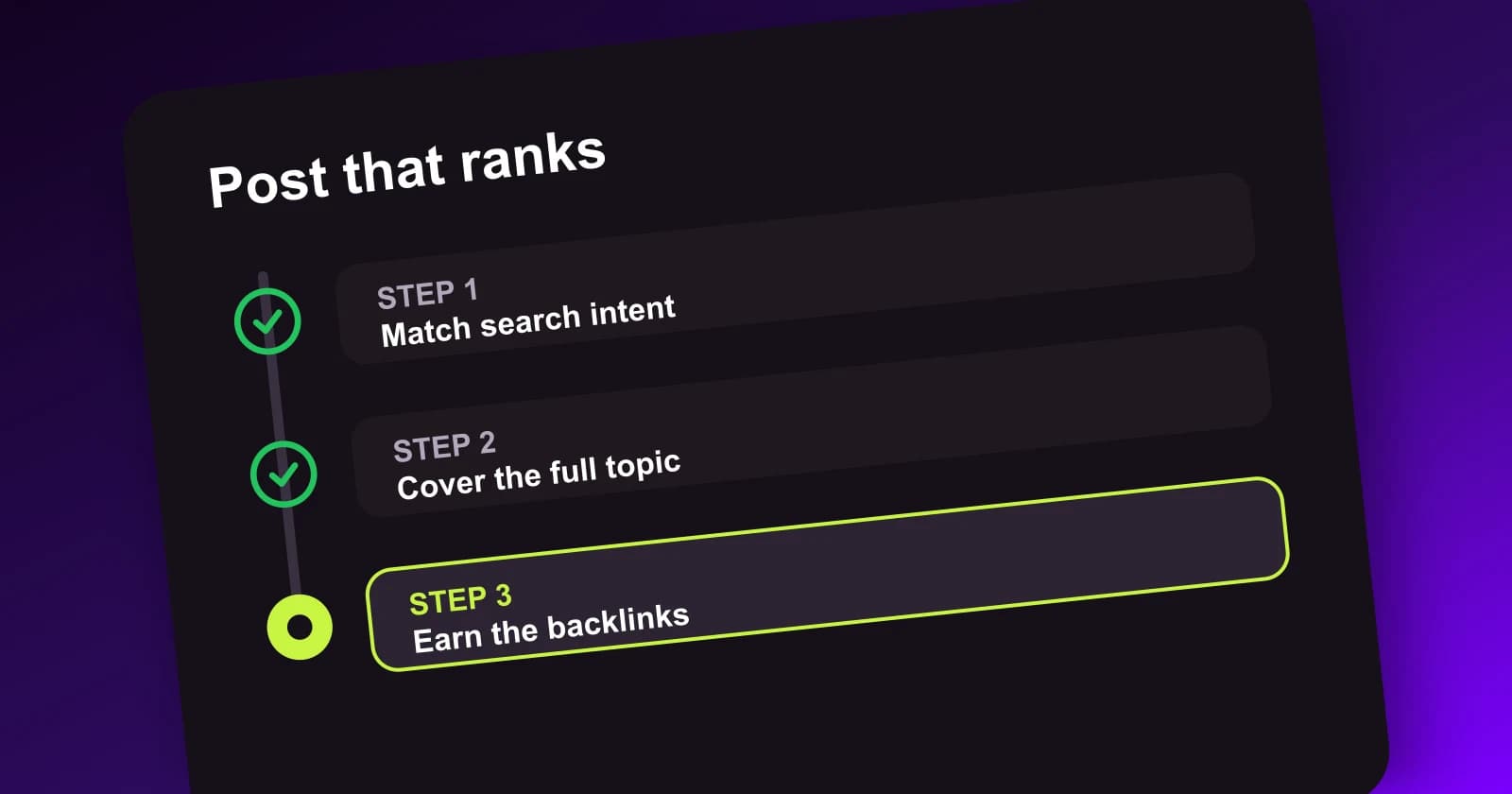
A repeatable process for writing blog posts that reach the top 10, each step with the exact action. Intent, structure, on-page, internal links and the authority step most guides skip.
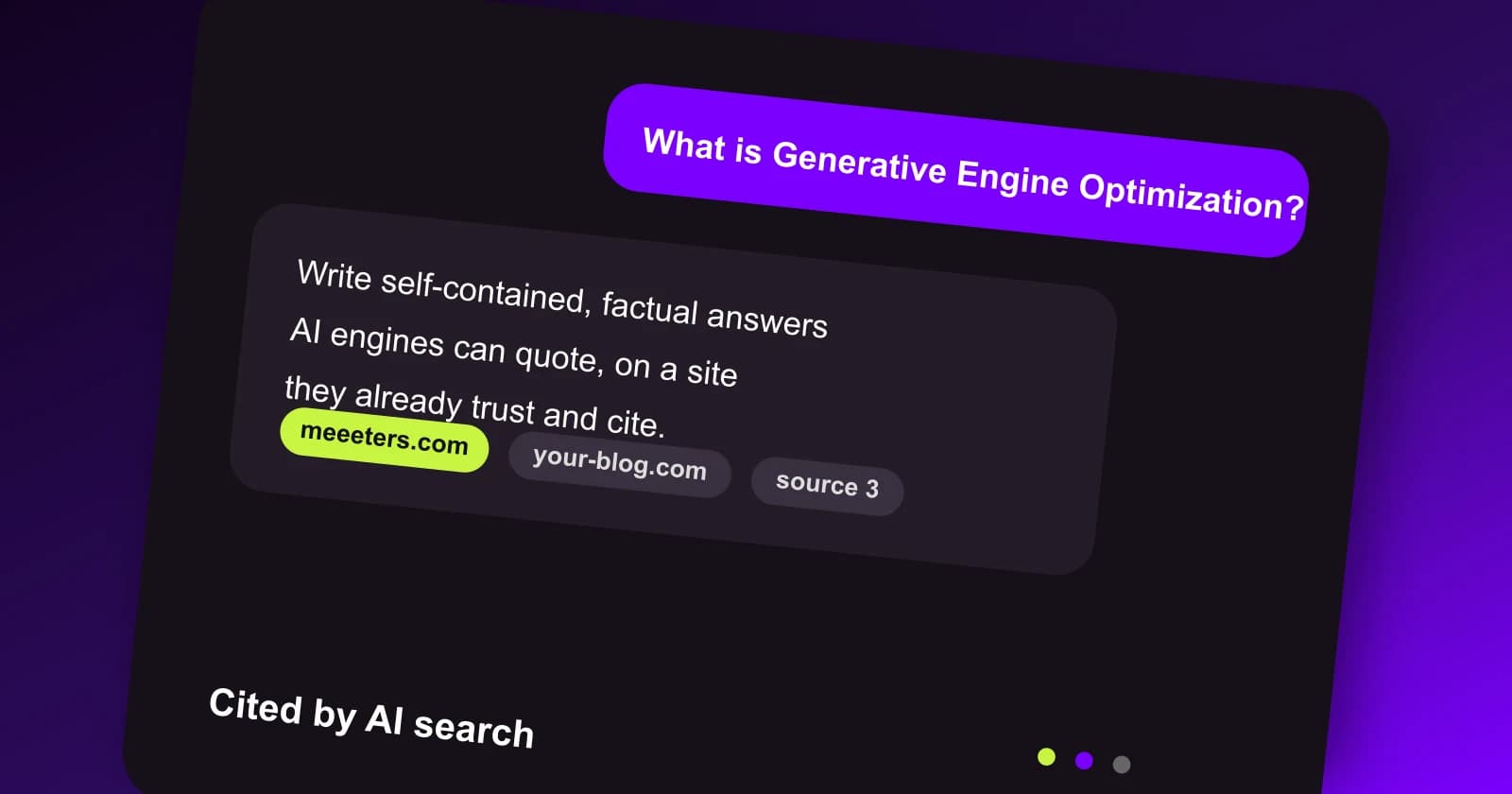
Generative Engine Optimization is how you get quoted by ChatGPT, Perplexity and Google AI Overviews. 12 concrete steps to write blog posts AI engines lift answers from, each with the exact action.
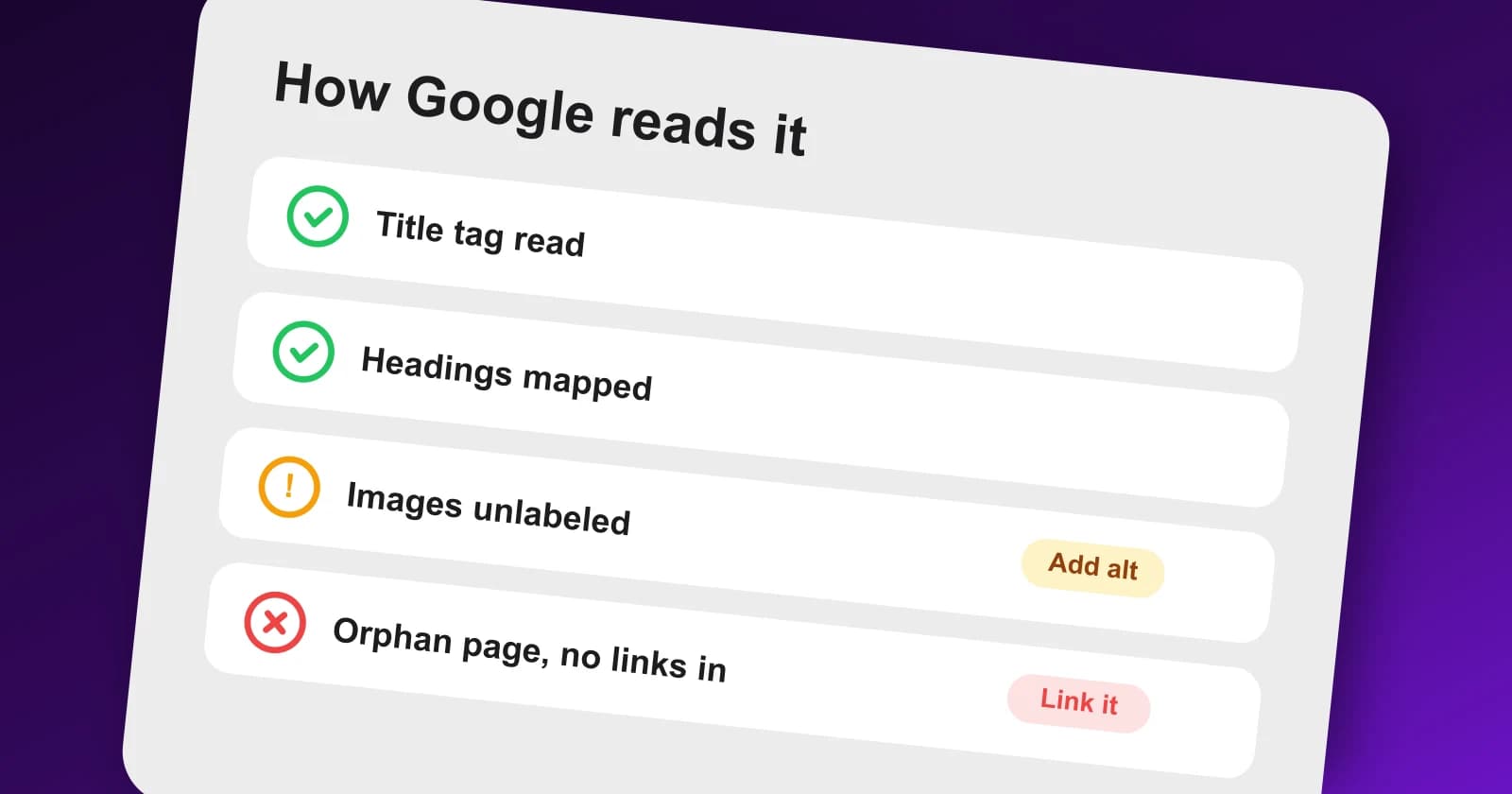
Google does not see your site the way you do. It reads links, titles, headings, images and structure. 13 things Google actually looks at, what it concludes, and how to fix each one.
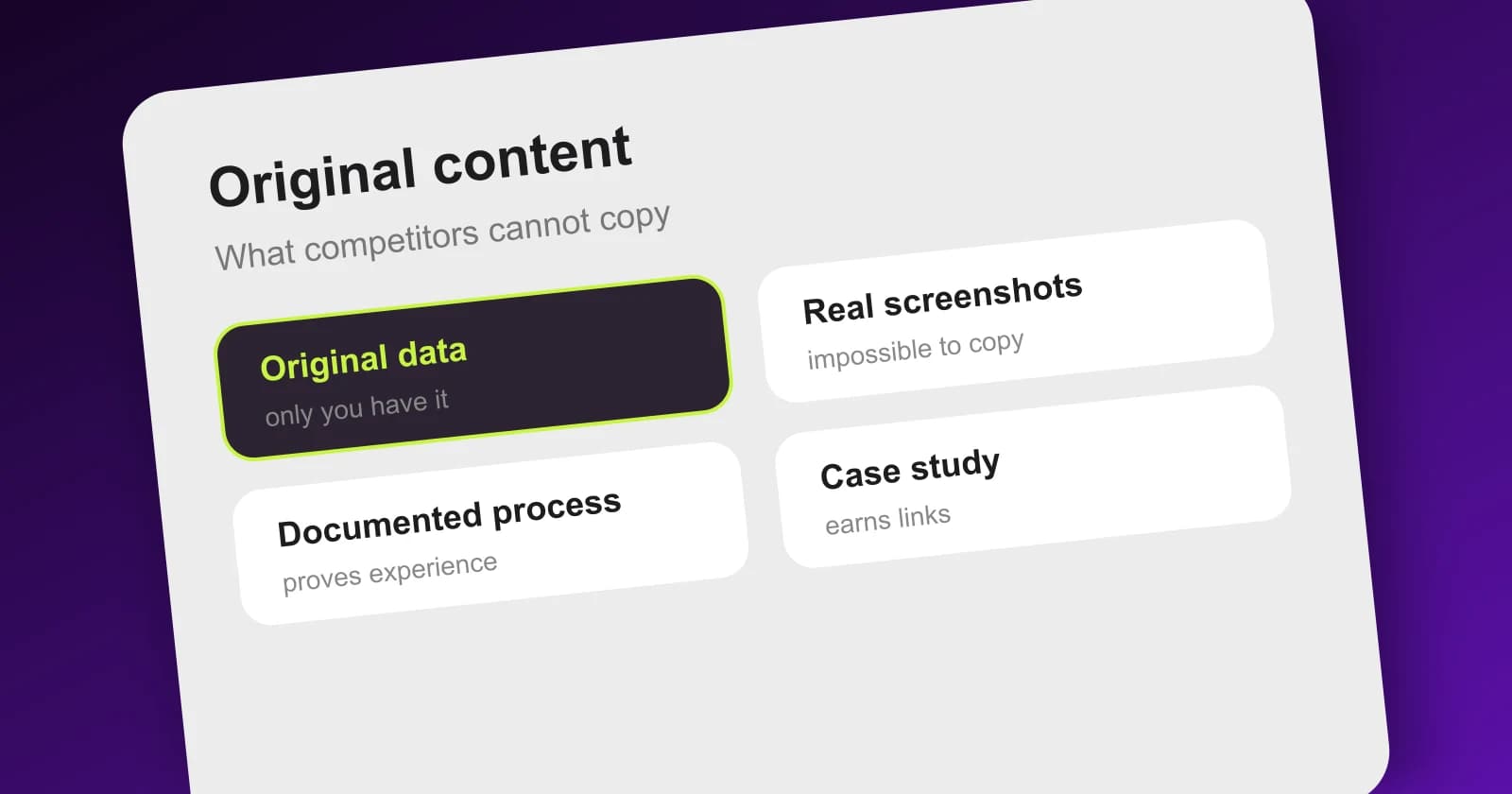
Recycled content does not rank or earn links. Original data, images and documented process do. 12 ways to document what you actually do and turn it into content that ranks and gets cited.
Meeeters screens every site for toxicity before it can trade links, using backlink and anchor-profile signals to score risk. See how the screen works, what it catches, and why it protects you from the penalty of a bad-neighbor link.
Meeeters' site strength score turns your domain's authority and traffic into one clear gauge, weak, medium or strong, so you know where you stand and what to fix. See how it is measured and why a single number beats a wall of metrics.
An SEO crawl explained plainly: what a crawler sees, the issues it catches that break rankings, how to run one step by step, and how to turn the report into fixed pages instead of an ignored spreadsheet.
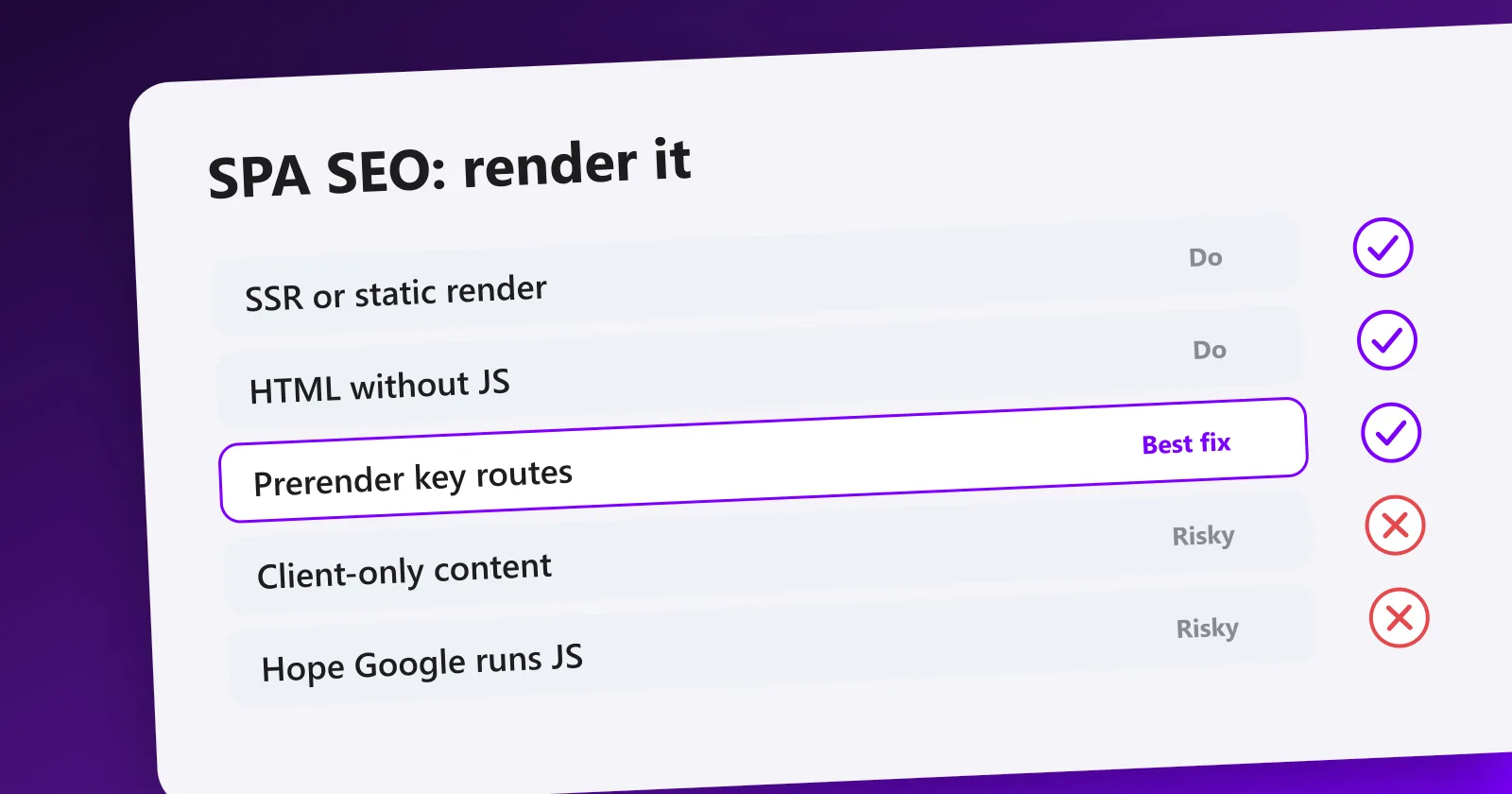
SEO and JavaScript explained: how Google renders JS, why client-side rendering hides your content, how to check what the crawler actually sees, and the rendering choices that keep a JavaScript site indexable.
Meeeters connects your Google Search Console and Analytics so your real rankings, clicks and traffic sit next to the work that moves them. See how the connection works and why closing the loop beats a third-party rank tracker.
Meeeters writes personalized outreach openers grounded in the target site's real content, so your first line proves you actually looked. See how it works and why a specific opener beats a templated 'I love your blog' every time.
Meeeters' keyword strategy turns your site's real topics into a shortlist of winnable keywords, each with volume, difficulty and intent. See how it works, which data it uses, and how it replaces the keyword spreadsheet nobody acts on.
Meeeters detects keyword cannibalization by cross-referencing your indexed pages against your real Search Console queries, so you find the pages fighting each other. See how detection works and how to consolidate two weak pages into one winner.
How to do a technical SEO audit step by step: crawl, indexing, site speed, mobile, structured data and internal links. What to check, in what order, and how to turn the findings into fixes instead of a checklist you abandon.
How to automate SEO reports end to end: which data sources to connect, what to include, how to schedule and deliver them, and why the report is only useful if it drives the next month's work instead of just proving activity.
How to hire an SEO expert without getting burned: what they cost, the questions that expose fakes, the red flags to walk away from, and the honest case for when automation does the same job for less.
How to use a free online SEO audit tool without getting misled: what the free score really measures, the upsell traps, which findings to trust, and how to turn a free audit into an actual plan of pages to fix and create.
Meeeters surfaces link partners scored on two things: site strength and audience match. See how the matching works, why a same-audience link beats a high-DR irrelevant one, and how it turns link building from guesswork into a curated deck.
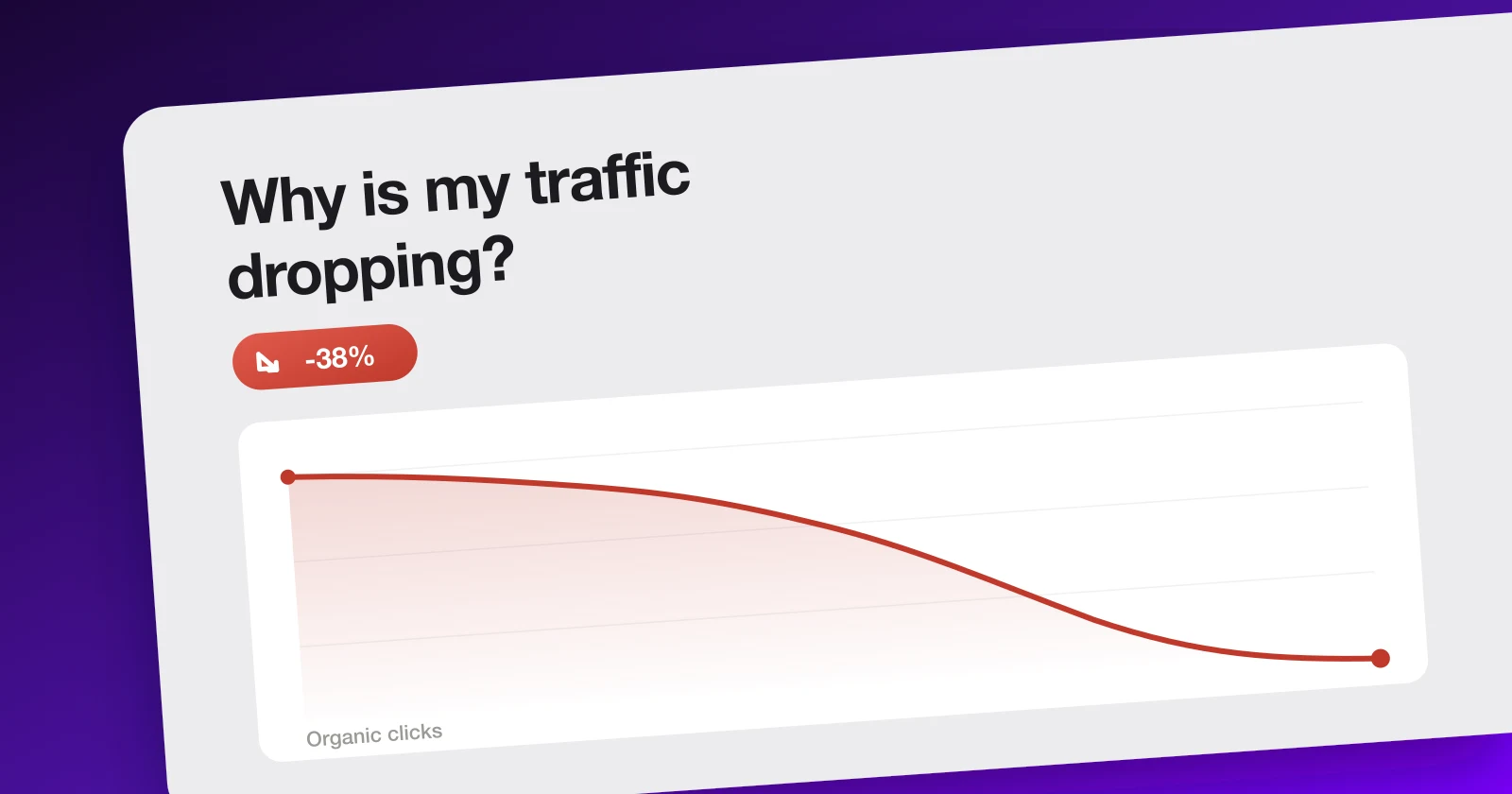
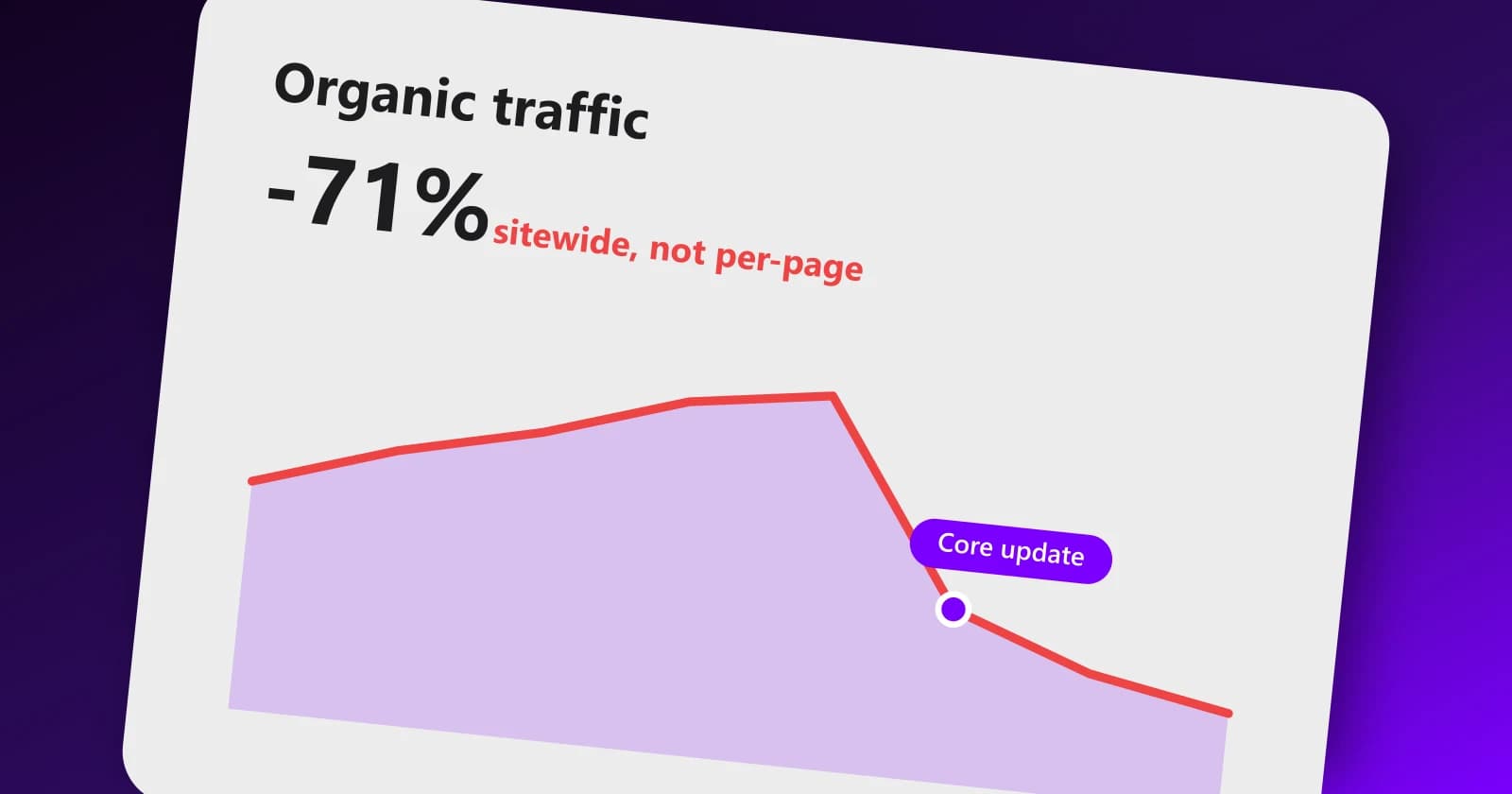
A traffic drop is a symptom, not a cause. Diagnose the seven real reasons your organic traffic is falling in 2026, then follow the recovery plan to earn it back.
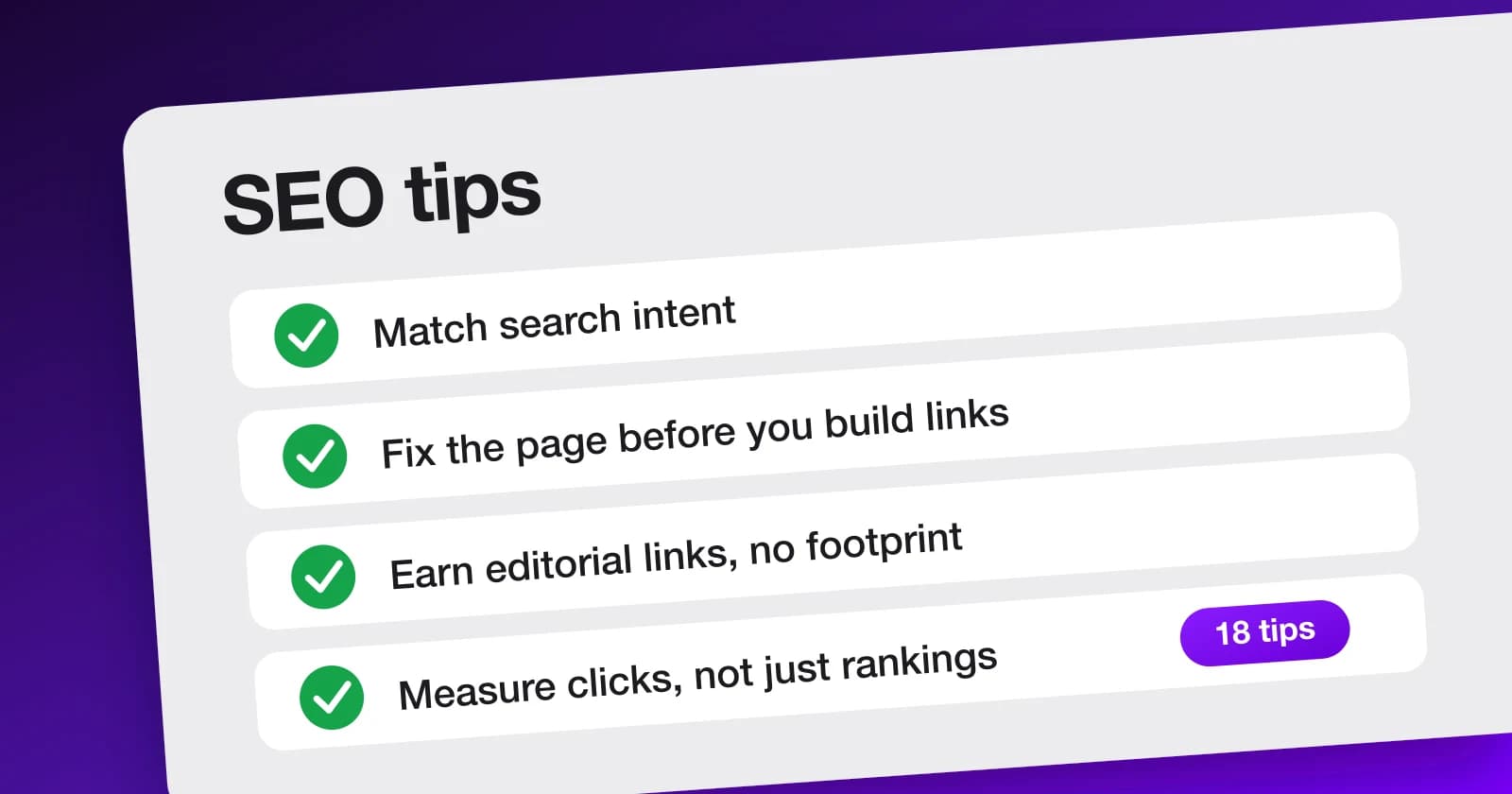
18 practical SEO tips you can act on today, each with the exact steps. On-page, technical, content, backlinks and AI search, ordered by leverage. No recycled listicle filler.
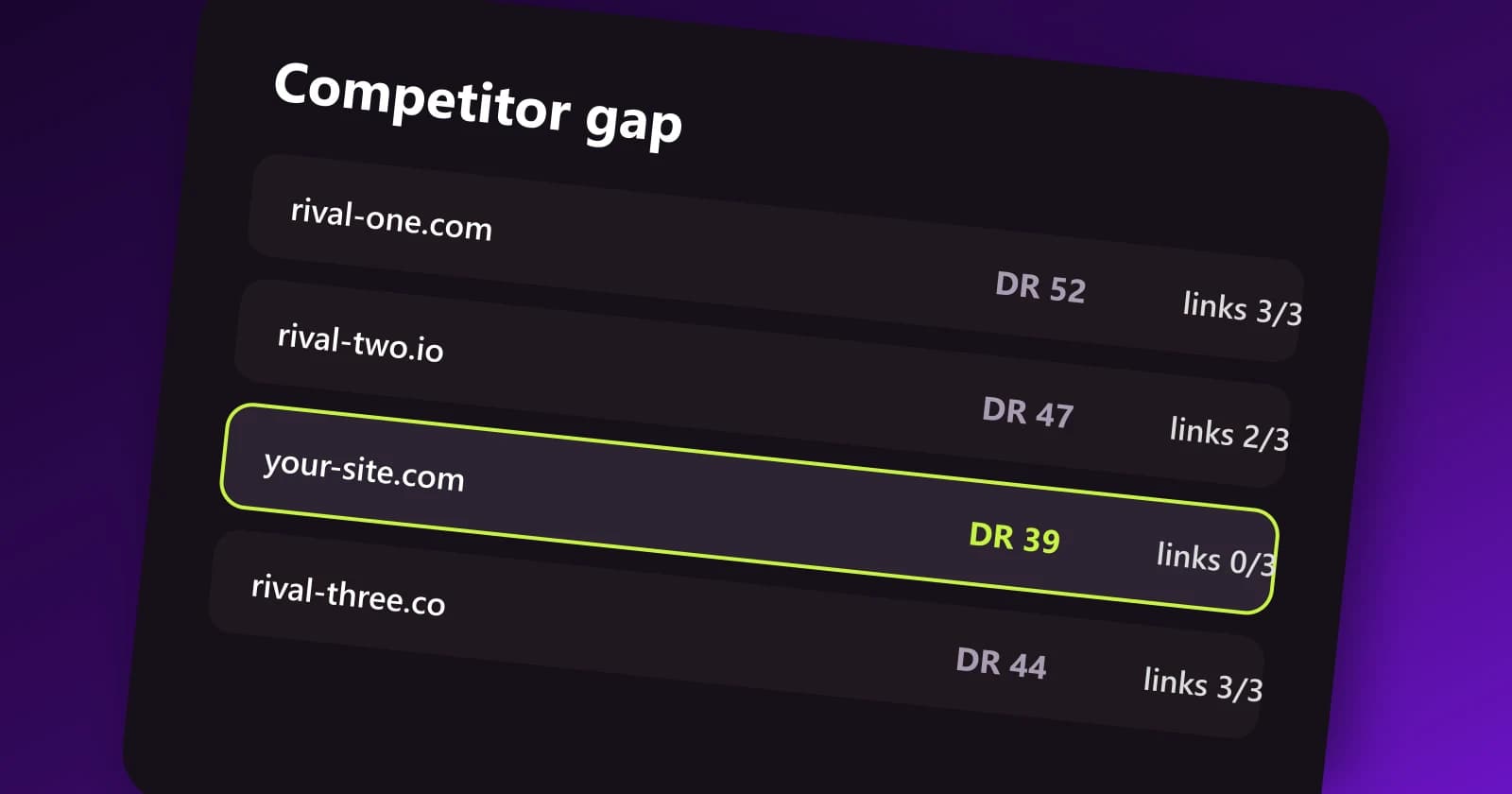
Step-by-step workflow to check any competitor's backlinks, find the gap with your profile, and turn their best links into your own. Free and paid options.
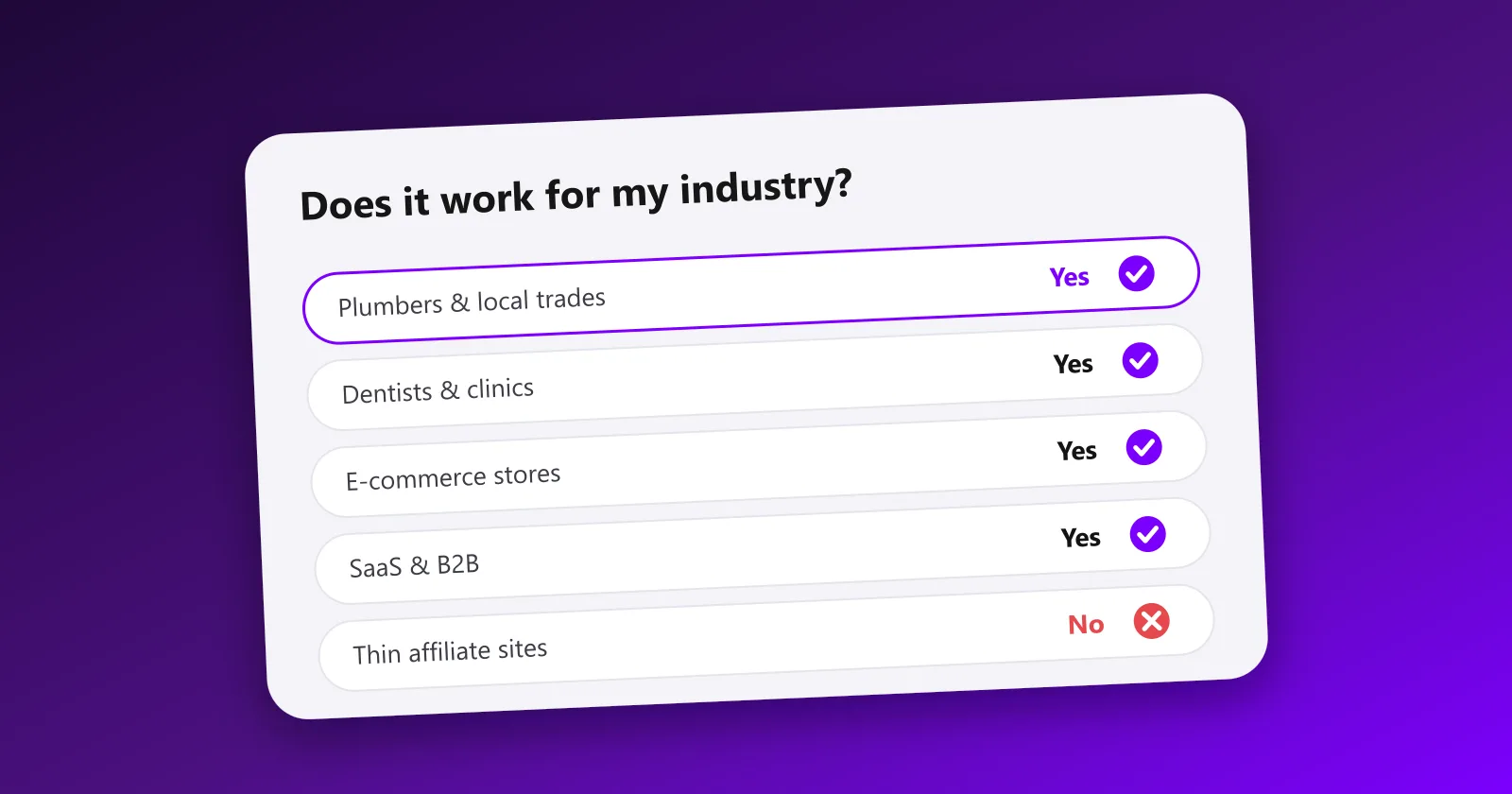
Whether SEO automation works for your industry: plumbers, electricians and local trades, dentists and clinics, restaurants, e-commerce stores, SaaS, real estate, agencies and freelancers. Where it fits, what changes by niche, and the one case where it is not worth it.
Which meta tags actually affect rankings and clicks in 2026: title, description, canonical, robots, OG. Copy-paste examples and the tags to stop worrying about.
Eight ways to earn real dofollow backlinks without paying: safe exchanges, free tools, digital PR, unlinked mentions, and the footprints to avoid.
The honest answer to how many backlinks you need: it depends on the keyword, and you can measure it. A 4-step method to estimate the real number for your page.
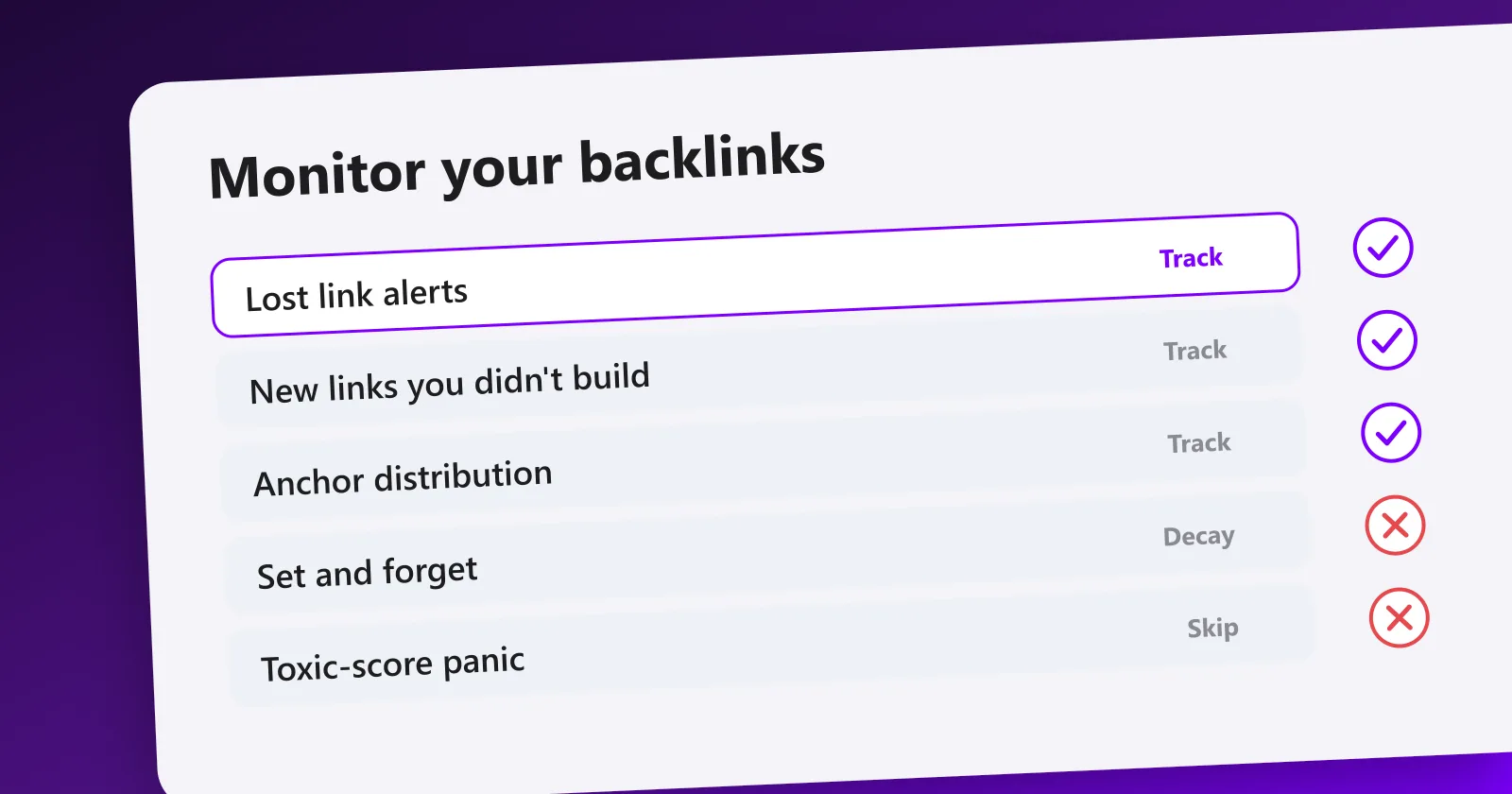
What a backlink monitoring tool should actually track: lost links, toxic links, anchor drift. How far Google Search Console gets you for free, and when paid is worth it.
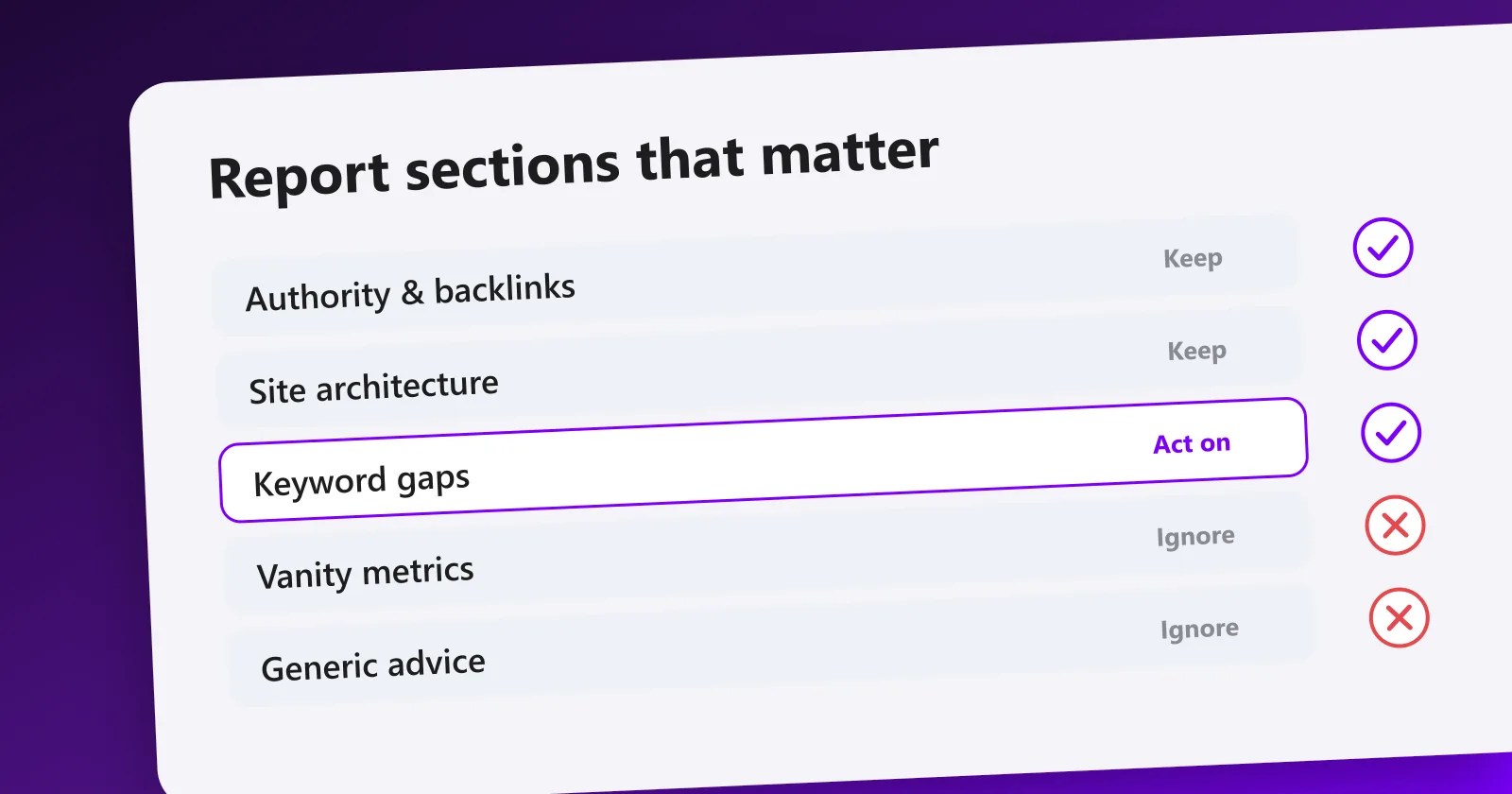
A concrete SEO report example, section by section: authority, architecture, keyword gaps and prioritized quick wins. What to keep, what to ignore, and how to turn a report into an action plan.
Google's June 2026 spam update rolled out in just 2 days. What SpamBrain targeted, why link spam was not on the list, and the recovery plan if you dropped.
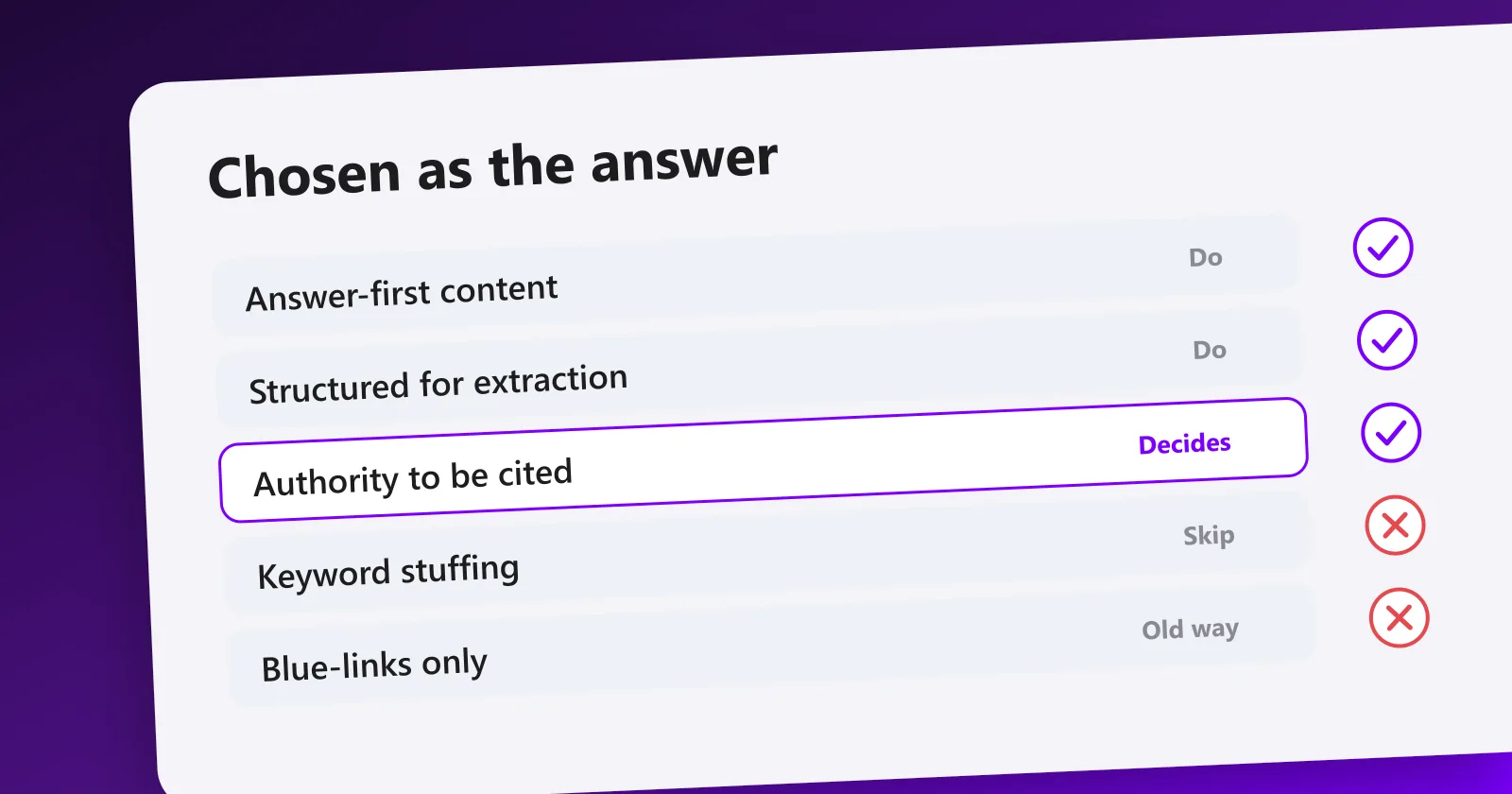
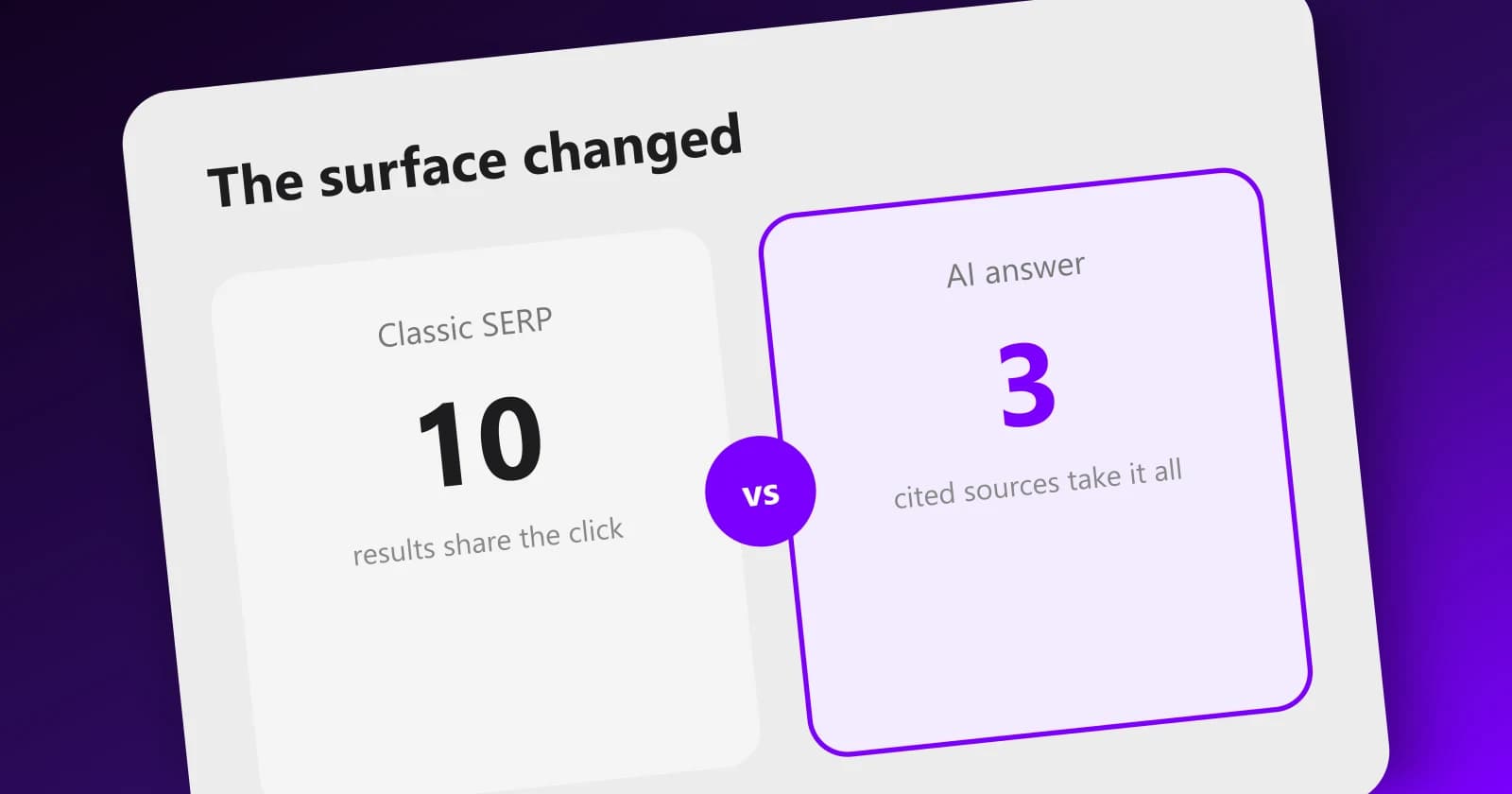
Answer engine optimization explained: how AEO differs from SEO and GEO, why being the answer beats being a link, and the concrete steps to get cited by Google AI Overviews, ChatGPT, and Perplexity.
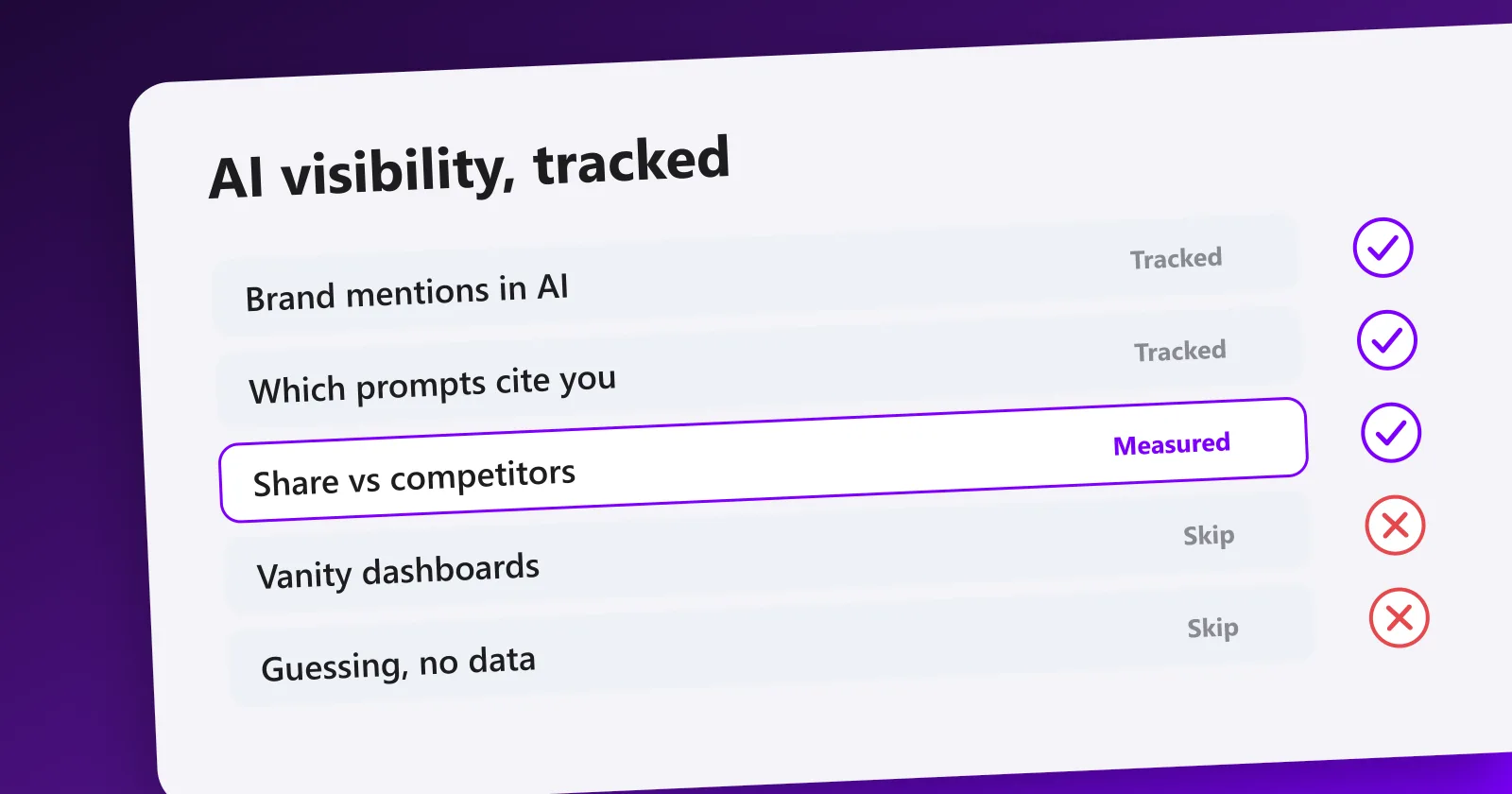
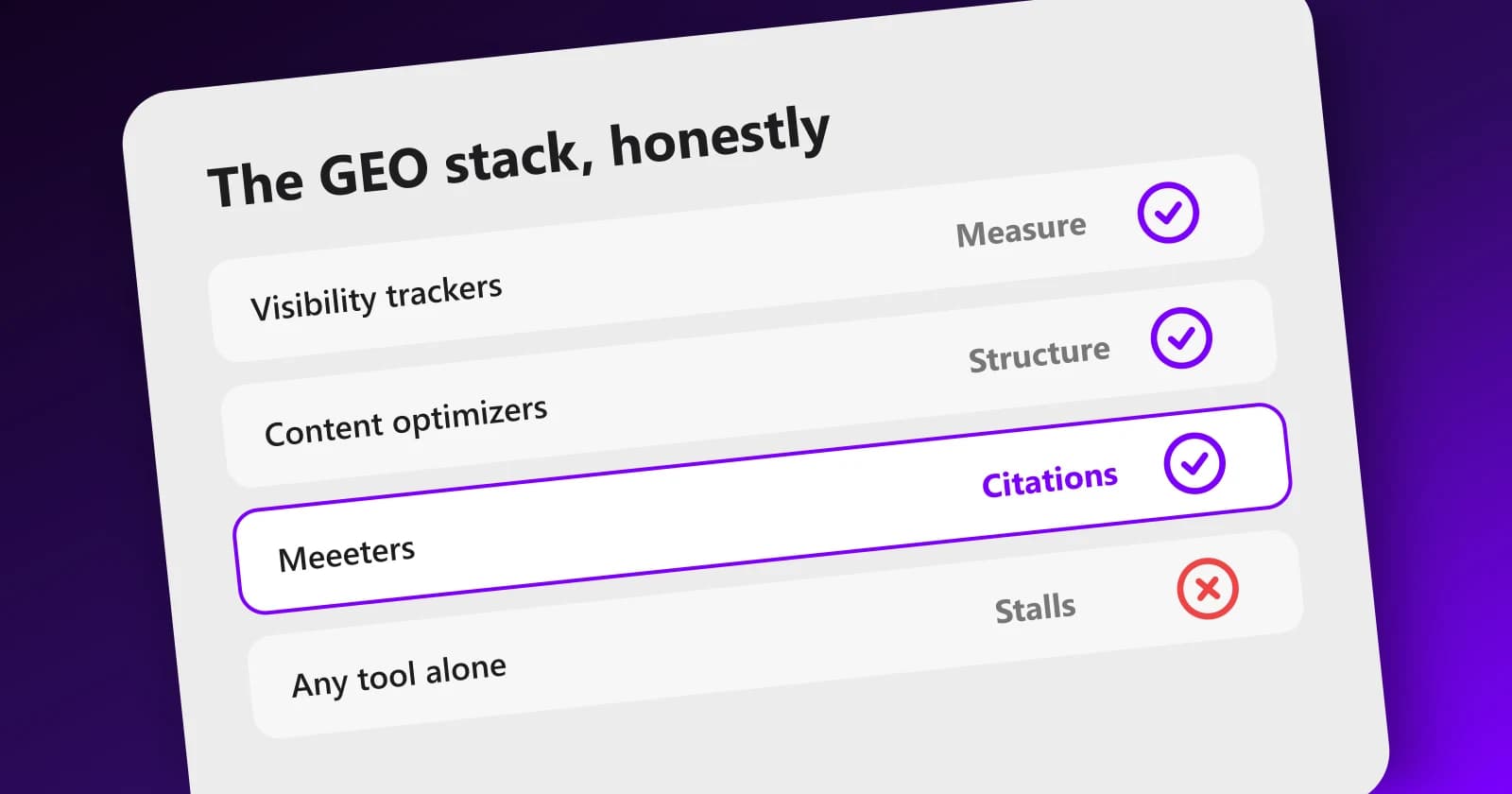
AI search visibility tools explained: what they actually measure across ChatGPT, Perplexity and AI Overviews, the metrics that matter, and how to turn tracking into more citations instead of just a dashboard.
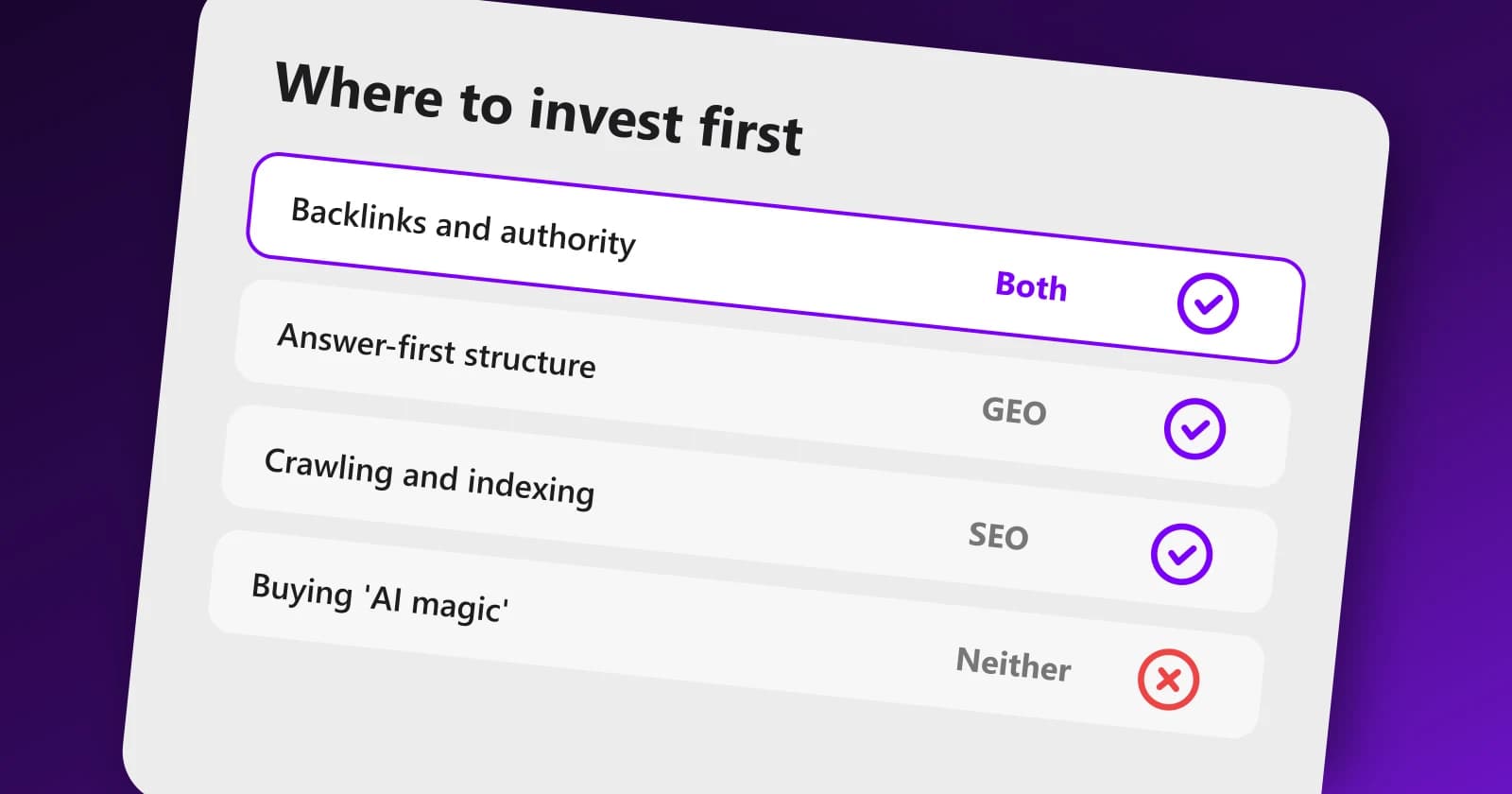
GEO vs SEO compared for site owners with a budget: what transfers 1:1, what is genuinely new work, what is hype, and where your next dollar earns AI citations.
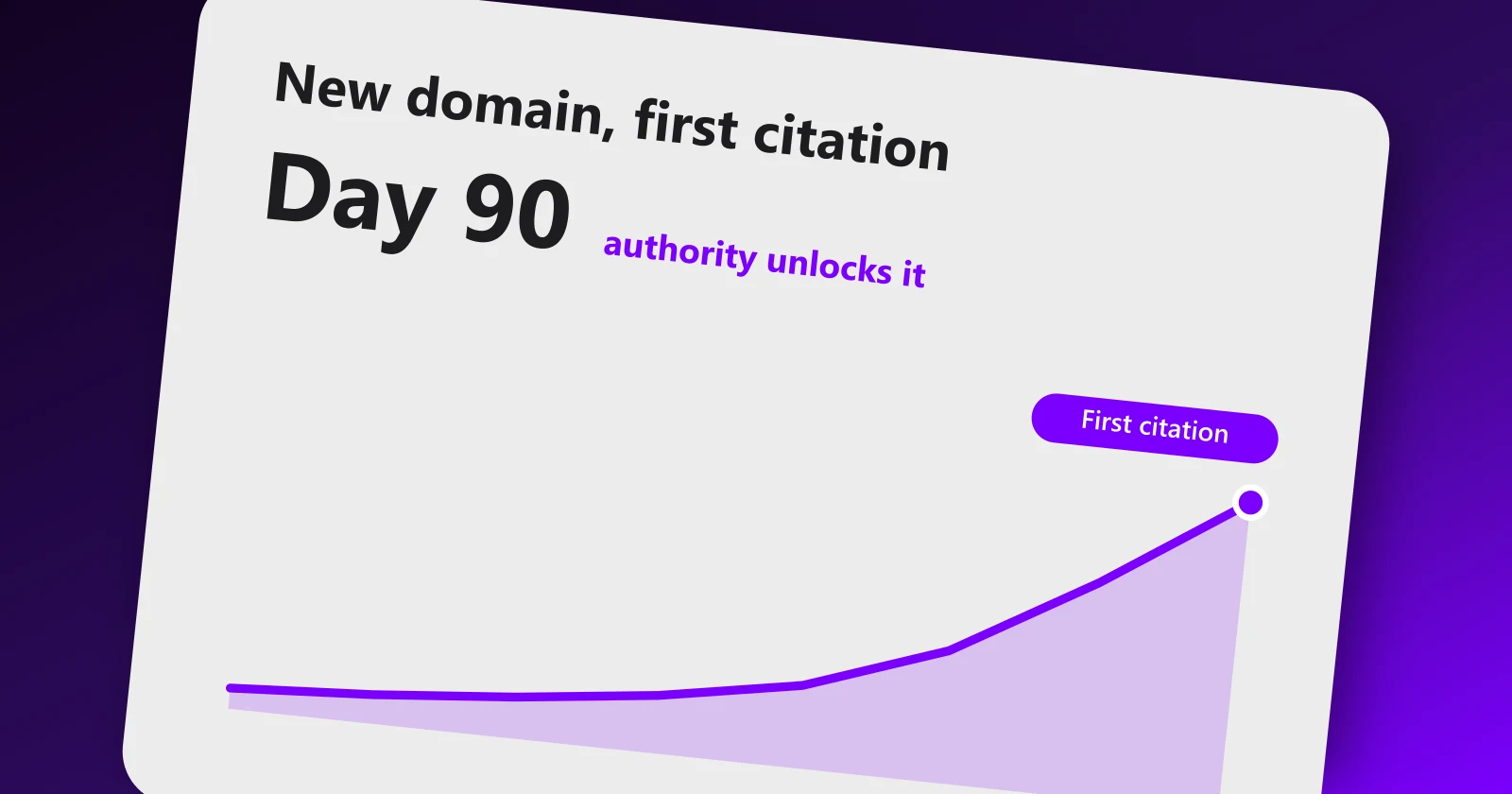
A 90-day GEO plan for new websites: indexation on Google and Bing, AI crawler access, answer-first content, and the authority that gates AI citations.
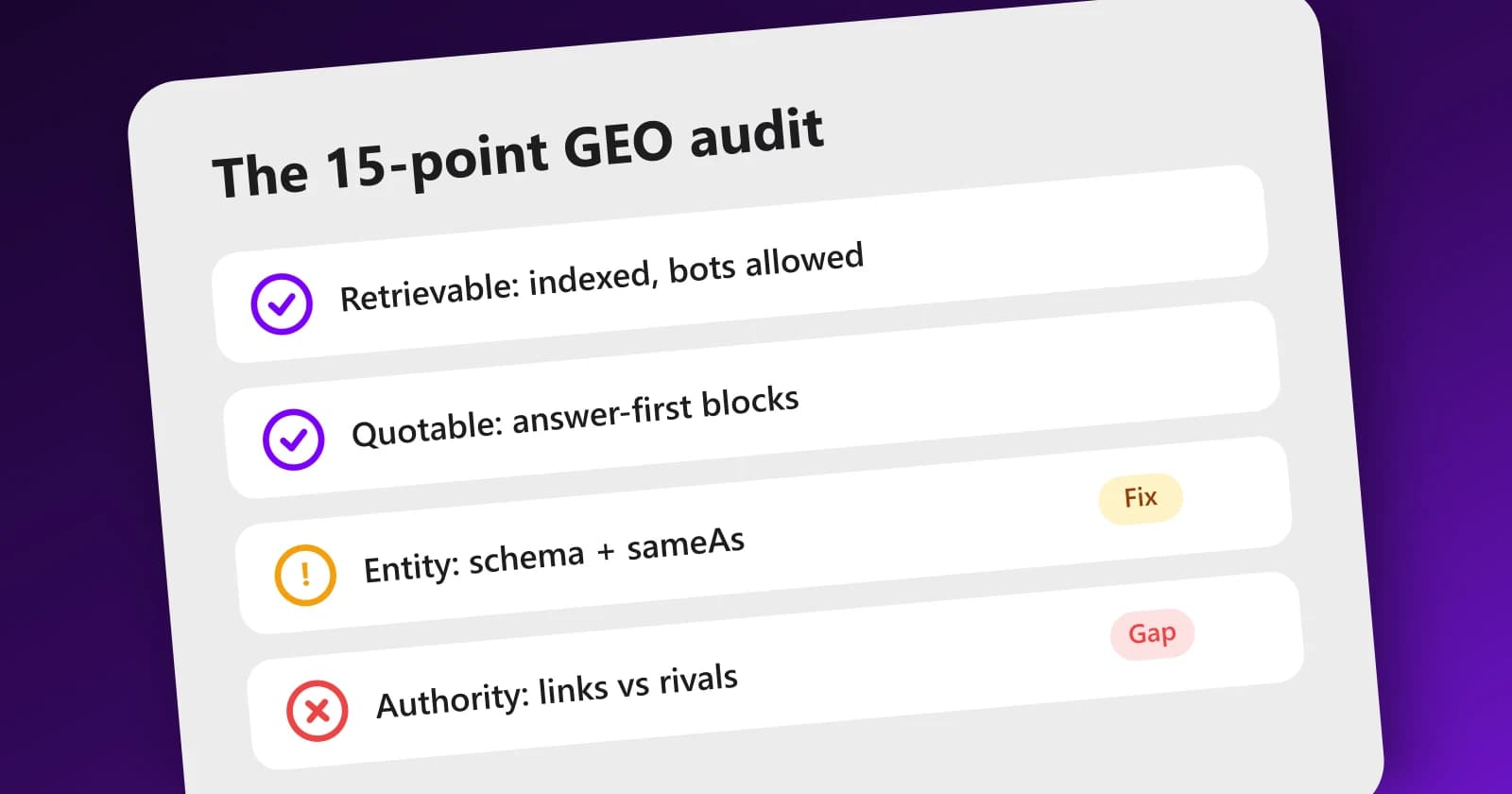
A 15-point GEO audit checklist in 4 blocks: retrievability, quotability, entity, authority. Each check comes with exactly how to run it, no tools required.
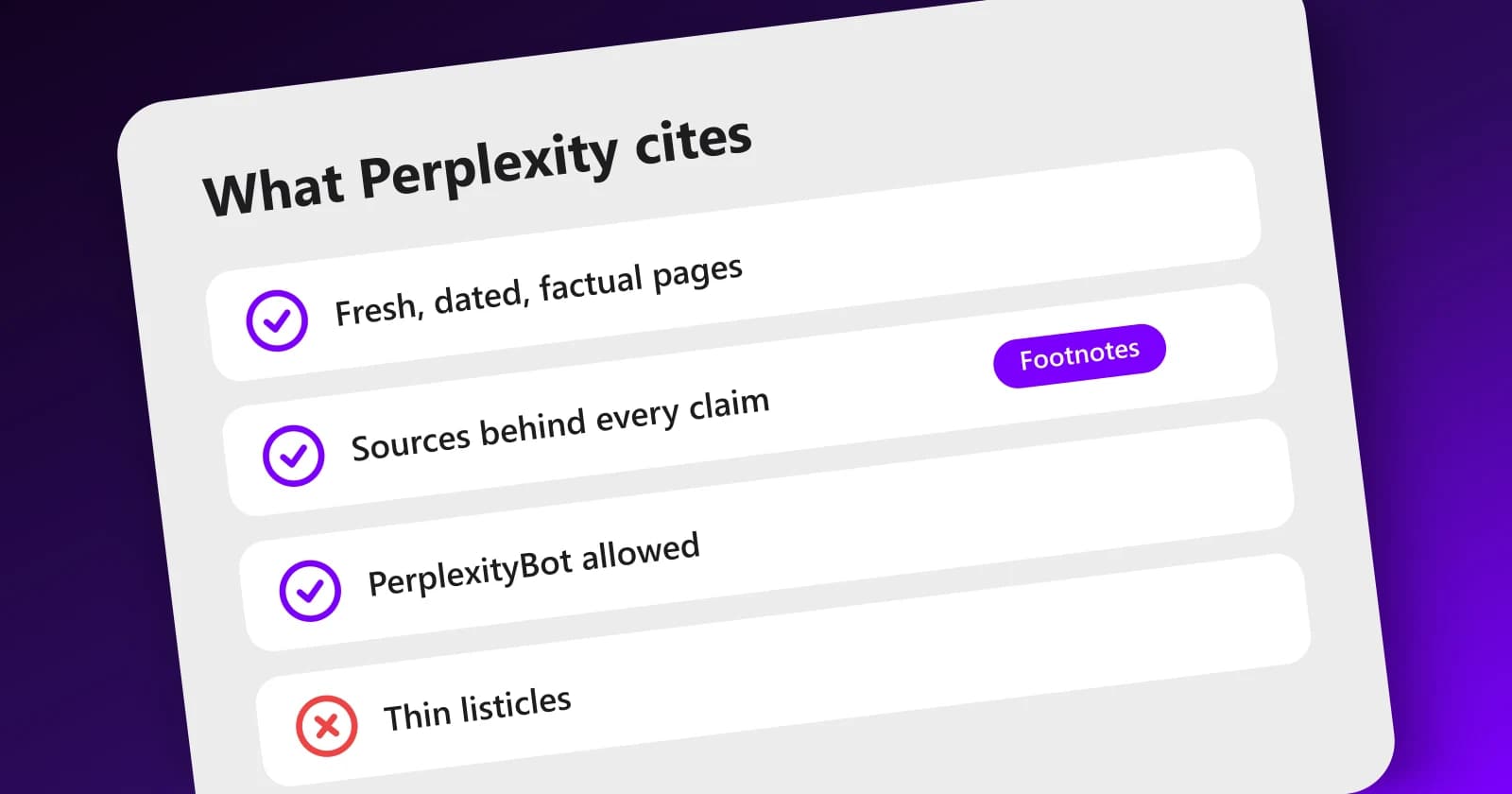
Perplexity cites sources for every claim it makes. A practical Perplexity SEO playbook: crawler access, fresh factual content, answer-first structure and community presence.
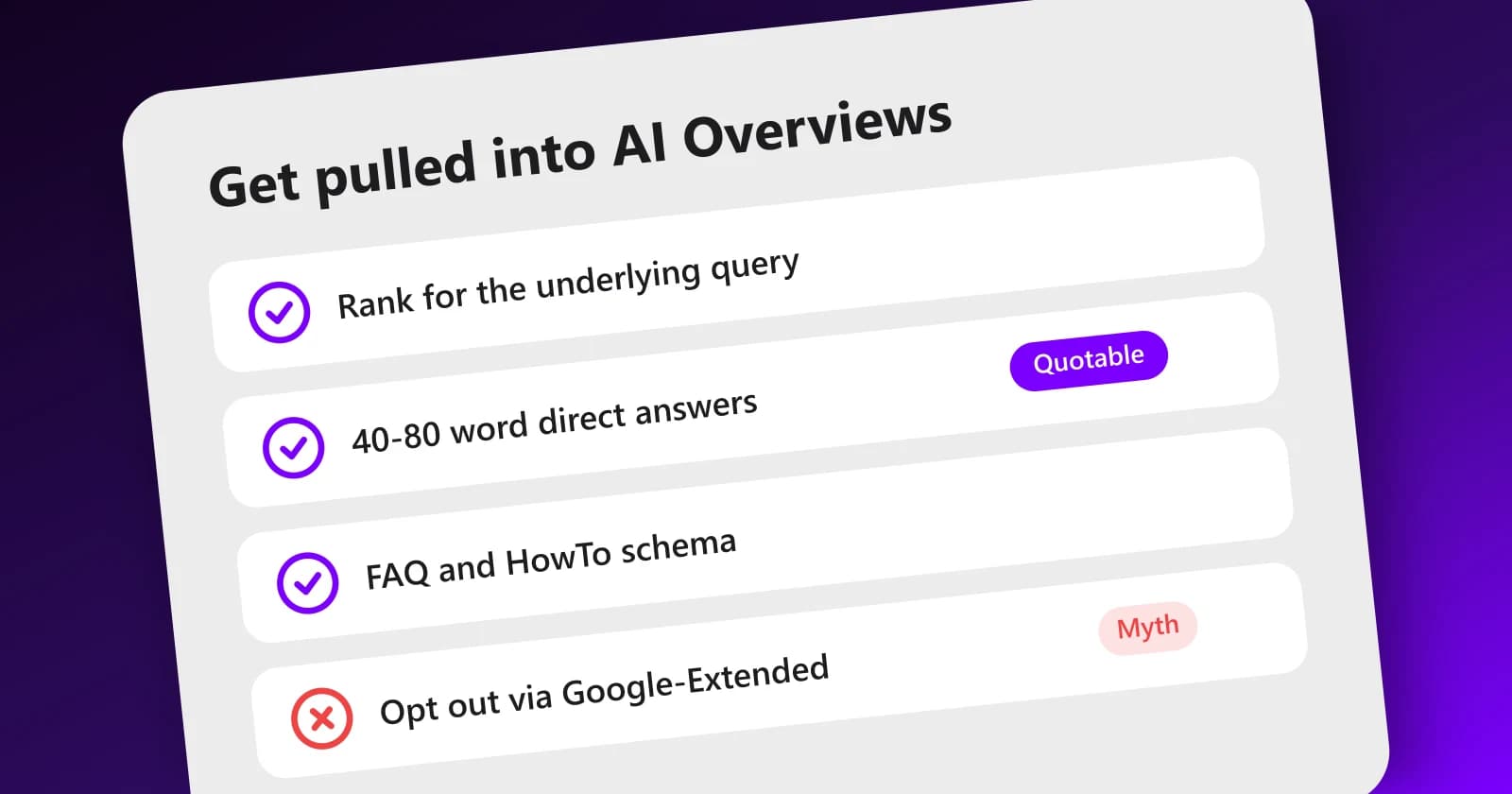
How to show up in Google AI Overviews: win the underlying query, write extractable answer passages, add schema, and monitor the CTR patterns that reveal impact.
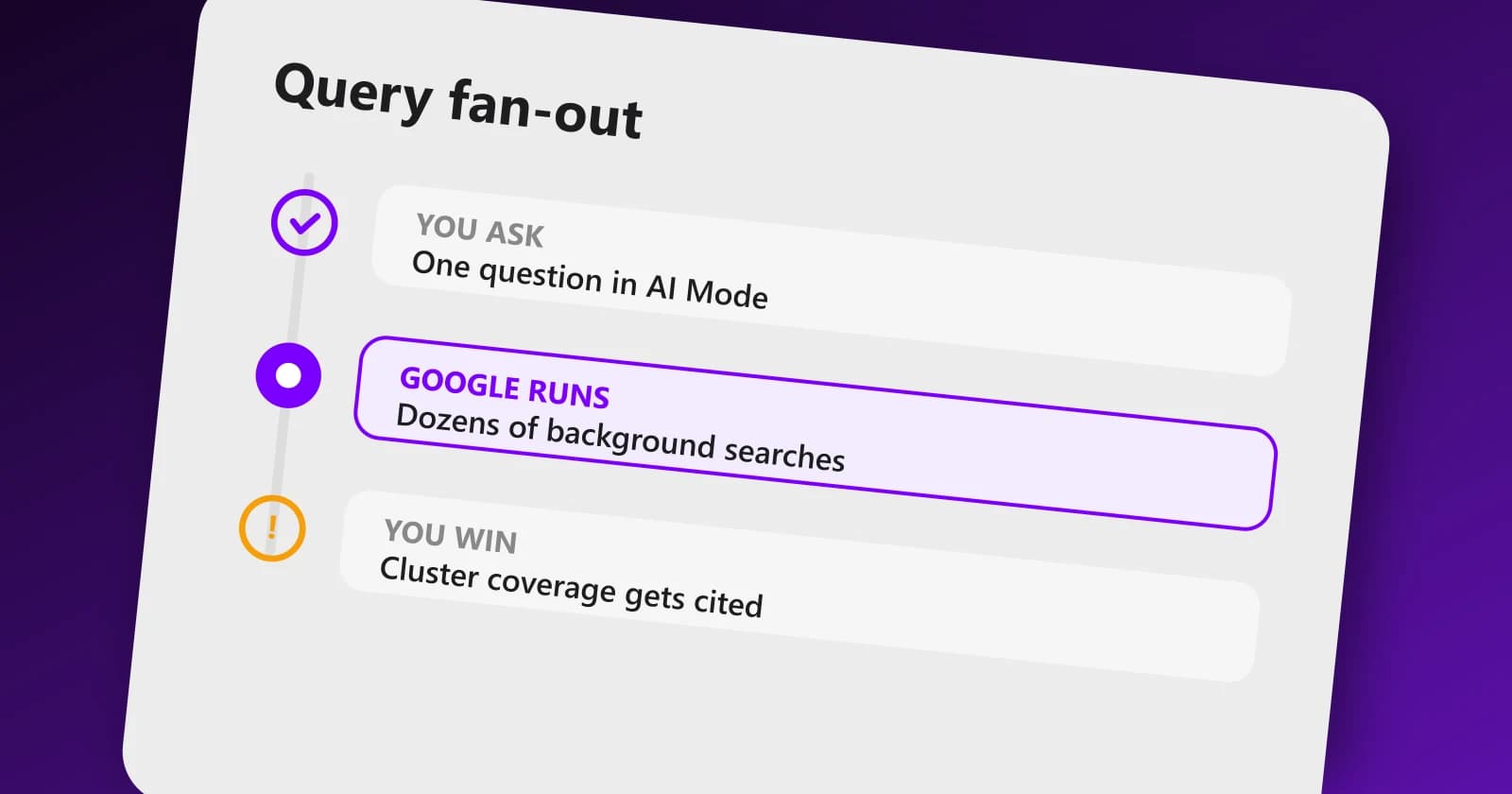
Google AI Mode SEO explained: how query fan-out works, why topic clusters beat single pages, how AI Mode differs from AI Overviews, and what to optimize first.
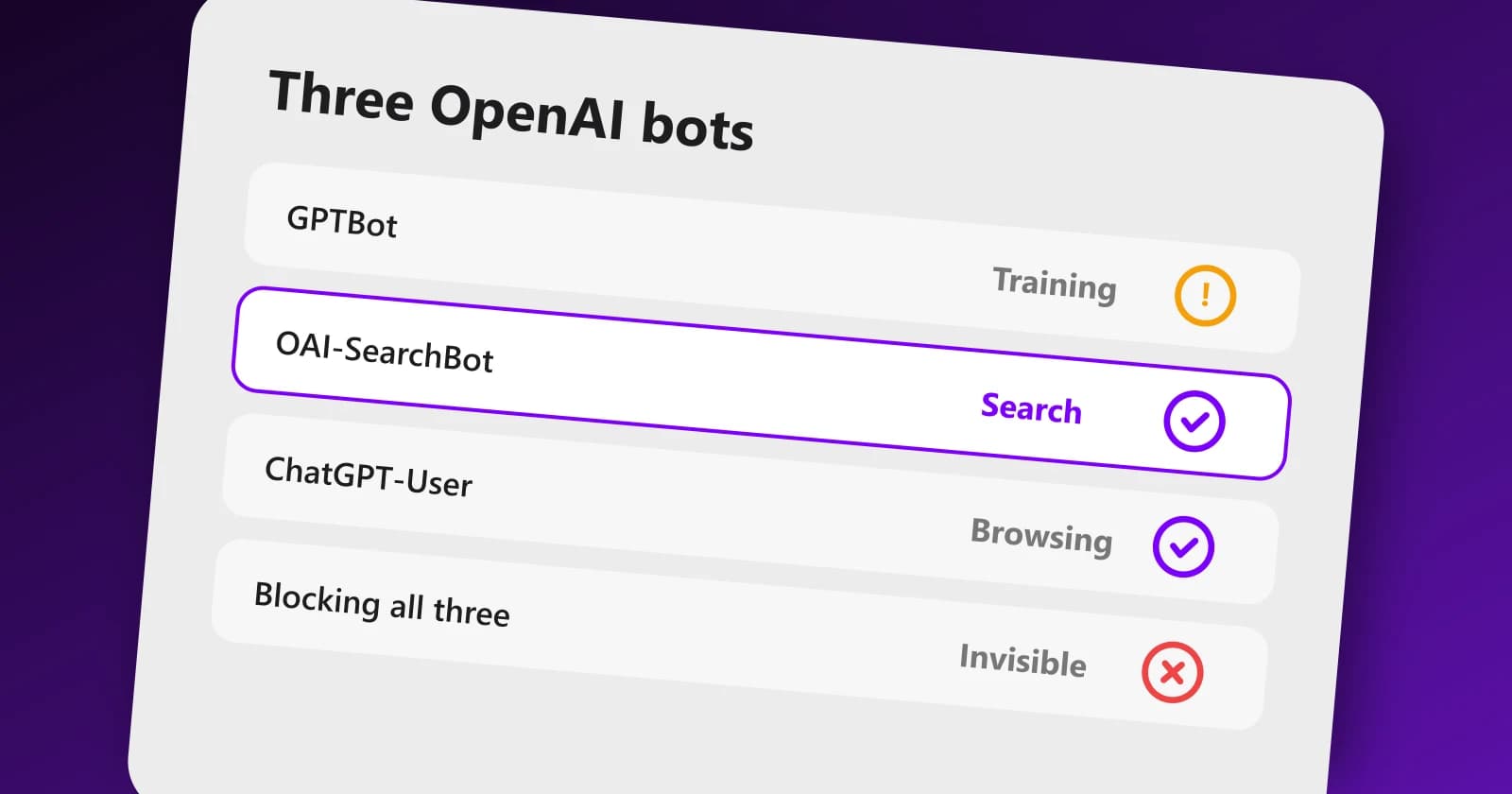
How to show up in ChatGPT search: allow the right OpenAI crawlers, win Bing rankings, keep your brand description consistent, and measure the chatgpt.com referrals.
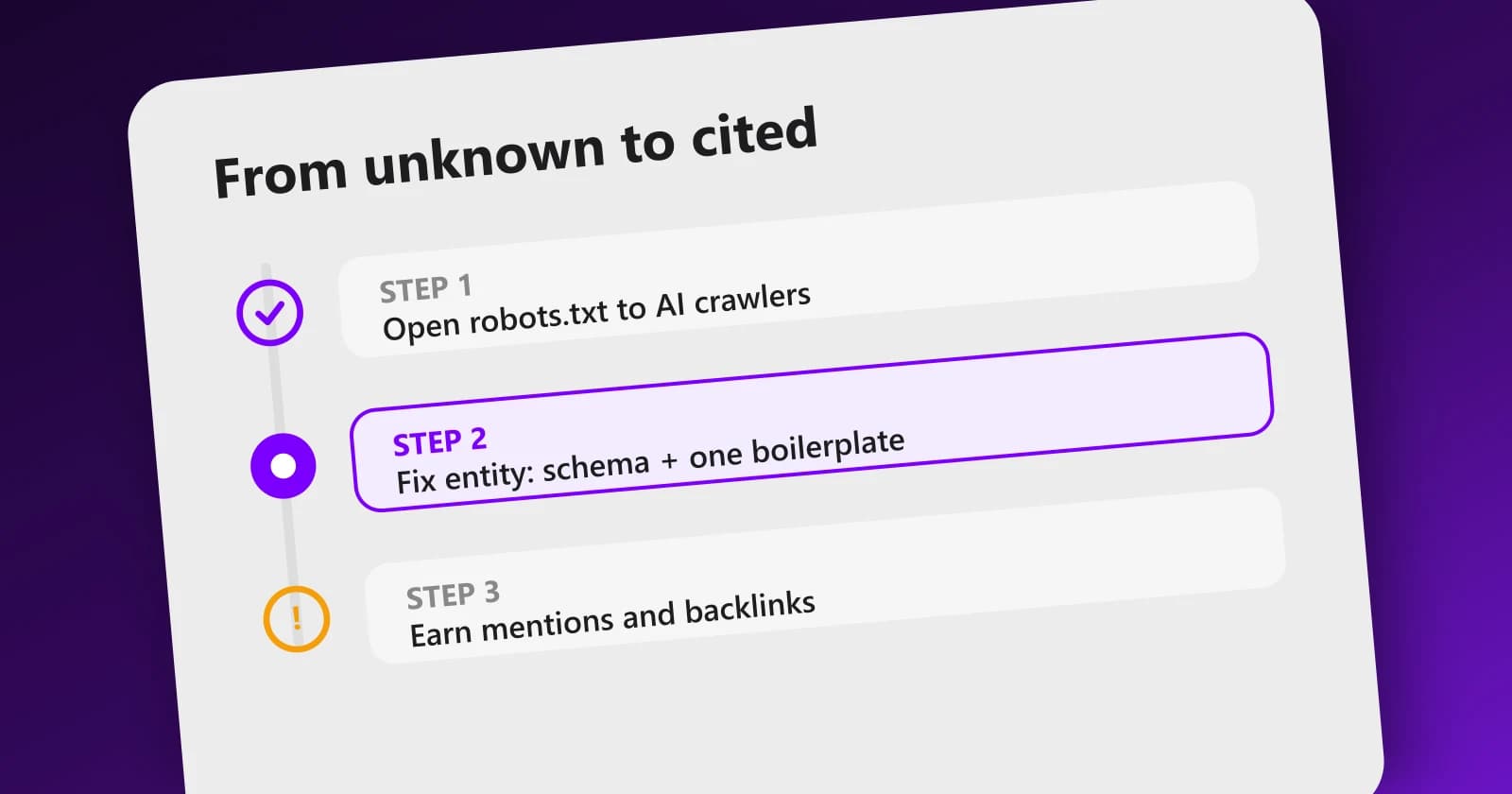
ChatGPT doesn't know your company? The 5 usual causes: thin mentions, blocked crawlers, weak entity signals, missing authority, an entrenched default answer. With a test and a fix for each.
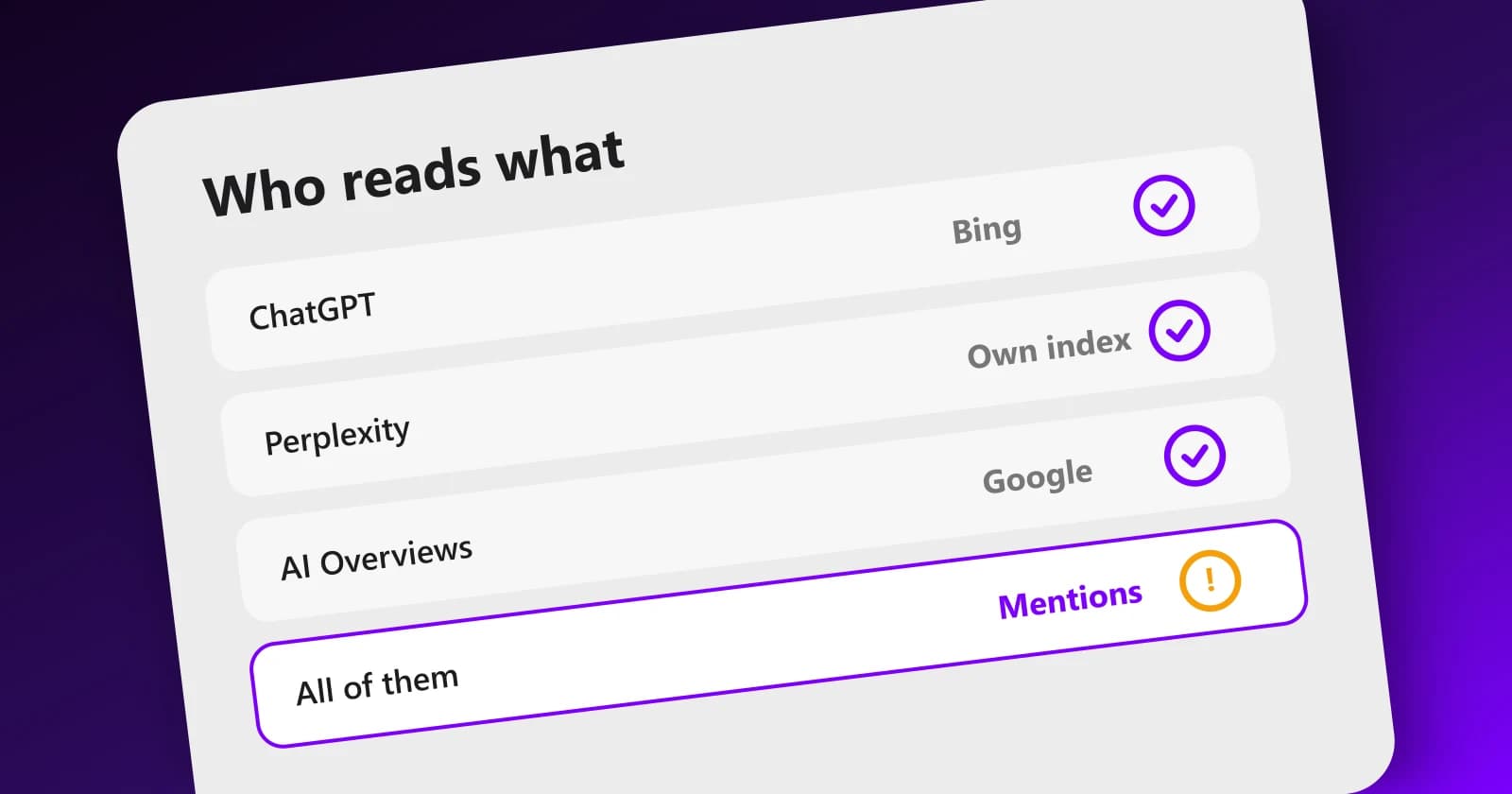
Where AI assistants get information: training data vs live retrieval, which index each engine reads (Bing, Google, PerplexityBot), and how to be included.
Generative engine optimization (GEO) explained: what it means, where the term came from, how it differs from SEO and AEO, and the levers that earn AI citations.
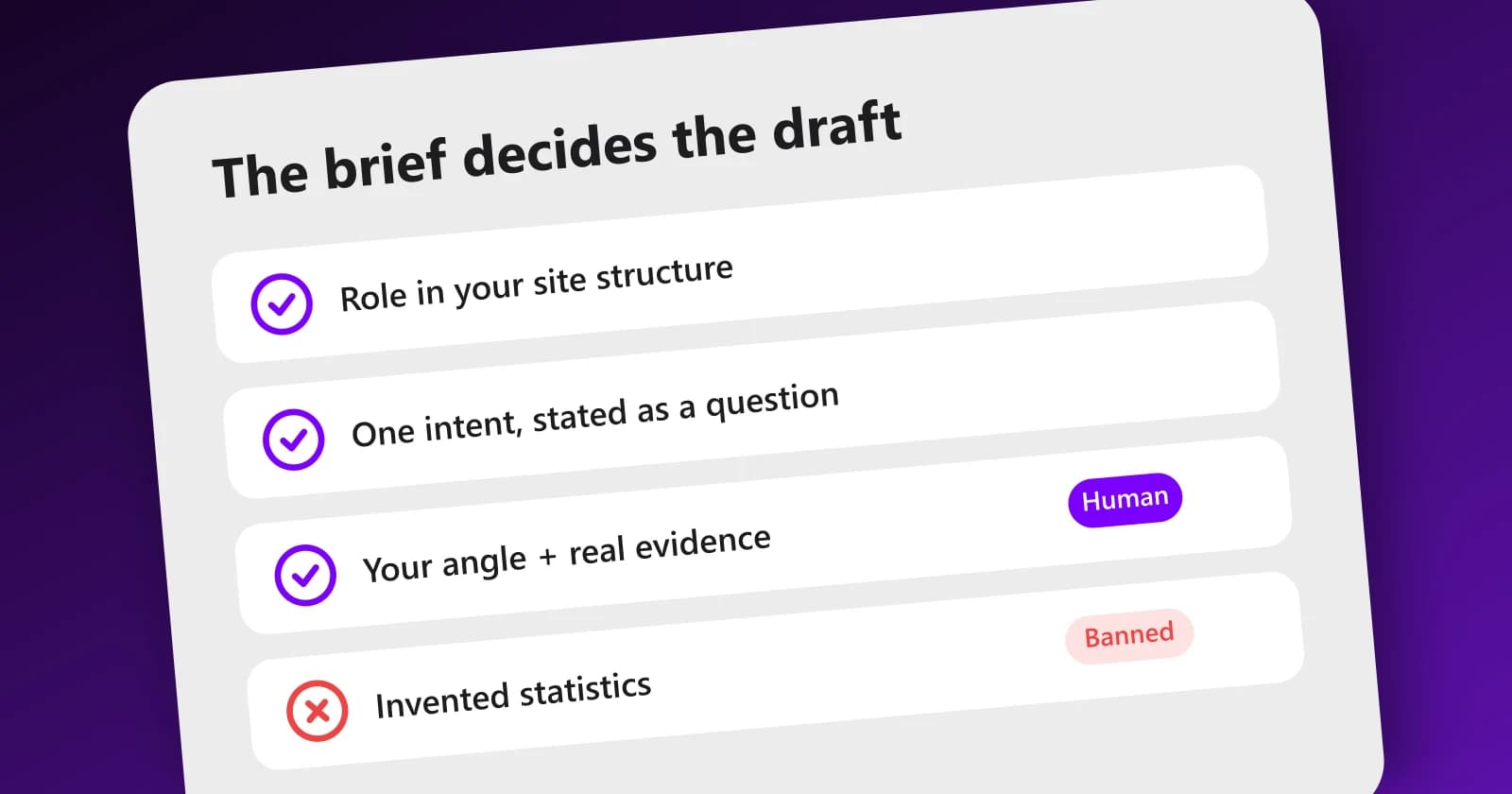
Generic AI drafts come from generic prompts. The six elements of a content brief that produces specific, rankable drafts: role in structure, intent, angle, evidence, internal links and hard rules.
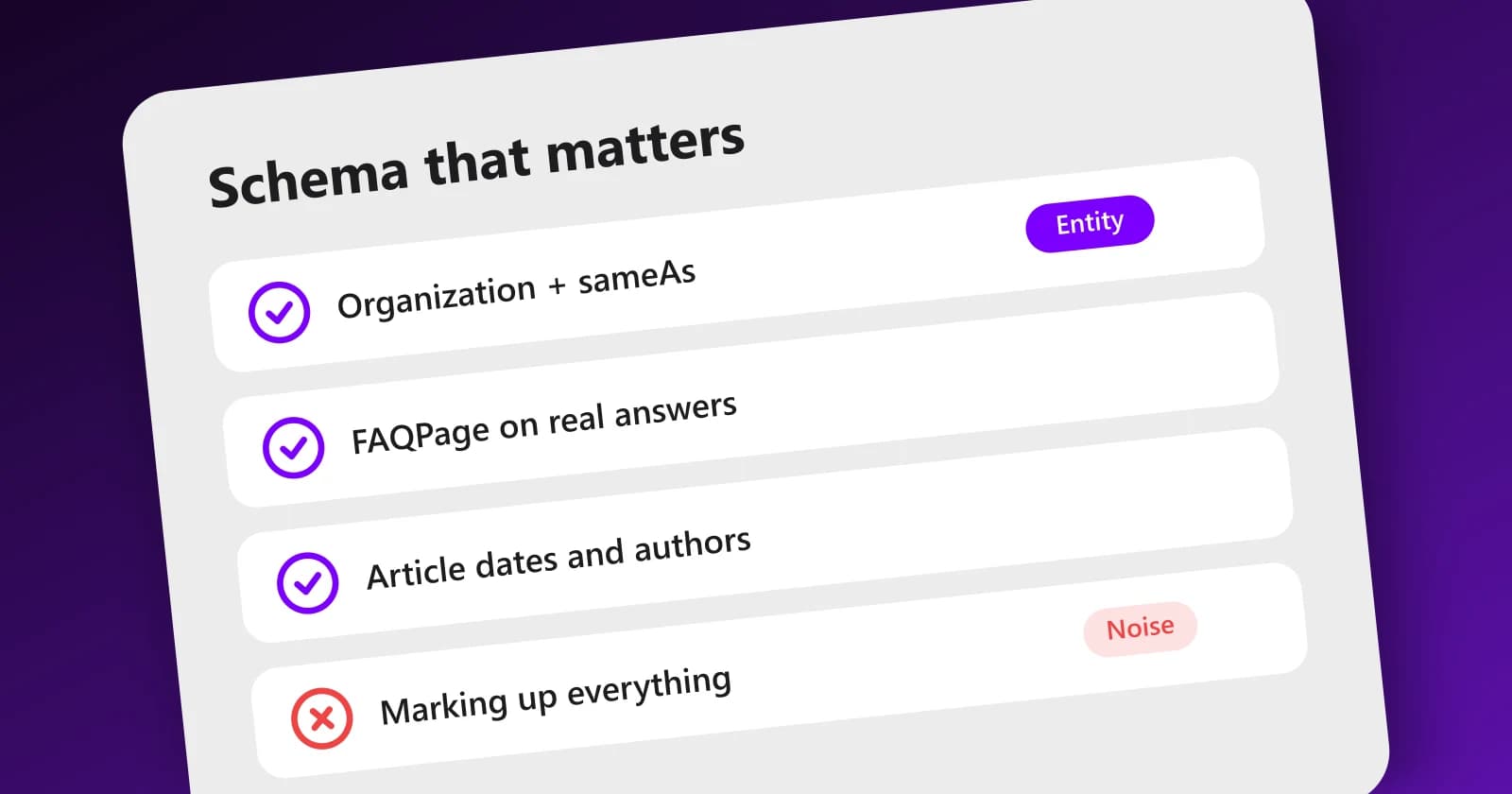
Which schema.org types actually help AI search visibility: Organization, Article, FAQPage, Product and HowTo, how the mechanism really works, and what to skip.
Scaled content abuse is Google's spam policy against mass-produced pages made to manipulate rankings. What triggers it, what the March 2024 enforcement showed, and the volume rules that keep you safe.
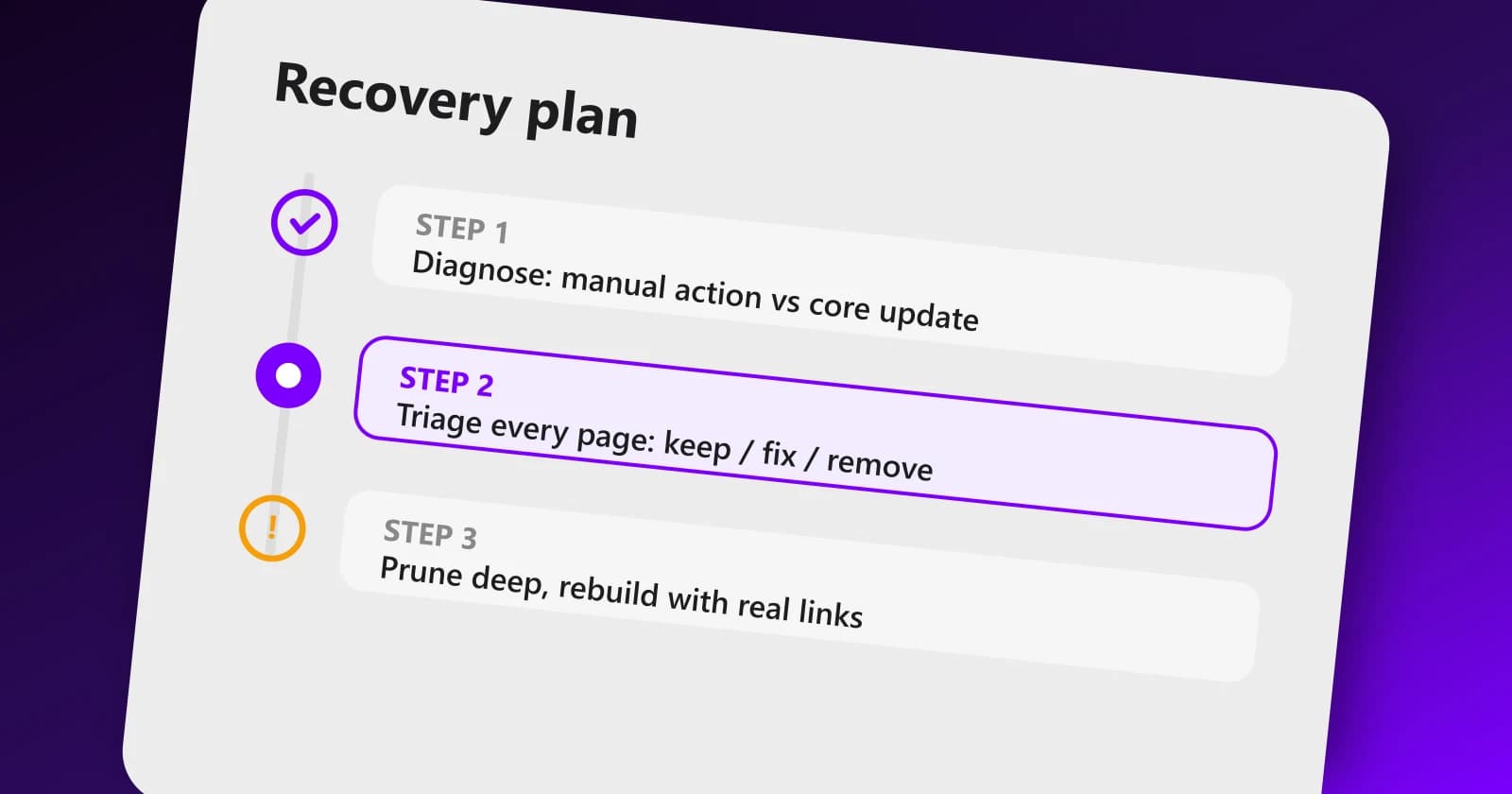
Traffic collapsed after mass-publishing AI content? How to tell a manual action from algorithmic suppression, triage your page inventory, prune, and rebuild the quality signals, with realistic timelines.
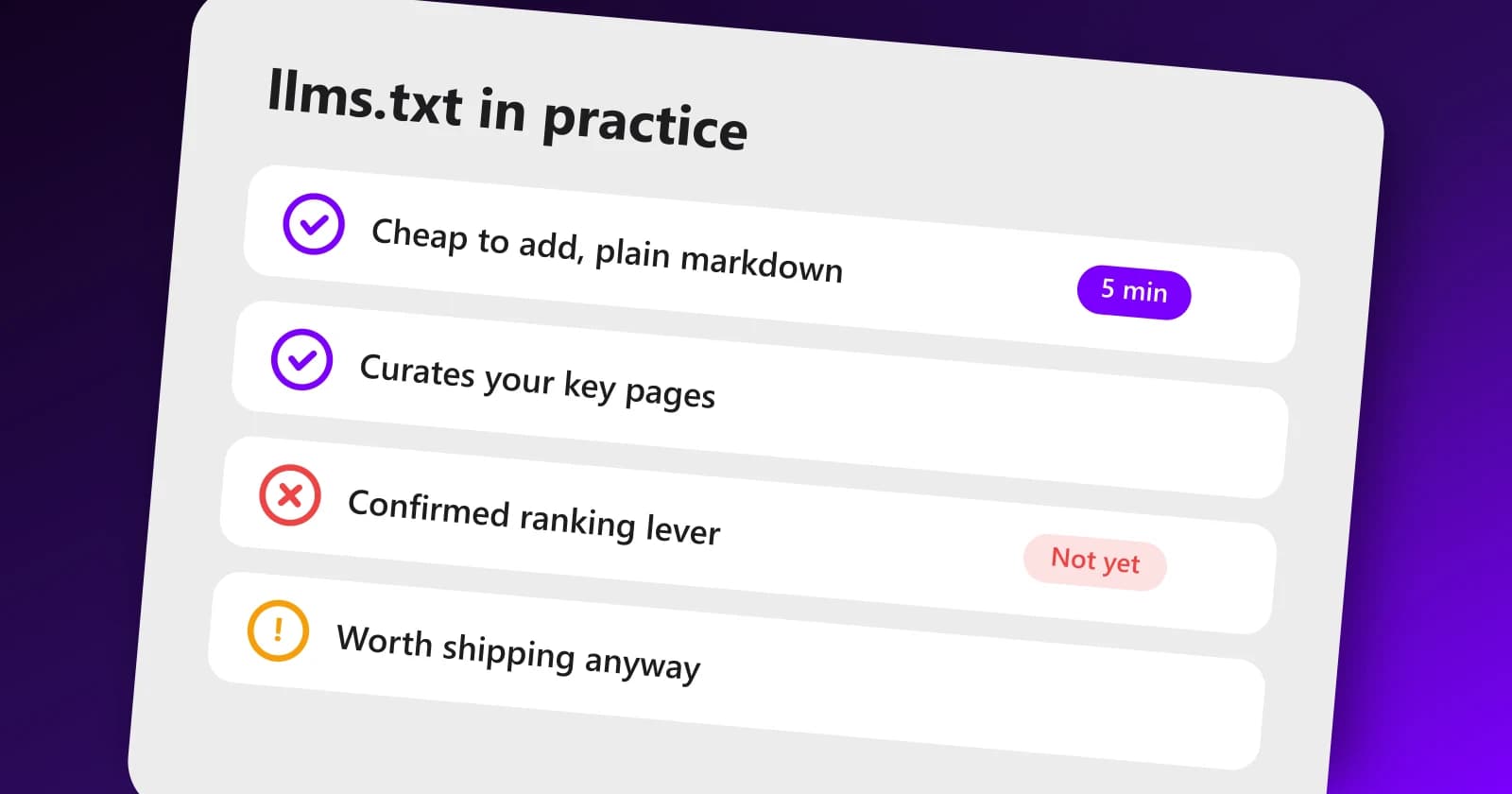
What llms.txt is, the exact format with a real example, how it differs from robots.txt and sitemap.xml, and an honest look at whether AI engines use it.
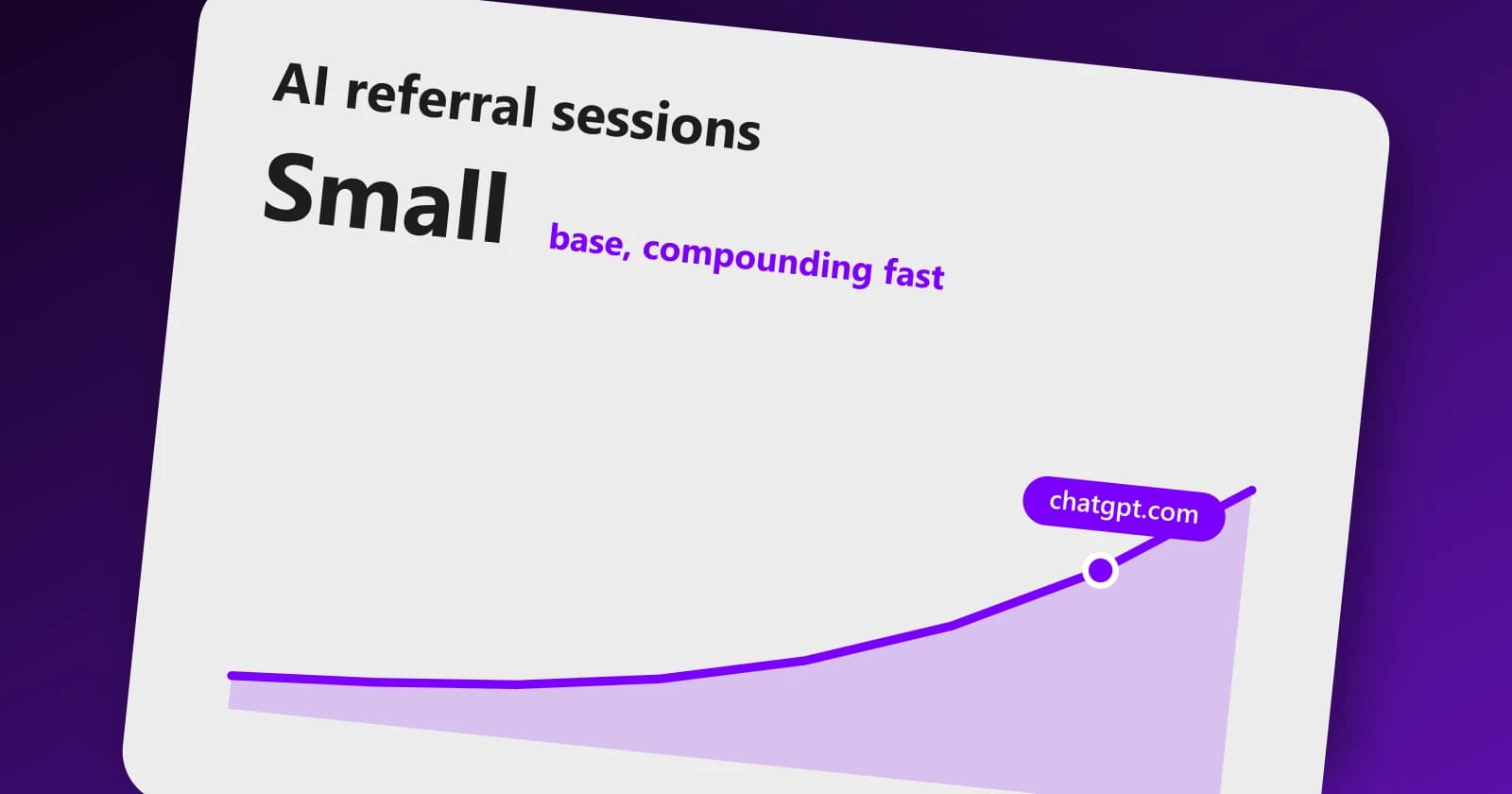
How to track AI search traffic: the GA4 regex and channel group setup for ChatGPT and Perplexity referrals, why AI Overviews are invisible, and bot log detection.
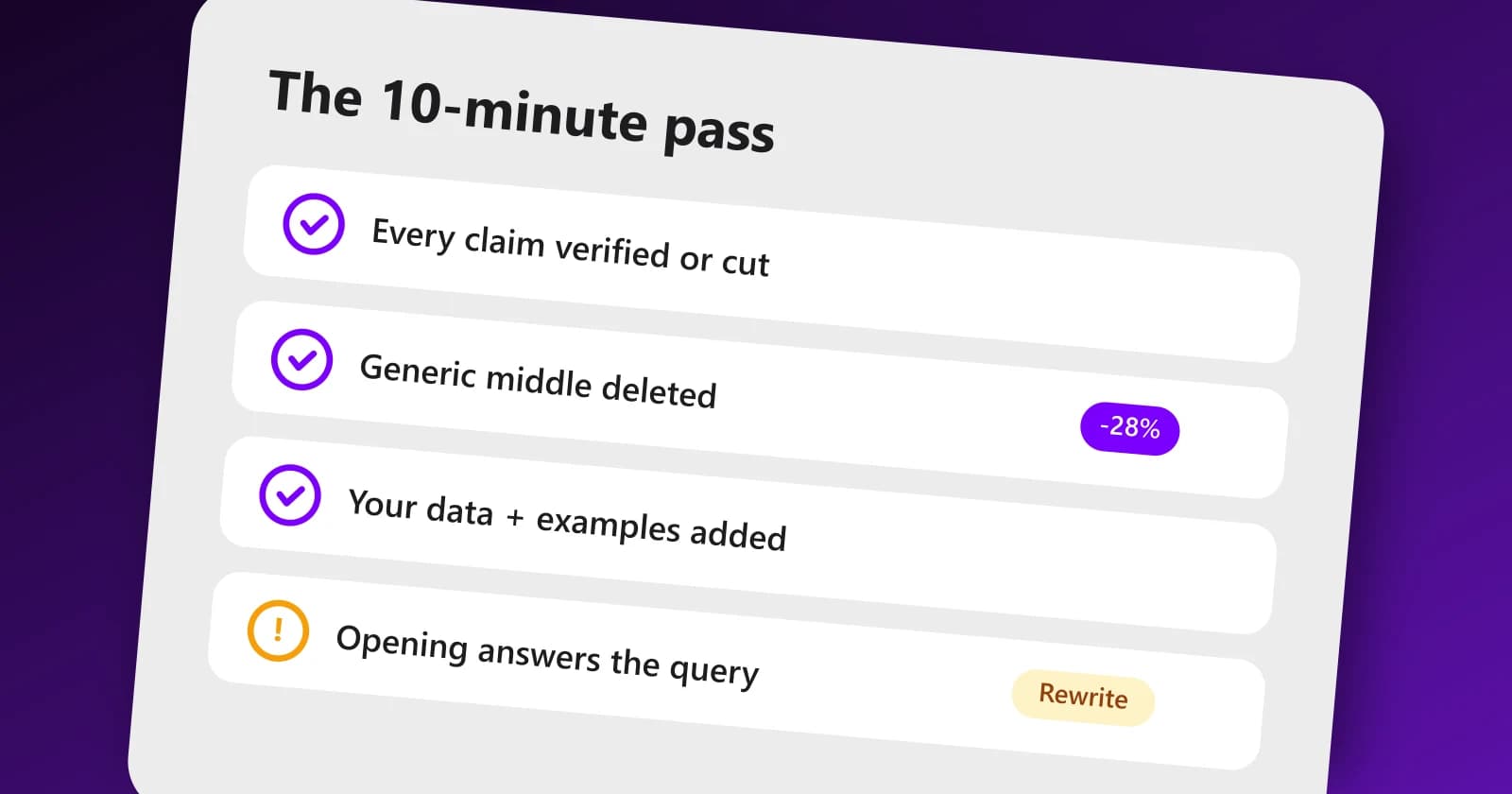
A practical editing pass for AI-generated drafts: verify facts, cut the generic middle, inject what only you know, fix internal links and tighten the opening. Ten minutes per page, in this order.
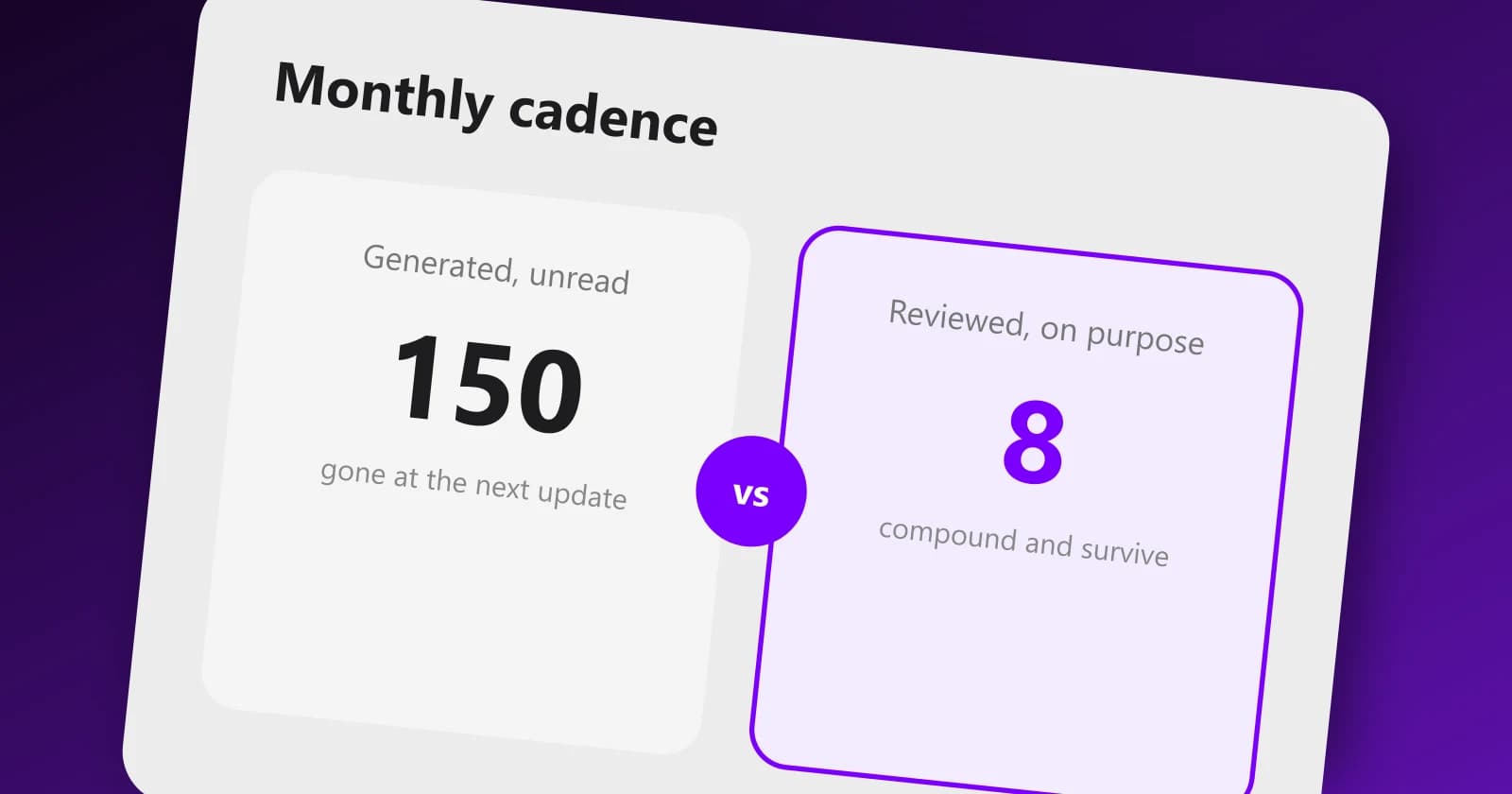
The right publishing cadence is set by your review capacity and your authority, not by a content tool's output. Why 8 shaped pages beat 150 unread ones, with the math per site stage.
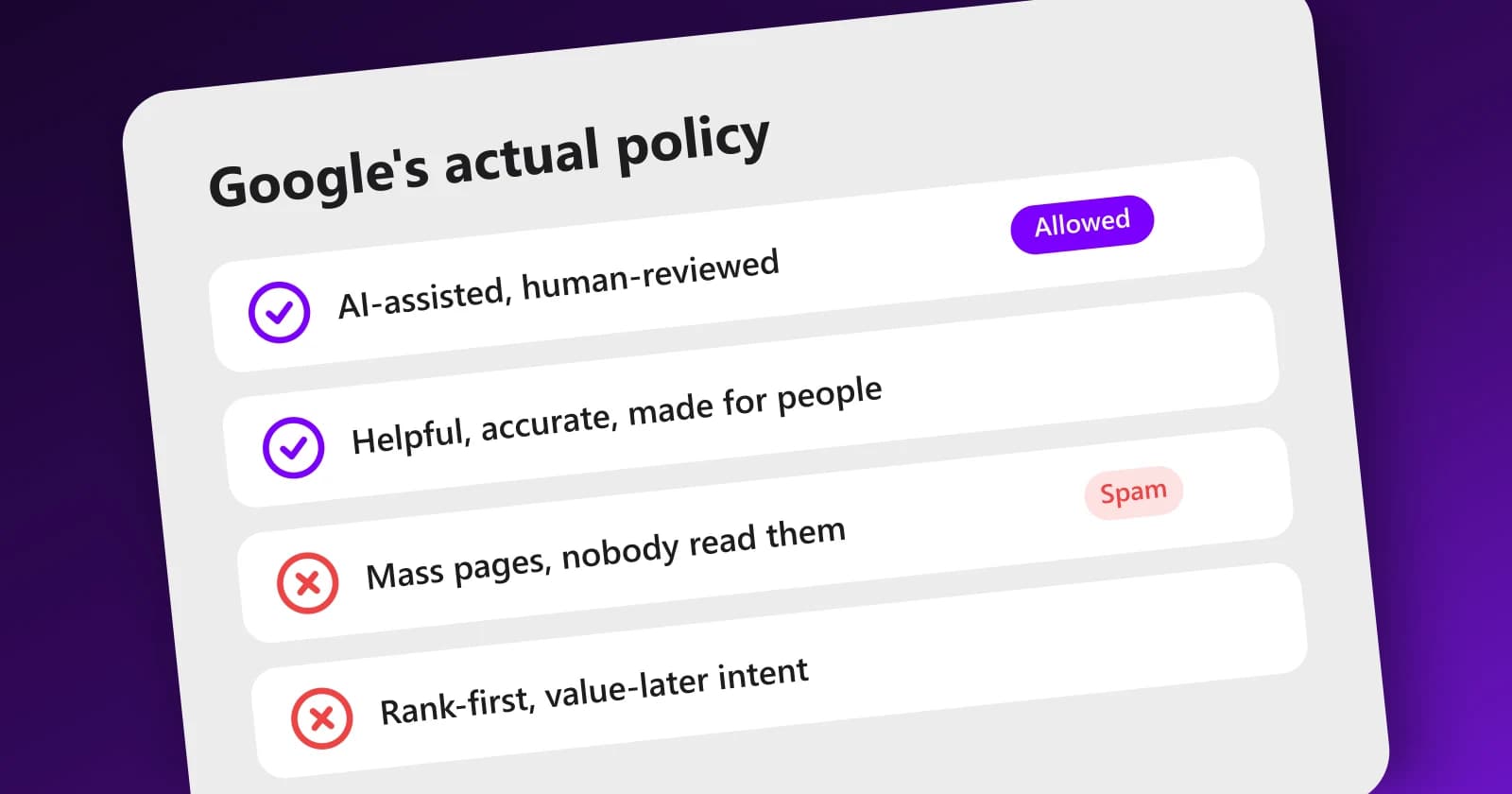
No, AI content is not against Google's guidelines. What Google forbids is scaled content abuse. Here is the actual policy, where the line sits, and how to stay on the right side of it.
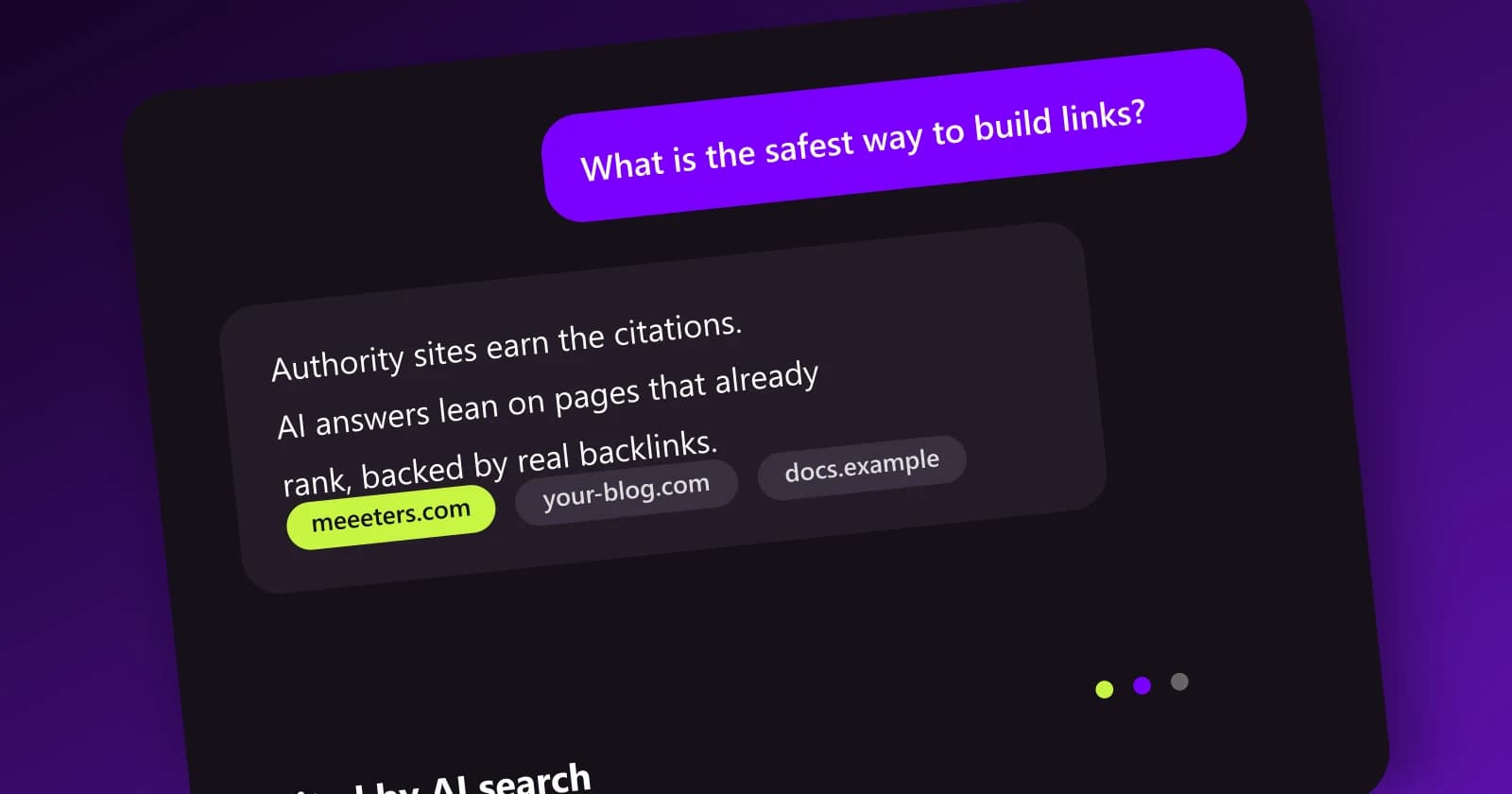
AI assistants recommend the brands that already win search: authority, structure and citations. A practical AEO playbook to become the answer, not a result.
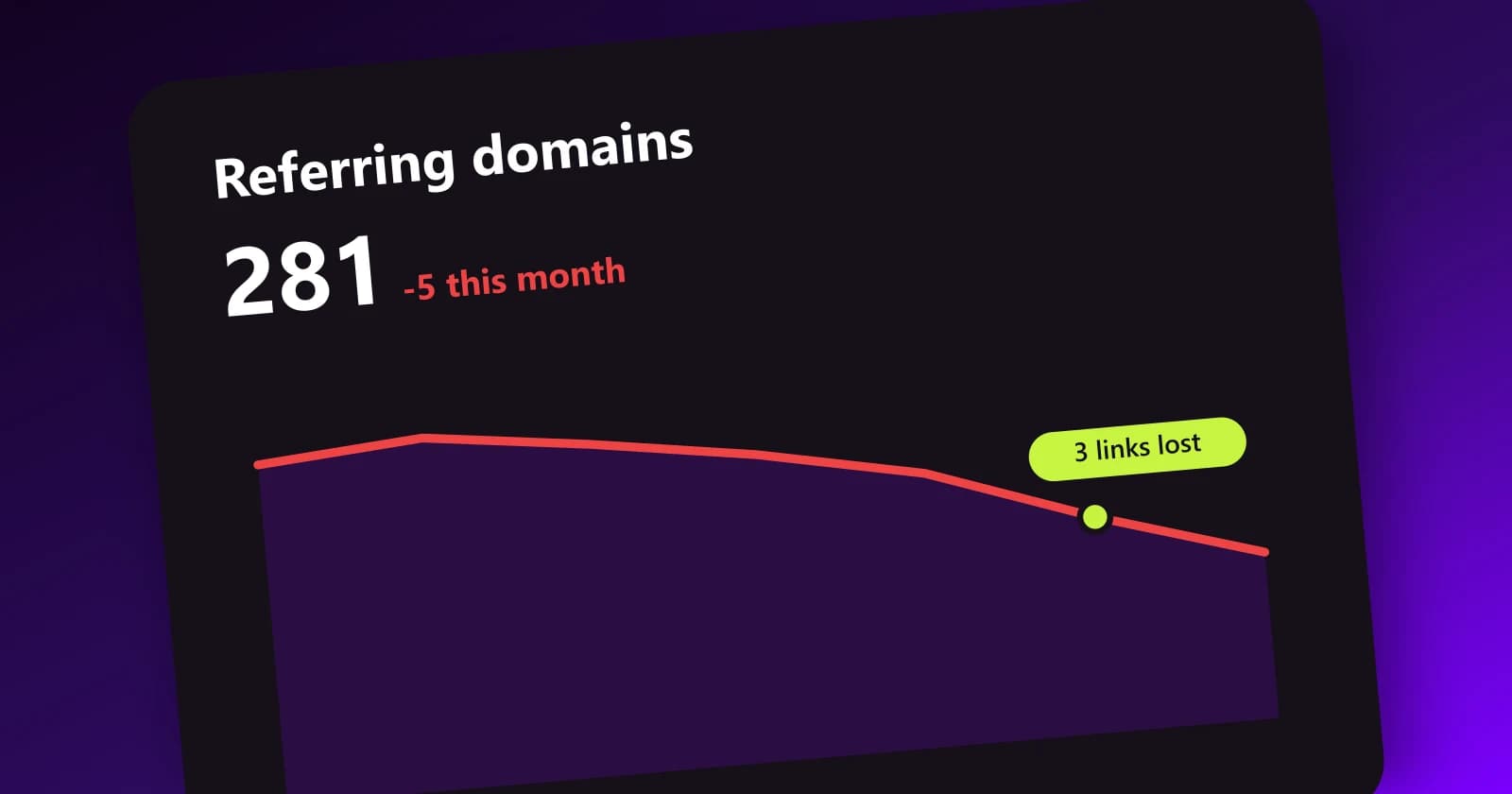
Sites lose 5-10% of their backlinks every year to deleted pages, redesigns and nofollow switches. How to detect lost links, reclaim them, stop the leak.
What E-E-A-T really is, how Google evaluates it, and the concrete on-site and off-site work that proves experience, expertise, authority and trust in 2026.
Unlinked brand mentions are the easiest backlinks you will earn. How to find them, the exact ask email, 20-40% conversion rates and ongoing monitoring.
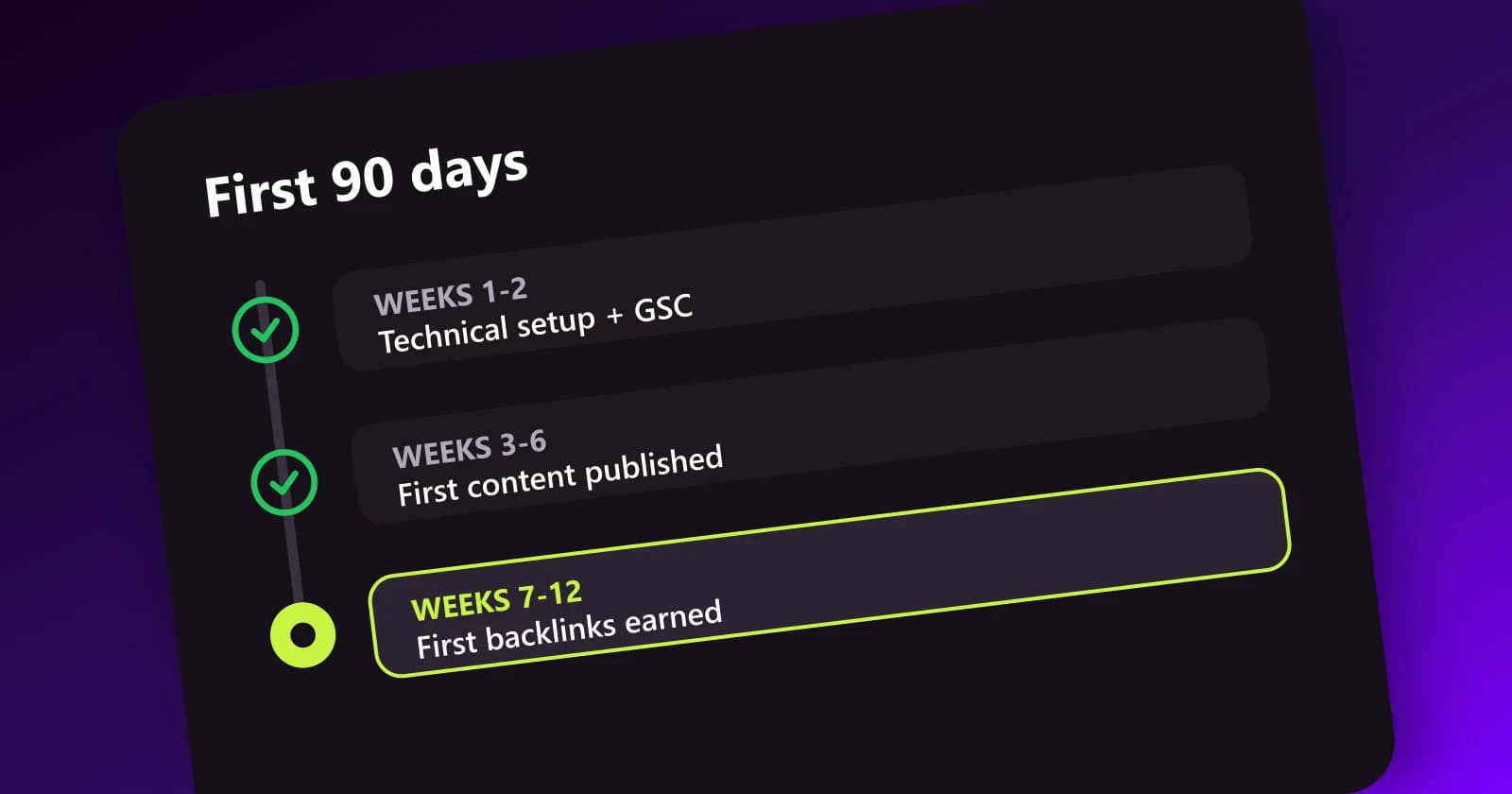
A realistic 90-day SEO roadmap for brand-new websites: technical setup, first content targeting winnable keywords, first backlinks, and honest timelines.
Resource page link building still works when done right. Search operators to find pages, how to qualify them, pitch emails, and real conversion benchmarks.
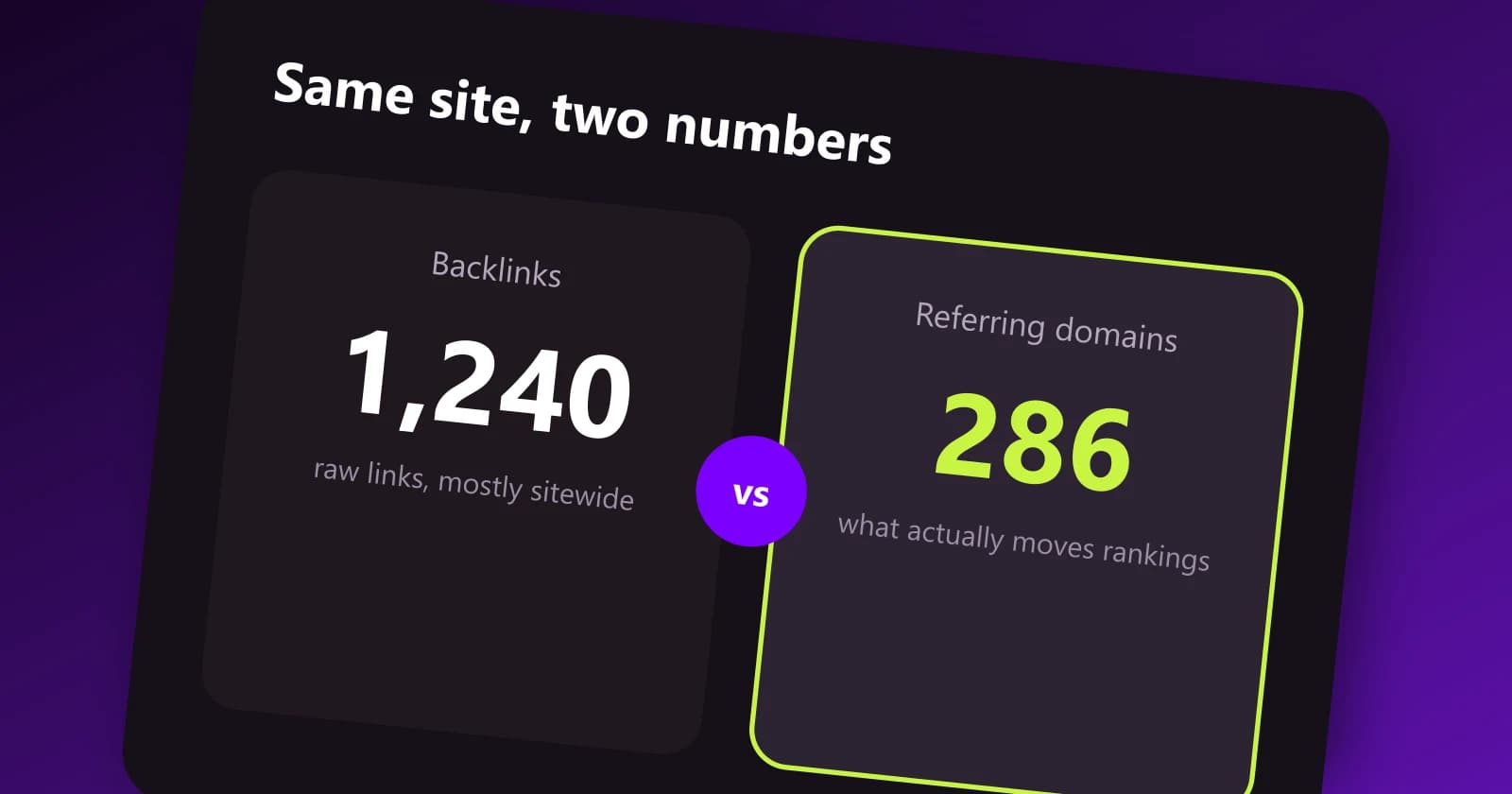
1,000 backlinks can equal one referring domain. Here is the difference, why domain diversity correlates with rankings, and which number you should grow.
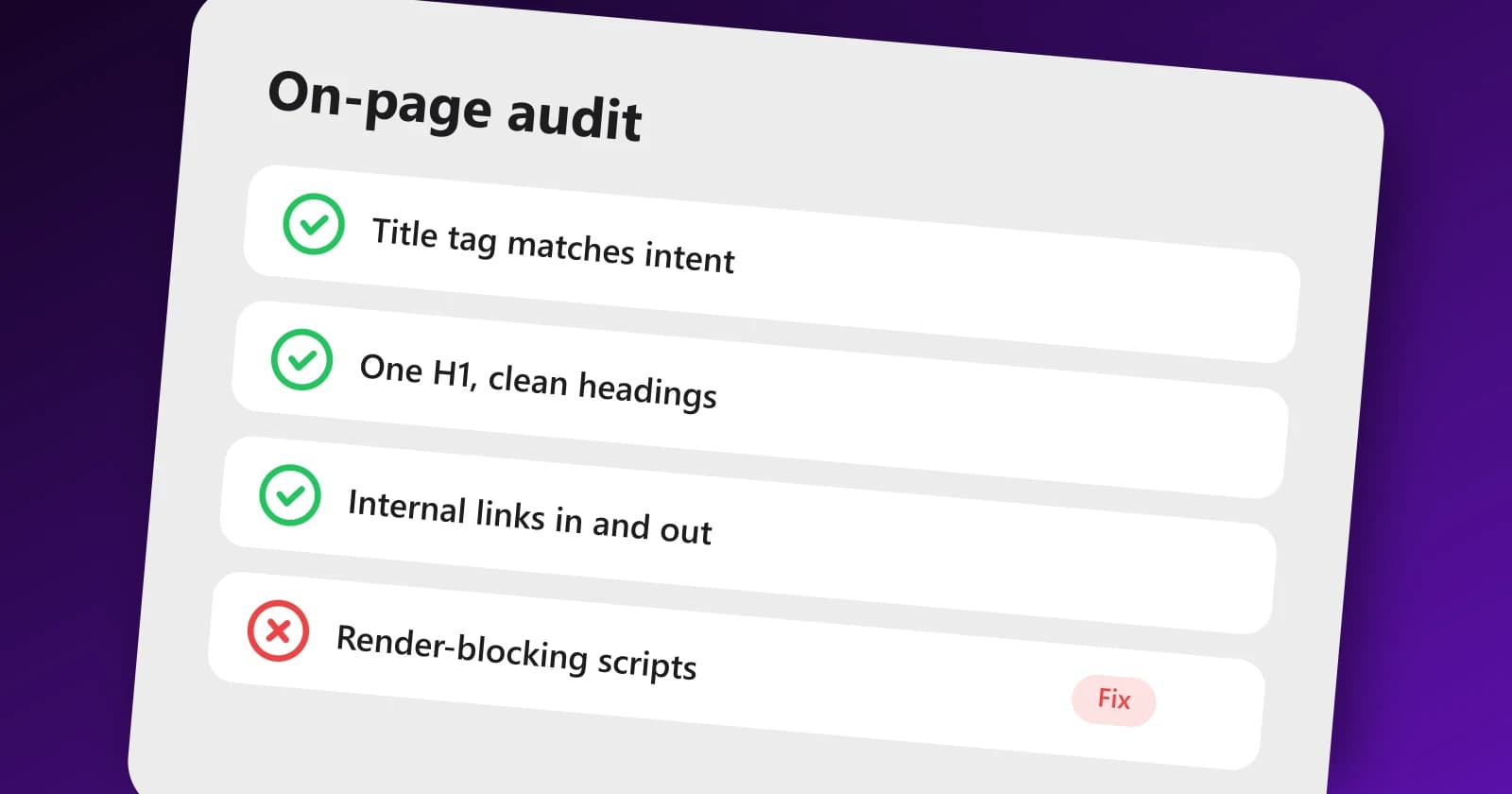
On-page SEO checklist covering titles, headings, intent, internal links, speed and schema. Fix these 15 items first - backlinks cannot rescue weak pages.
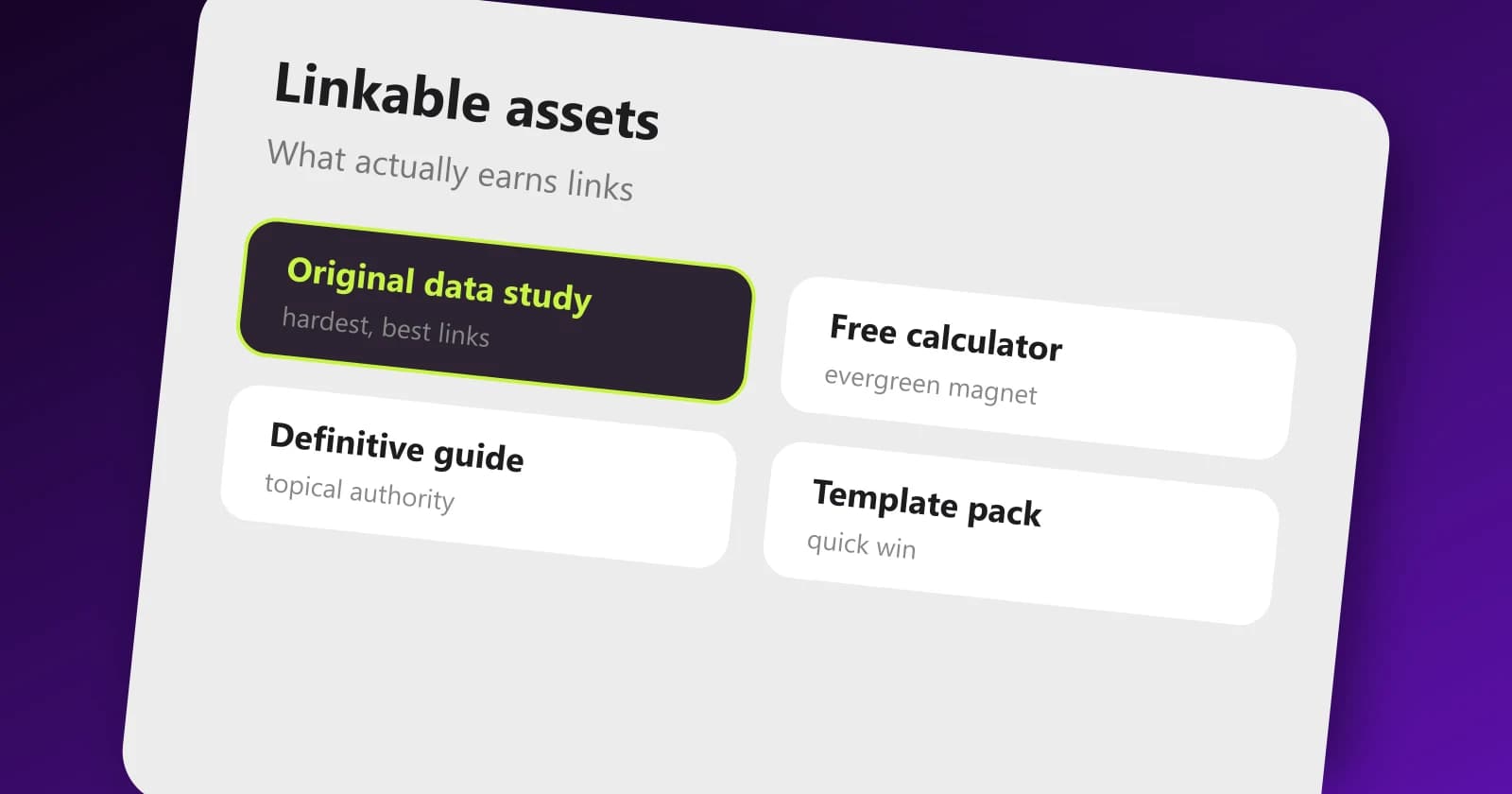
Nine linkable asset types that actually earn backlinks, with real examples, difficulty ratings and promotion tactics. How to choose one for your niche.
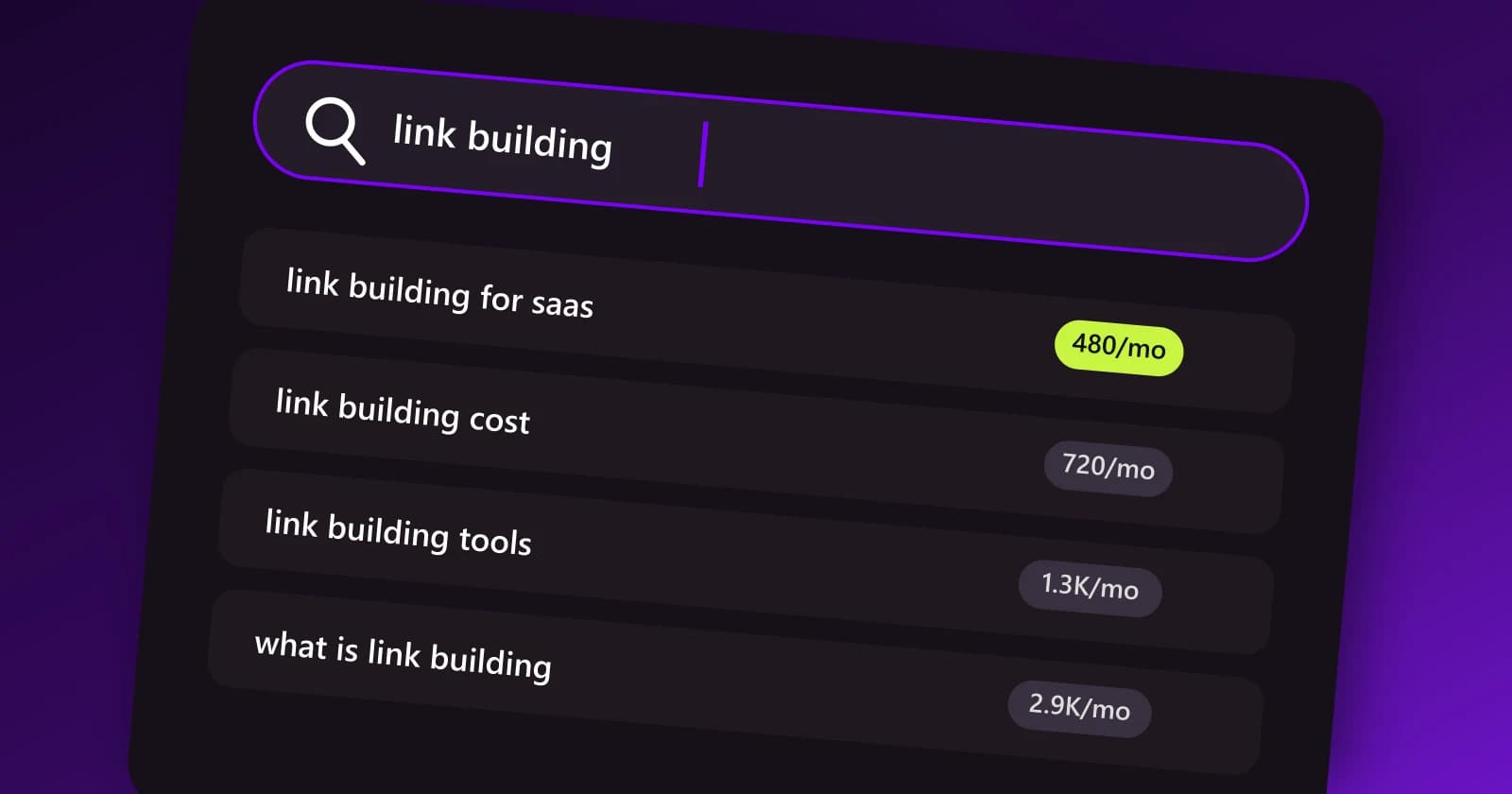
A complete keyword research method using free sources: Google autocomplete, People Also Ask, Search Console mining, SERP-based difficulty checks and more.
Internal links decide where your backlink authority flows. How to structure internal linking with hubs, anchors and depth rules, plus mistakes to avoid.
A step-by-step playbook to refresh decaying content: find losing pages in Search Console, run the refresh checklist, then update, rewrite or delete.
How AI search engines pick their sources and how to become one. Retrieval, citations, answer-first writing, schema, llms.txt and why backlinks gate it all.
A practical framework for measuring link building: leading and lagging KPIs, cost per link by method, attribution lag, and vanity metrics to ignore.
Google ignores most spam links automatically, and careless disavows destroy good links. The two cases where disavowing makes sense, plus the file format.
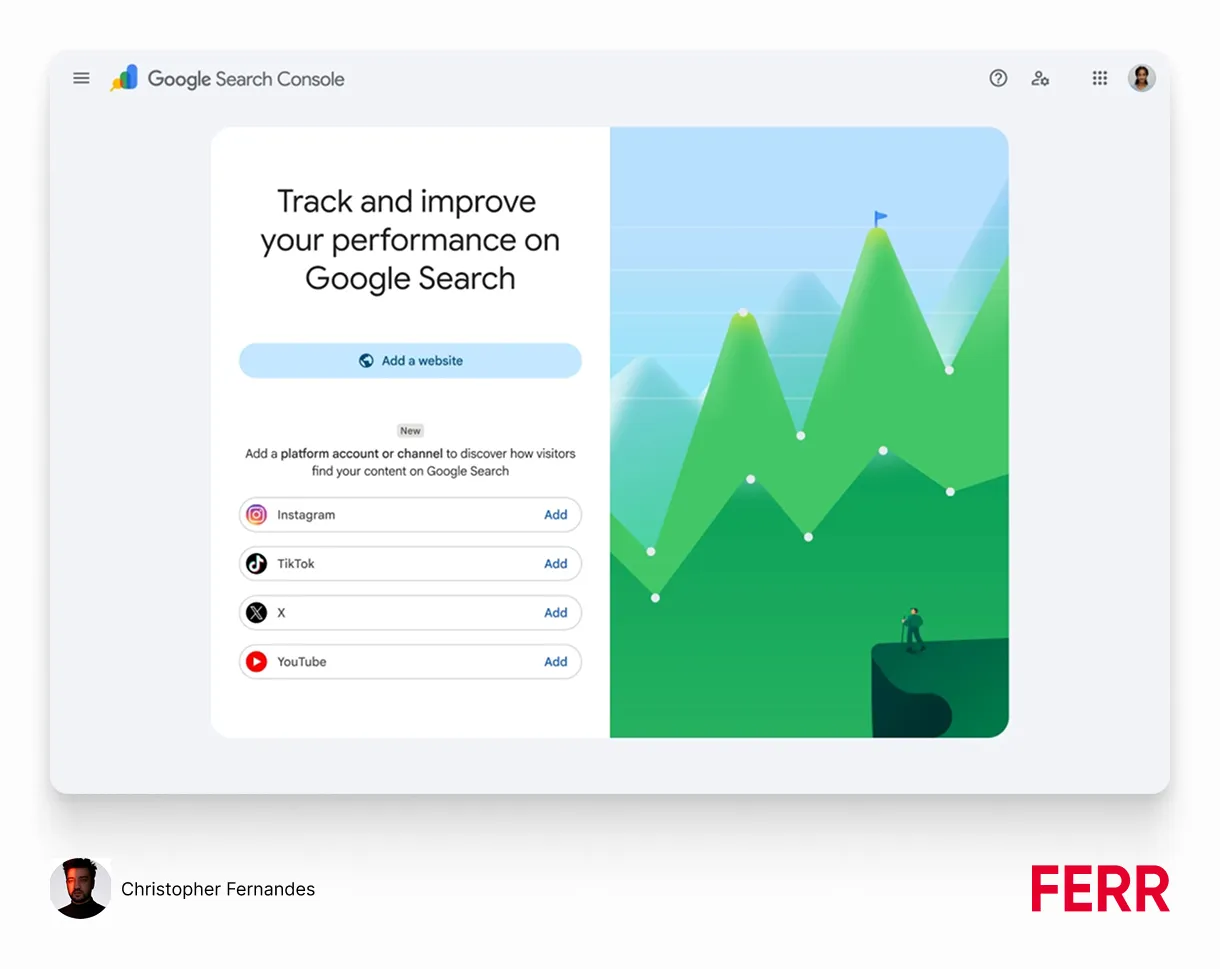
Learn Google Search Console from setup to advanced workflows: performance reports, indexing, free backlink data, and how to find quick SEO wins in 2026.
Digital PR earns links from journalists at scale. Campaign types that work, cheap data stories, pitch templates, real costs and hit rates.
Broken link building still works but expect 5-10 hours per link earned. The exact process, the real conversion rates, and when to choose a faster method.
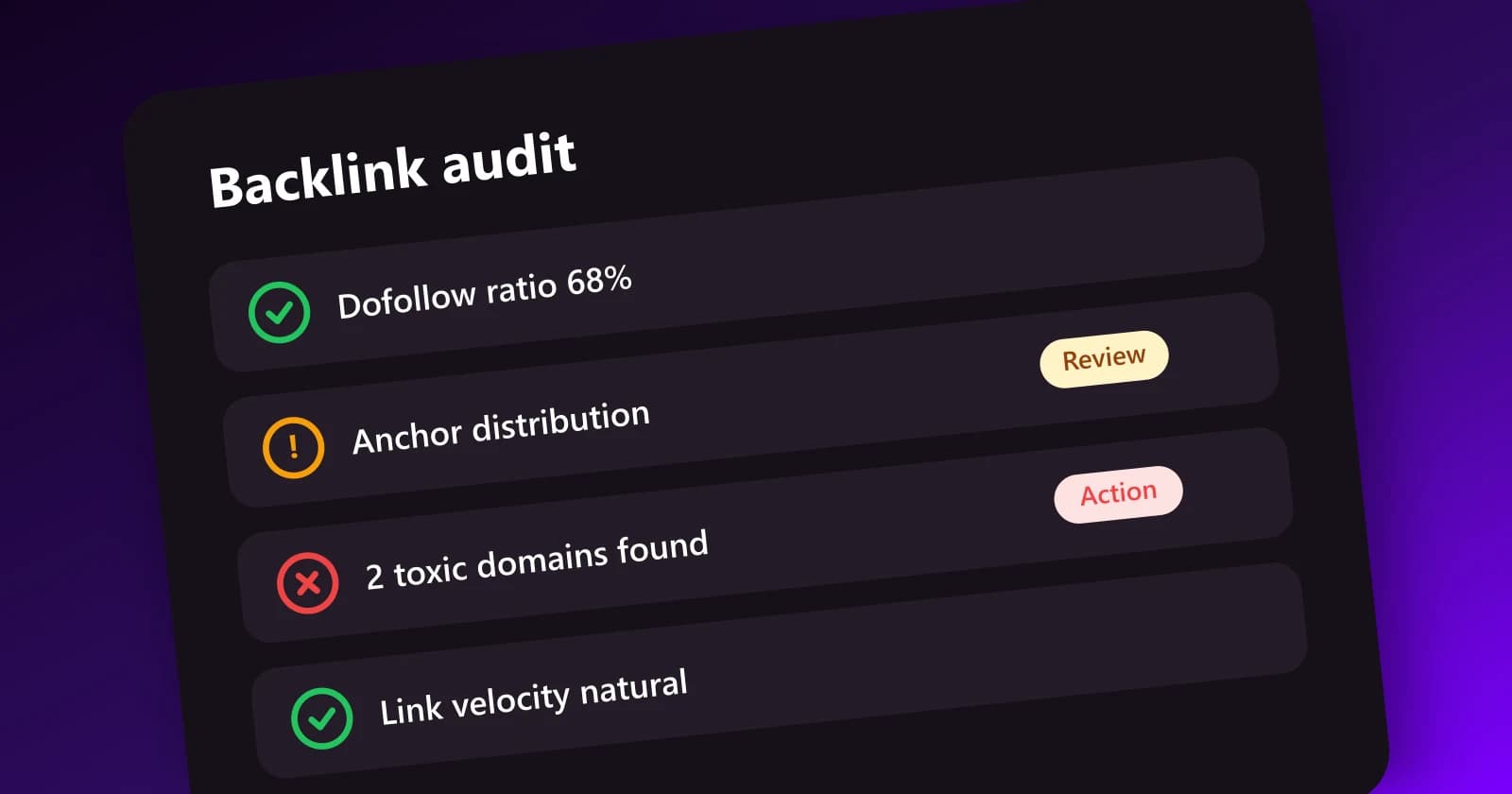
A practical backlink audit: pull your profile, check dofollow ratio, anchors, velocity and toxic patterns, then score every domain. Free options inside.
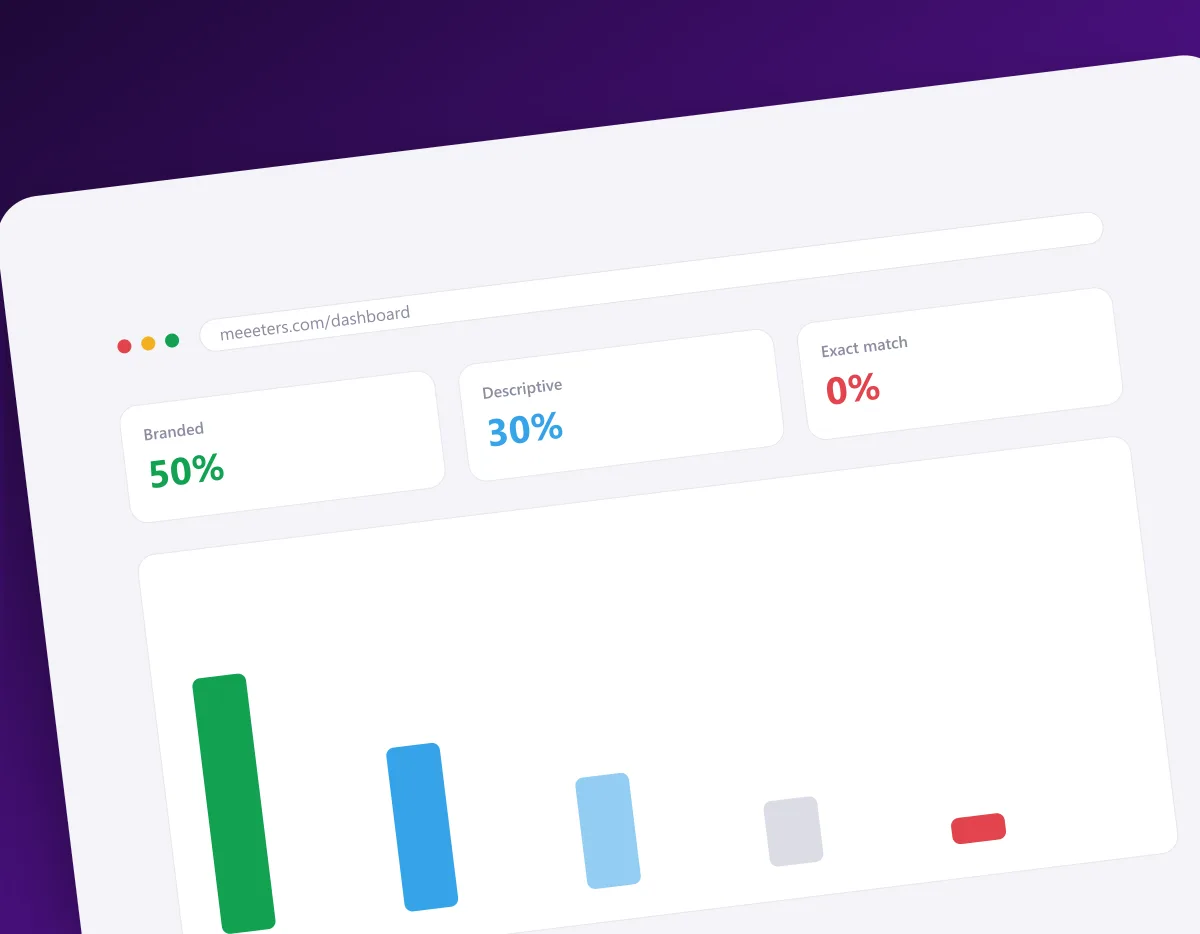
Exchanged links with exact-match anchors turn safe trades into penalties. The anchor distribution that looks natural, with examples and ratios to copy.
Where to find sites willing to exchange links: competitor backlink mining, adjacent-niche SERPs, communities, platforms. Seven methods ranked.
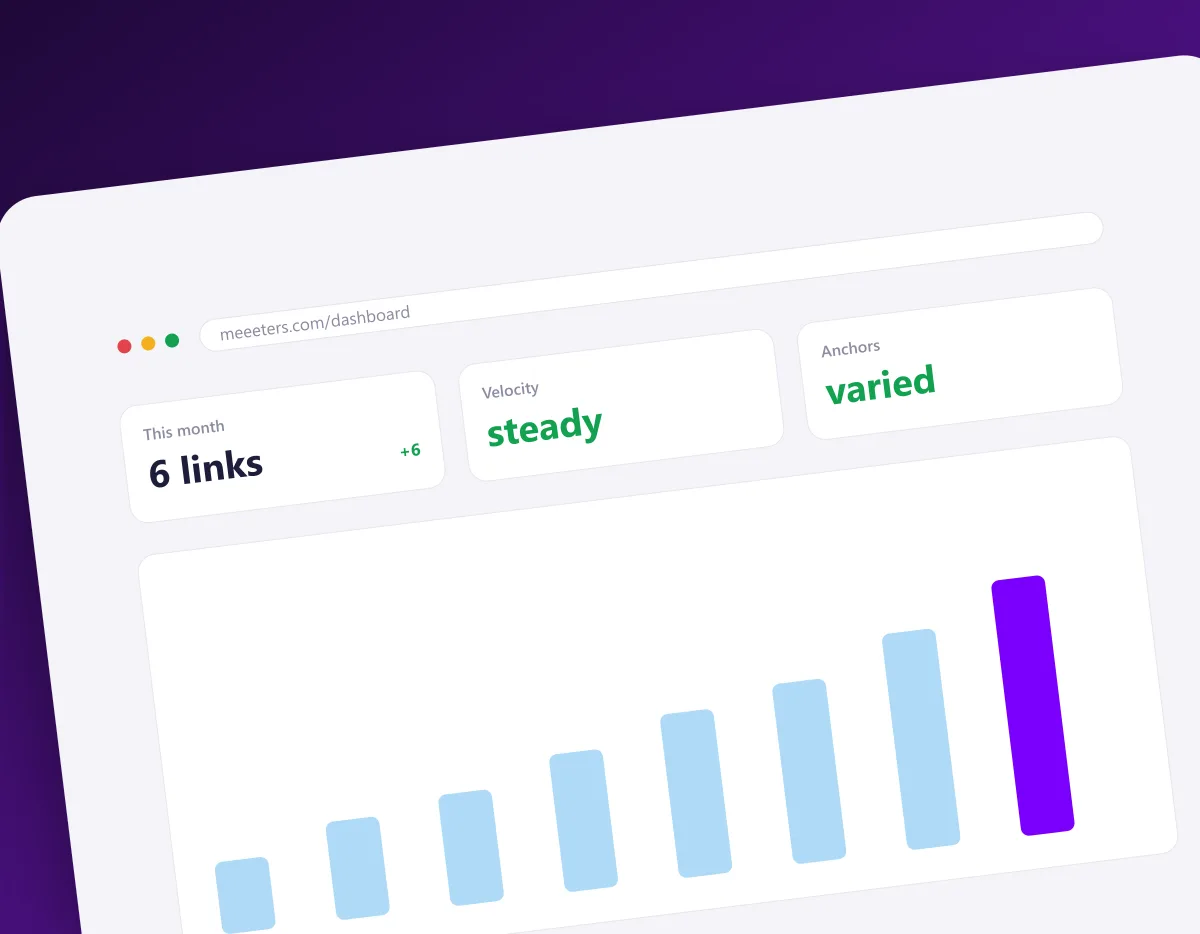
There is no magic number, but there are unnatural spikes. Realistic link velocity benchmarks by site age and authority, and why consistency beats bursts.
DR can be pushed to 50+ in weeks with cheap tricks, so trading links on DR alone gets you scammed. How the inflation works and the 4 checks that expose it.
Backlinks are one of Google's strongest ranking signals and their value compounds. Why they still matter in 2026 and how to think about the return.
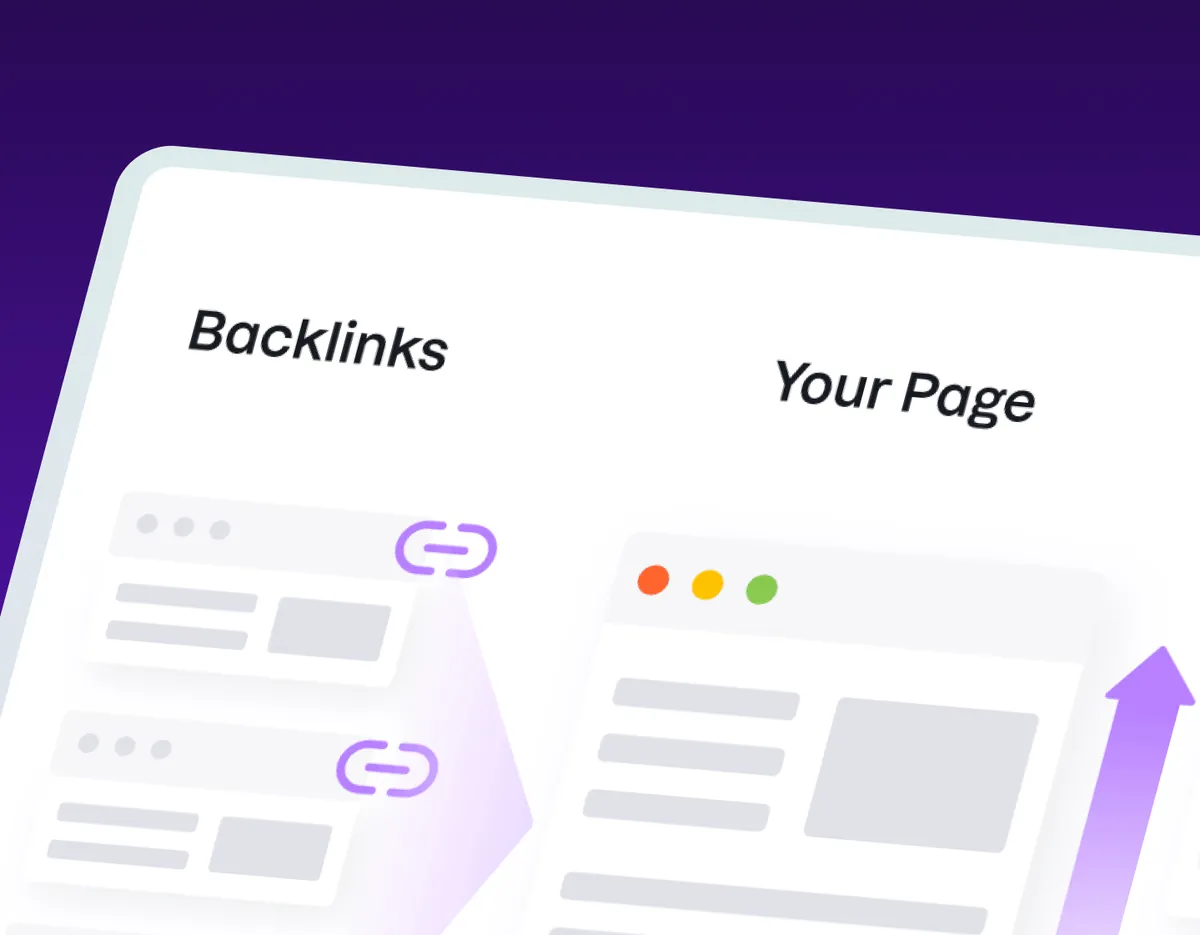
A backlink is a link from another website to yours. Here is why Google treats them as votes of confidence, and which backlinks actually move rankings.
Toxic backlinks, suspicious link neighborhoods and PBNs are what get sites devalued or penalized. Here is how to spot bad SEO and avoid it.
Page speed and Core Web Vitals are confirmed Google ranking signals and shape conversions. What to measure and the fixes with the biggest impact.
If your site does not appear on Google, the cause is usually indexing, a noindex tag, being too new, or thin content. How to diagnose and fix each.
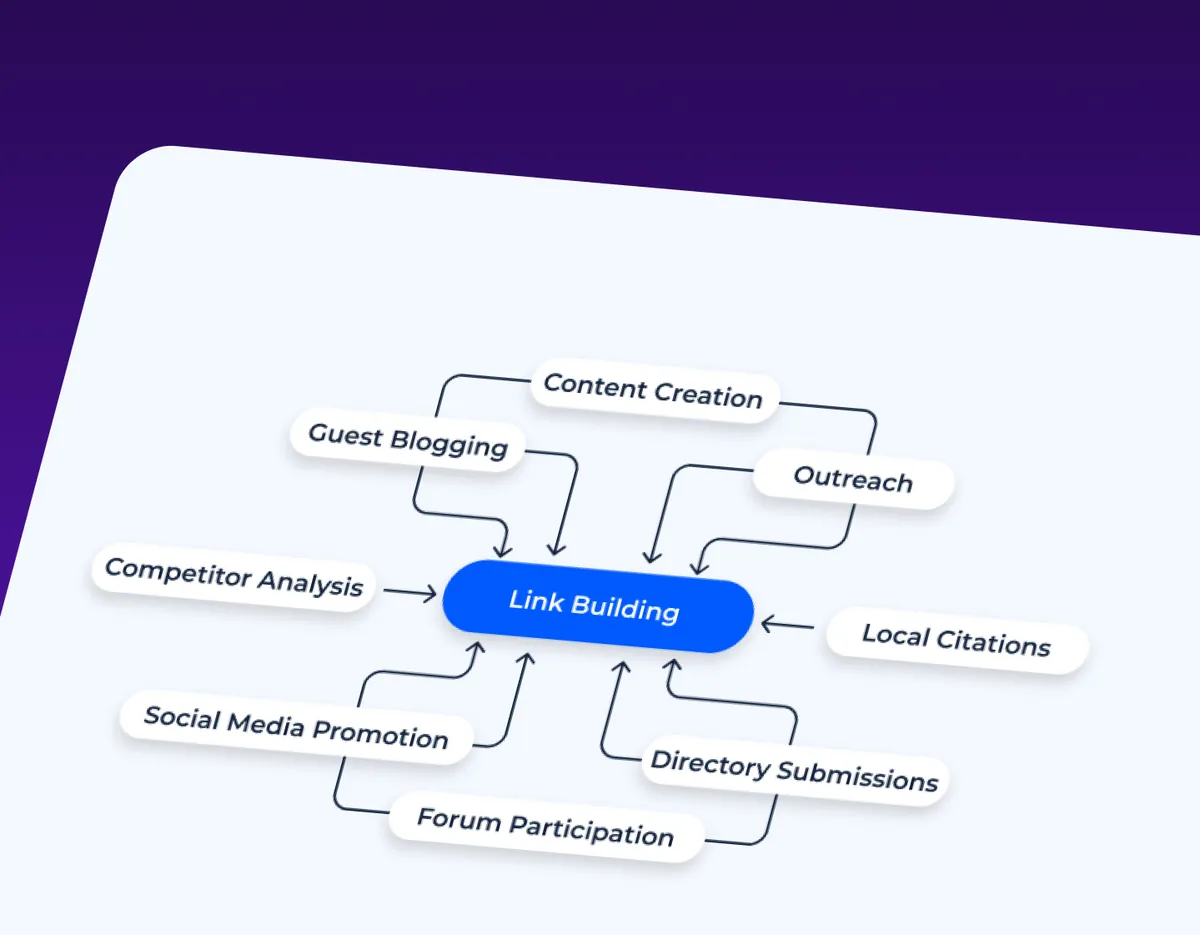
A practical guide to building backlinks that rank without risking a Google penalty. What is safe, what is not, and how to remove the reciprocal footprint.

Guest posts, niche edits, marketplaces, PBNs, reciprocal exchanges and niche networks compared on risk, cost and effort. Which one fits you.
A 12-step checklist for safe, effective link building: from prospecting to placement to verification. Copy it and run it every month.
Most sites see meaningful SEO movement in three to six months, with compounding gains after. What drives the timeline and how to speed it up.
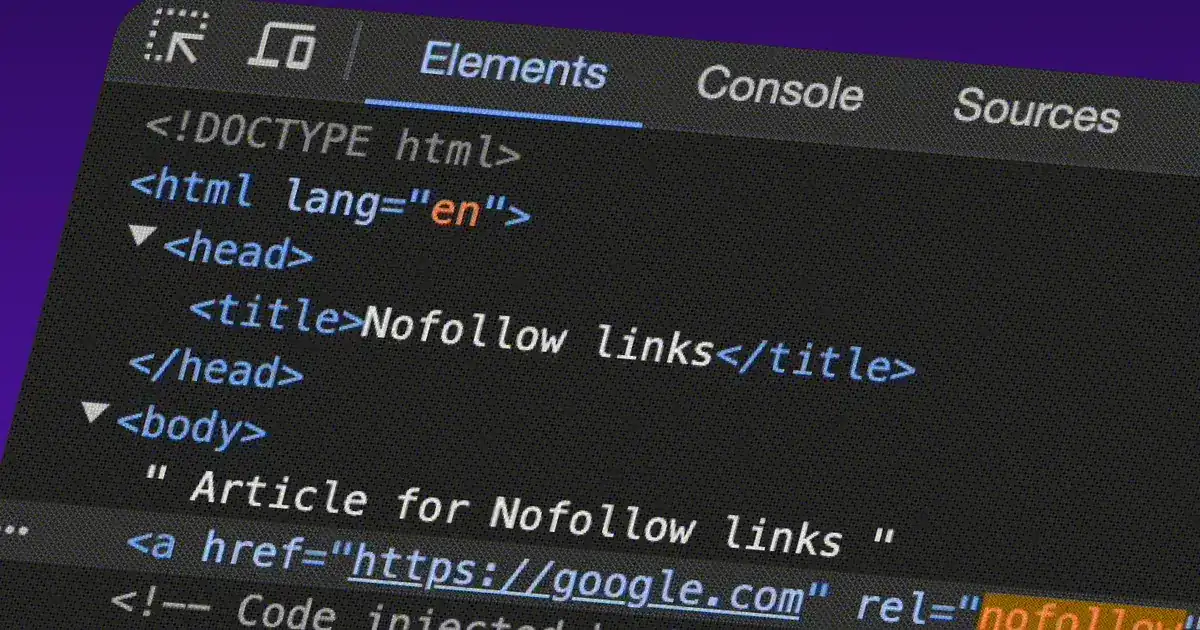
Dofollow links pass ranking signal, nofollow usually do not. What each attribute does, when nofollow still helps, and why a profile needs both.
Four short outreach templates that get replies: guest post, resource page, unlinked mention and broken link, plus the rules that keep them read.