Internal Linking for SEO: How to Multiply the Value of Every Backlink

Every backlink you earn injects authority into one page of your site. What happens next is up to your internal links. They decide whether that authority stays trapped on a single URL or flows to the pages you actually want to rank. If you are investing in link building, internal linking is the multiplier on that investment.
What internal links do that backlinks cannot
Internal links do three jobs at once:
- They pass authority. PageRank flows through internal links exactly as it flows through external ones. A page with strong backlinks can push a weaker page up by linking to it.
- They define context. Anchor text and surrounding copy tell Google what the target page is about, with anchors you fully control.
- They drive discovery. Google finds and recrawls pages by following links. A page nothing links to is a page Google may never index properly, one of the common reasons a site does not show on Google.
The structure that works: hubs and spokes
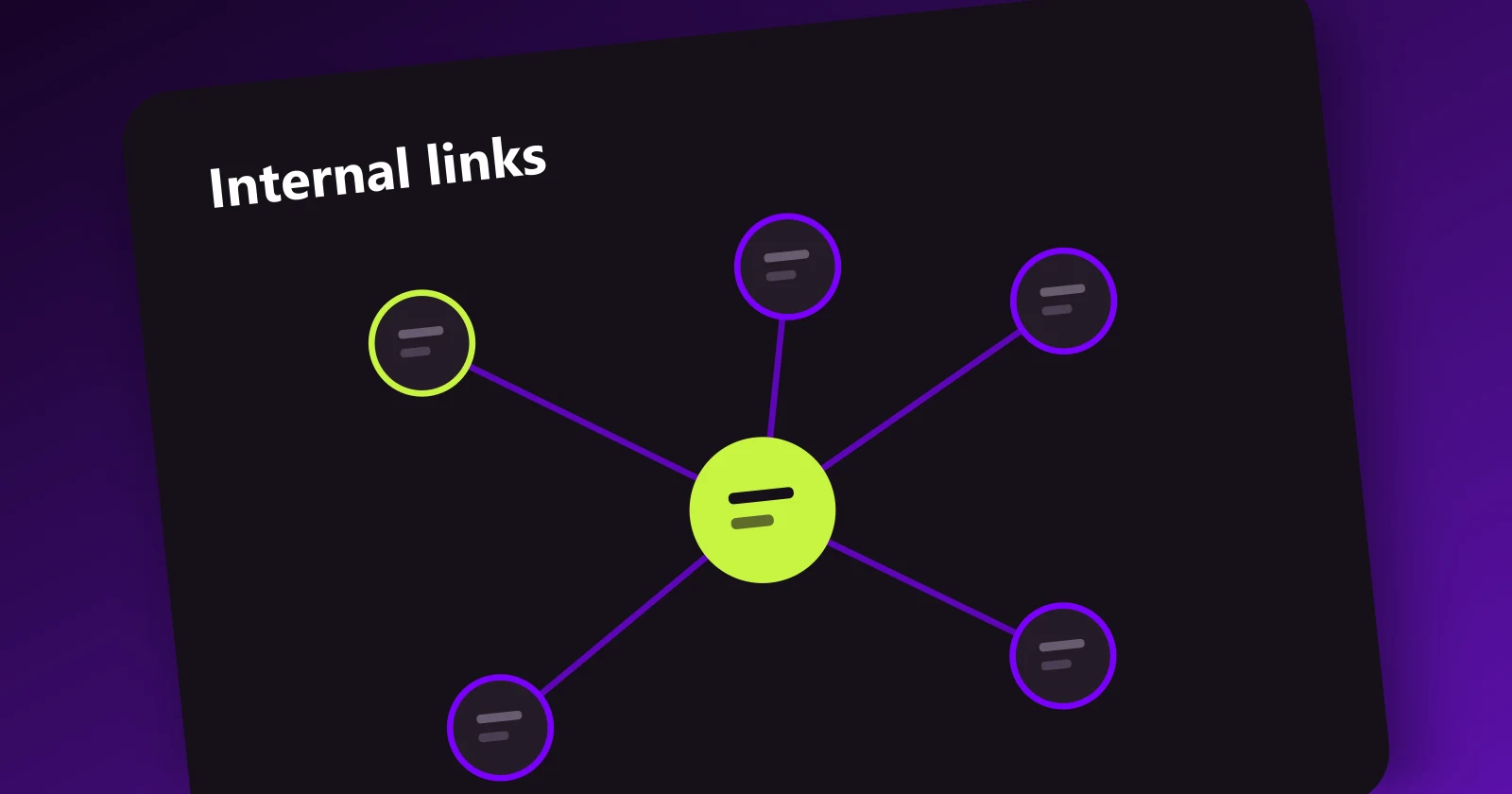
The simplest durable model is the hub and spoke, sometimes called a topic cluster or silo:
- One hub page targets the broad keyword and links down to every related article.
- Each article targets one specific question and links back up to the hub.
- Articles link sideways to each other when genuinely related.
This concentrates topical signals and keeps authority circulating inside the topic instead of leaking randomly across the site. It also mirrors how readers actually navigate: broad question first, specifics next.
Five rules that cover 90% of it
1. Keep important pages shallow
Any page you want to rank should be reachable within three clicks of the homepage. Depth is a statement of priority: pages buried deep get crawled less and receive less authority.
2. Link from your strongest pages
Find the pages with the most referring domains (your backlink checker or Search Console will show you) and add contextual links from them to the pages that need a push. This is the closest thing to free link building that exists.
3. Use descriptive anchors, not "click here"
The anchor is a ranking signal you control completely. "internal linking for SEO" tells Google something; "read more" tells it nothing. Unlike external links, you do not need to worry about over-optimizing internal anchors, just keep them natural and accurate.
4. Fix orphan pages first
An orphan page has zero internal links pointing to it. It receives no authority and sends no signals. Before creating any new content, find your orphans (most site crawlers list them) and link to the ones worth keeping.
5. One link, one purpose
If a page links to the same target five times, only the first anchor tends to count. Spread the mentions across genuinely useful spots instead of repeating them.
Common mistakes that waste link equity
- Linking everything to the homepage. The homepage is usually already your strongest page. Push authority down, not up.
- Giant footers with 80 links. Sitewide footer links dilute value and add noise. Keep the footer for genuine navigation.
- Redirect chains. Internal links that point to redirected URLs leak a little value at every hop. Link to the final URL.
- Nofollow on internal links. There is no scenario where this helps. Remove it.
- Forgetting new content. Every new article should get 2 or 3 internal links from existing relevant pages the day it is published, not someday.
Internal links and backlinks work as a system
Internal linking does not replace backlinks; it routes them. A site with strong backlinks and chaotic internal linking underperforms a site with fewer links and clean structure. The workflow is: earn authority through editorial backlinks, then steer it with internal links to the pages that convert.
If you want to see where your site stands on the authority side, run a free SEO analysis: you get your domain rating, referring domains and a view of which pages carry the weight, which is exactly the map you need before rewiring your internal links.
Frequently asked questions
Quick answers to the questions people ask most about this topic.
There is no fixed number. Add an internal link wherever it genuinely helps the reader reach related content, typically 3 to 10 contextual links in a standard article. Navigation and footer links come on top of that.
Yes. Internal links pass authority the same way external links do. That is why pages linked from your homepage and your most-linked pages tend to rank better than pages buried five clicks deep.
Yes, always. There is no good reason to nofollow your own internal links. Nofollowing them simply throws away link equity you already earned.

I built Meeeters to make link building safe and simple: real, relevant backlinks with no reciprocal footprint and no black-hat shortcuts.