AI Search Visibility Tools: What They Track and Which to Use

Ranking in Google is measurable to the decimal. Being cited by ChatGPT is not, at least not with the tools most teams already own. That gap is why AI search visibility tools exist: to answer "when someone asks an AI about my category, do I show up?" This guide covers what these tools actually measure, which metrics matter, and how to avoid buying a dashboard that changes nothing.
What these tools track
The good ones watch four things:
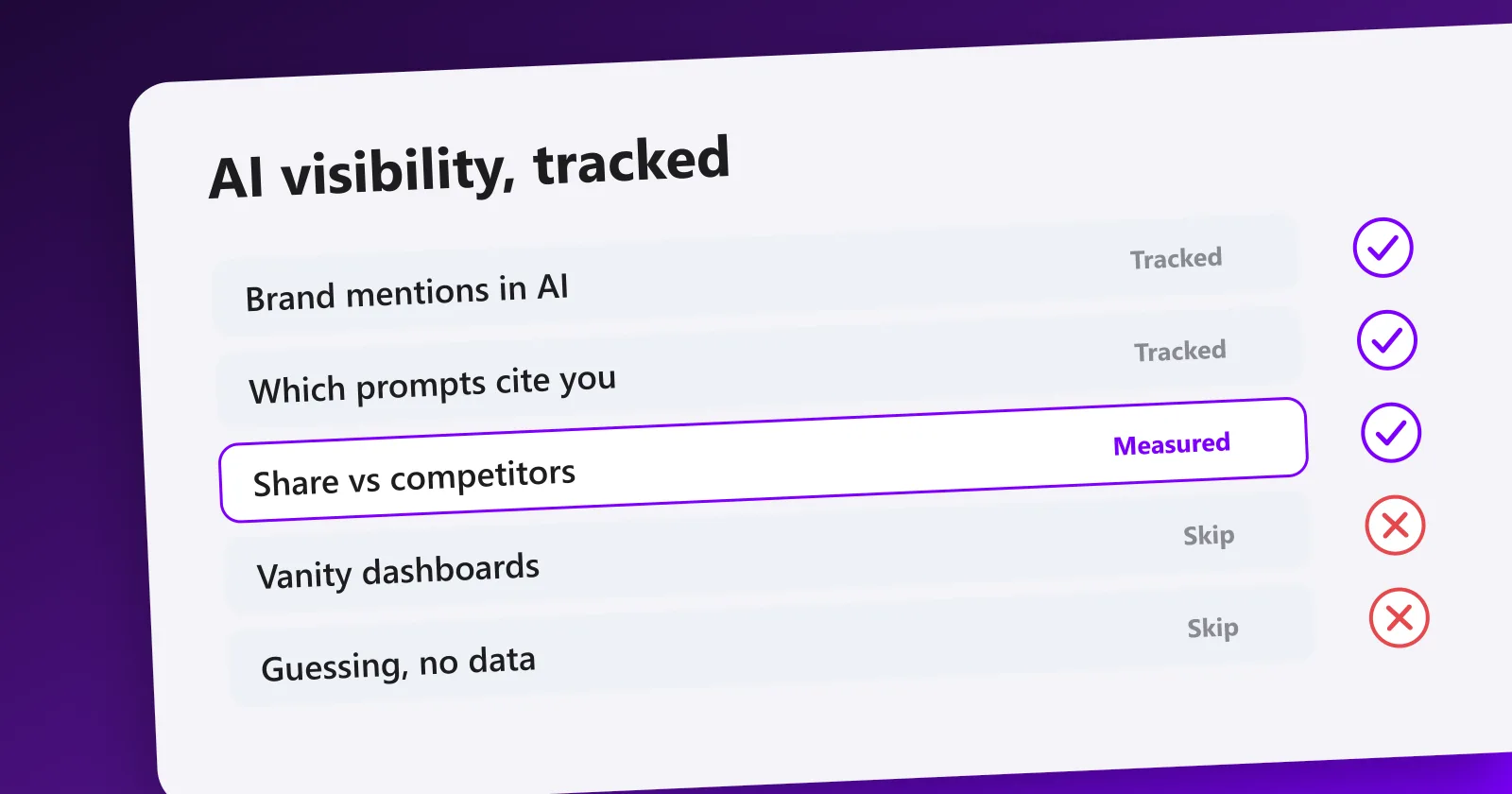
- Citation presence: for a set of prompts, do AI engines mention or link you at all?
- Citation share: how often you appear versus competitors for the same prompts. This is the real scoreboard, presence is binary, share is the trend.
- Source attribution: which page the AI pulled from. Often you lose a mention not because you have no content, but because a third-party listicle outranks your own page as the cited source.
- Prompt coverage: which questions in your category you show up for, and the buyer-intent ones where you are invisible.
Some also track sentiment (how the AI describes you) and the exact wording of the mention, which matters more than it sounds: being cited as "a budget option" is not the same win as "the tool built for X".
Why your existing analytics miss this
Google Search Console shows Google clicks and impressions. But AI Overviews frequently answer with no click, and ChatGPT, Perplexity and Gemini are not in Search Console at all. So the surface where AI visibility is won is mostly invisible to the tools you already run. You need two things classic analytics do not give you: direct prompt monitoring, and AI referral traffic tracking in GA4 and your server logs to catch the clicks that do come through.
The metric that actually matters
Ignore vanity totals. The number to move is citation share on buyer-intent prompts: the questions where being the cited source would win you a customer. Being mentioned in a broad informational prompt is nice; being the recommended tool when someone asks "best X for Y" is revenue. Pick ten of those prompts, measure your share, and work only on those first.
From tracking to citations: closing the loop
Here is the trap with every visibility tool. It tells you that you are absent from a prompt. Getting present is a different job: you need the page that answers that prompt in a quotable, answer-first structure, and the authority that makes the AI pick you over the incumbent. The tool is the thermometer, not the medicine.
That loop, measure the gap, create the page, earn the links, is exactly what Meeeters automates. The SEO automation pipeline turns a visibility gap into a drafted, answer-shaped page and publishes it to your CMS, while the network builds the citations-worthy authority behind it. And it closes the measurement side too: Meeeters reads the visits ChatGPT, Perplexity and Gemini actually send you from GA4, the referral traffic Search Console never shows, checks that GPTBot, ClaudeBot and PerplexityBot are not blocked by your robots.txt, and verifies your llms.txt exists. You see the number move on the same screen as the work that moves it. To understand the discipline itself, read what generative engine optimization is.
Start lean
You do not need to buy an enterprise platform to begin. Run a free SEO analysis to see your content and authority gaps, track a short list of buyer prompts by hand or with a focused tool, and put the effort into the pages that move them. Visibility follows work, not dashboards.
Frequently asked questions
Quick answers to the questions people ask most about this topic.
How often AI engines mention or cite your brand, for which prompts, in what position, and how that compares to competitors. Better tools also surface which sources the AI pulled from, so you can see whether you were cited directly or lost the mention to a third-party page that ranks above you.
Search Console shows Google clicks and impressions, but AI answers often resolve without a click, and ChatGPT and Perplexity are not in Search Console at all. AI visibility happens on surfaces classic analytics barely see, so you need to monitor prompts and citations directly, plus AI referral traffic in GA4 and server logs.
Only if you act on them. A tool tells you that you are absent from a prompt; getting present still requires the content that answers it and the authority that gets it cited. Treat the tool as the diagnosis, not the treatment.
Yes, but keep it lean. You do not need an enterprise suite to start. Track a handful of buyer prompts where being cited would win you customers, watch AI referral traffic, and put your effort into the pages and links that move those specific prompts.

I built Meeeters to make link building safe and simple: real, relevant backlinks with no reciprocal footprint and no black-hat shortcuts.