How to Write a Content Brief for AI That Produces Rankable Drafts

Everyone blames the model. The draft came back generic, wrong about the product, structured like every other article on the internet, so the tool must be bad. Then you look at the prompt: "Write a 1,500-word SEO article about link building for dentists." The model did exactly what was asked. The draft was decided before generation started, and it was decided badly. Fixing the brief fixes most of what people hate about AI content.
Why keyword-only prompts produce interchangeable drafts
A model given only a keyword has one source: its training average for that keyword, which is a blend of everything that already ranks. That output is, by construction, the article your competitors already published. It cannot know your site's structure, your customers' objections or your actual pricing, so it pads the gaps with the confident filler you spend your editing pass deleting.
Specificity in, specificity out. The brief is where the specificity enters.
The six elements of a brief that works
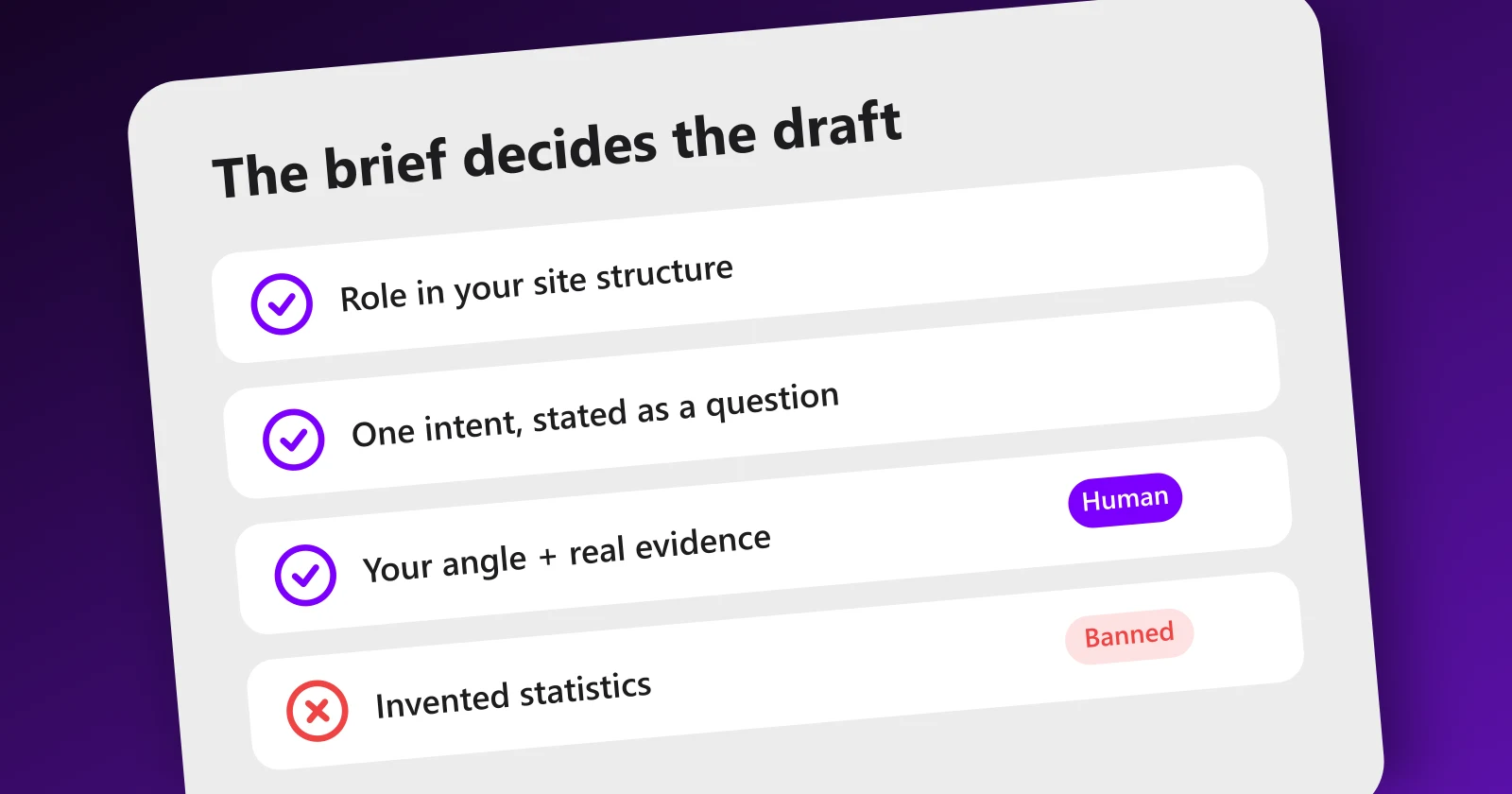
1. Role in the structure. Which silo does the page live in, what gap does it fill, what will its URL be? A draft written as "the missing satellite in the backlinks cluster, sitting under /backlinks, linking up to the hub" arrives already fitting your architecture. This is the single biggest difference between briefs derived from a site audit and briefs derived from a keyword tool: the page has a reason to exist, which is also the line Google's policy draws.
2. The intent, stated as a question. Not "target: automated seo content tools" but "the reader is comparing tools and afraid of being penalized; resolve which features are safe and which are red flags." One intent per page. Drafts sprawl when briefs do.
3. Your angle. One or two sentences of position: what you believe that the average article doesn't say. Without it you get the both-sides mush that reads like a summary. This is two minutes of human input and it is the part that cannot be automated honestly.
4. The evidence it may use, and the ban. Paste in the real numbers, examples, product facts and sources the draft is allowed to cite, and state plainly: invent nothing; what is not provided is not claimed. This converts your later fact-check from an investigation into a comparison, and it removes the fabricated-statistics failure mode that gets AI content flagged in the first place.
5. Internal links to place. List the three to five pages this draft must link to, with suggested anchors: the silo hub, two siblings, one conversion page. Links specified in the brief arrive woven into the argument; links added afterward read like stickers.
6. Hard rules. The non-negotiables that should never depend on the editor's attention: direct answer in the first two sentences, H2s that match subquestions, a short FAQ, the site's language and locale, no keyword stuffing. Encode them once in the brief template rather than re-fixing them in every draft.
Where the brief should come from
Elements 1, 2 and 5 are structural: derivable from a crawl of your own site. This is why brief generation is the step most worth automating in the whole content workflow: an audit that knows your silos can emit the role, intent and link targets for every missing page mechanically. Meeeters generates its drafts from exactly this kind of audit brief, which is why they land inside your strategy rather than next to it. Elements 3 and 4 stay human, and they are cheap: a position and some evidence.
One caution from the other direction: a perfect brief produces a page worth ranking, not a page that ranks. The queries worth winning are decided by authority, and no brief writes referring domains into existence: that is the link building half of the system. See which briefs your site actually needs first: a free SEO analysis returns the recommended pages, each with its silo, format and intent already filled in.
Frequently asked questions
Quick answers to the questions people ask most about this topic.
Because a keyword-only prompt gives the model nothing but its training average, which is the same average your competitors get. Specificity in equals specificity out: structure, intent, angle and your own evidence are what differentiate a draft.
The page's role in your structure: which silo it belongs to, what gap it fills, which pages it links to. A draft written to occupy a slot in your architecture lands connected; a draft written for a keyword lands beside your strategy.
Yes: provide the statistics, examples and product details the draft may use, and explicitly forbid inventing others. Supplying evidence up front converts fact-checking from a hunt into a diff.
The mechanical parts, yes: a site audit can derive the silo, gap, intent and internal links for every recommended page. The angle and evidence should come from you, which takes two minutes and is where the differentiation lives.

I built Meeeters to make link building safe and simple: real, relevant backlinks with no reciprocal footprint and no black-hat shortcuts.