Google June 2026 Spam Update: What It Targeted, What It Skipped, and How to Recover

Google confirmed its June 2026 spam update on June 24, 2026 and marked it complete on June 26, after a rollout of just 2 days and 1 hour. It is the second spam update of the year, it applied globally across every language, and it was done before most site owners had even noticed the volatility. This guide collects what Google actually said, what the update did and did not target, and the exact steps to take if your traffic dropped.
The timeline, and why the speed matters
The official record on the Google Search Status Dashboard is short: announced June 24, 2026 at around 9:00 AM Pacific, completed June 26, total duration 2 days and 1 hour.
That speed is part of the story. Spam updates used to be slow, multi-week affairs:
- August 2025 spam update: 26 days and 15 hours, the longest on record
- Median spam update: around 7 days
- March 2026 spam update: 19.5 hours, the fastest ever documented
- June 2026 spam update: 2 days and 1 hour
Two data points make a trend: Google can now retrain and ship SpamBrain classifications in days. For site owners this changes the rhythm of the game. There is no longer a long rollout window in which rankings drift and you can react mid-flight. By the time the volatility shows up in your dashboards, the update is usually finished and your new baseline is already set.
The update also landed in an unusually dense year. Google had already shipped a Discover-focused update in February, the March 2026 spam update and the March 2026 core update back to back, and the May 2026 core update that ran from May 21 for almost 12 days. If your traffic moved in the last two weeks of June, the spam update is the prime suspect; if it moved in late May, it was probably the core update. Separating the two matters, because the diagnosis and the fix are completely different.
What Google said it targets
Google characterized the release as "a normal spam update": an improvement to its automated detection systems, including SpamBrain, the AI-based classifier it has used since 2022 to recognize pages and sites that violate its spam policies. No new policy category was added. The policies themselves did not change on June 24; what changed is how well the systems recognize violations of the existing ones.
Those policies are worth rereading, because they are the checklist Google points every demoted site back to. The spam policies for Google web search name, among others: cloaking, doorway abuse, expired domain abuse, hacked content, hidden text and link abuse, keyword stuffing, link spam, machine-generated traffic, scaled content abuse, scraping, site reputation abuse, sneaky redirects, thin affiliation and user-generated spam.
One category deserves special attention in 2026: scaled content abuse, producing many pages primarily to manipulate rankings rather than to help users, whatever the production method. Sites pumping out thousands of unedited AI pages are exactly the profile that gets classified in these updates. AI content is not the violation; scale without value is. Google's own position, covered in our guide to Google's guidelines for AI content, has been stable for two years: people-first content ranks regardless of how it was produced.
What it explicitly did not target
Google took the unusual step of confirming what was out of scope. Per Search Engine Roundtable's reporting, the June 2026 spam update did not target link spam and did not enforce the site reputation abuse policy. Both are handled through separate systems and get their own announcements when they ship.
Do not misread that as an amnesty. Link spam remains a named policy, SpamBrain still neutralizes manipulative links continuously outside of named updates, and Google's documentation is blunt about the consequence: ranking value from link schemes is not restored once the systems discount it. If your link profile depends on paid placements, PBNs or reciprocal swaps, the exposure is intact, this update simply was not the one that acted on it. A periodic backlink audit and a clear view of which backlinks actually hurt you remain the cheapest insurance in SEO, and if you exchange links at all, the safety rules for link exchanges have not changed: relevance, real traffic, and no reciprocal footprint.
The new frontier: manipulating AI answers is now spam
The most forward-looking detail sits in the policy text rather than the update itself. In May 2026, Google rewrote the definition section of its spam policies to include "attempting to manipulate generative AI responses in Google Search" alongside classic ranking manipulation. That sentence is live on the spam policies page today, and it makes tactics like seeding fake recommendation listicles or poisoning comparison pages, built purely to bias what AI Overviews and AI Mode cite, a named spam behavior.
This matters because AI surfaces are where search is moving. AI Mode answers conversationally with a handful of citations, AI Overviews sits on top of classic results, and both draw from the same index the spam systems police. The legitimate path to being cited, what the industry calls generative engine optimization, runs through the same fundamentals the spam update rewards: authority, clean structure and genuinely useful pages. The manipulative shortcut is now explicitly on the spam list, and SpamBrain updates like this one are the enforcement mechanism.
How to check if you were hit
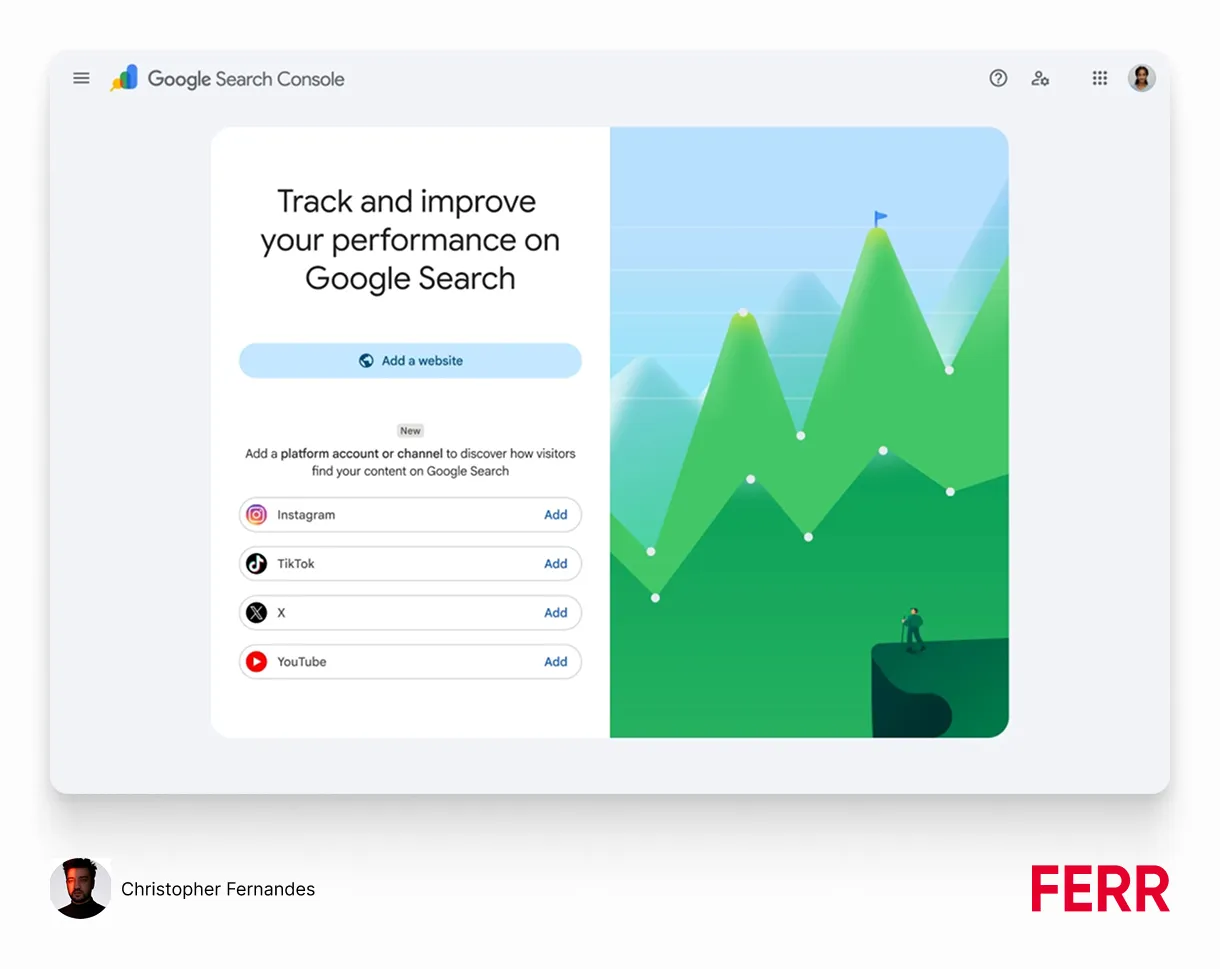
Search Console is the only source of truth here, and it is also where Google keeps shipping new measurement surfaces, from the AI-era performance reporting to the new platform accounts for tracking how visitors find your content across channels.
Run the diagnosis in four steps:
- Compare the dates. In Performance, then Search results, compare June 24 onward against the previous period. A spam-update hit shows as a step change that starts between June 24 and June 26 and holds, not a one-day wobble.
- Filter by page. Group the losses by template or directory. Spam classifications often hit a content type (thin programmatic pages, scaled posts) rather than the whole site.
- Filter by country. The rollout was global and language-independent, so a drop concentrated in one market usually points to something else, like a competitor or a local SERP change.
- Check Manual actions. Spam updates are algorithmic, but check Security and Manual actions anyway. If a manual action is listed, you have a different process, with an actual reconsideration request at the end of it.
If Search Console is unfamiliar territory, our Search Console guide walks through every report, and if your pages are missing from Google entirely rather than demoted, start with why a site does not show on Google, because indexing problems and spam demotions look similar from the outside.
The recovery plan if you dropped
There is no shortcut, and anyone selling one is selling exactly what the update targets. The honest sequence:
- Map the damage to a policy. Take the pages that lost visibility and read them against the spam policies list above. Be harsh: would this page exist if Google did not? Pages that only exist to rank are the definition of the problem.
- Fix or remove, do not dilute. Rewrite thin pages that have a reason to exist, consolidate near-duplicates, and delete what serves nobody. If you scaled AI content without editing, the playbook in recovering from a scaled content penalty applies almost verbatim to spam-update demotions.
- Keep publishing helpful content. Recovery is not a waiting game with a frozen site. Google's systems need evidence over months that the site now complies, and that evidence is your ongoing output.
- Expect months, not days. Google's documentation says improvement comes only after automated systems learn over a period of months that the site complies. There is no reconsideration request for an algorithmic demotion, and the next spam update is often where recovered sites see the correction land.
What this update rewards
Read the June 2026 spam update together with the May core update and the AI-manipulation policy, and Google's direction is coherent: faster enforcement, the same standards, extended to AI surfaces. The sites that never notice spam updates share three habits. Their content answers real queries from real customers instead of chasing volume. Their backlinks come from relevant, verified sites rather than schemes that SpamBrain eventually neutralizes. And they measure everything in Search Console, so a two-day rollout is a line on a chart rather than a mystery.
That is the boring, durable playbook, and it is the one Meeeters automates: articles written for the queries your customers actually type, and verified dofollow backlinks from relevant sites, with the toxic ones filtered out before they ever touch your profile.
Frequently asked questions
Quick answers to the questions people ask most about this topic.
An improvement to Google's automated spam detection systems, including SpamBrain, its AI-based spam classifier. It started on June 24, 2026, finished on June 26 after 2 days and 1 hour, and applied globally across all languages. Google described it as a normal spam update with no new policy categories added.
No. Google explicitly confirmed the update did not target link spam or the site reputation abuse policy. Both are handled by separate systems and announced separately. If your backlink profile is risky, that exposure still exists, it just was not what moved rankings this time.
2 days and 1 hour, against a median spam update duration of about 7 days. It follows the March 2026 spam update, which finished in under 20 hours, the fastest on record. Spam updates in 2026 are rolling out far faster than the 2024 and 2025 generations, which sometimes ran for weeks.
Open Search Console, go to Performance, then Search results, and compare the period starting June 24, 2026 against the previous weeks. Filter by page to find the affected templates and by country to see if the drop is concentrated. A sharp drop that starts on June 24 or 25 and does not recover by June 27 points to the spam update rather than normal volatility.
Months in most cases. Google's documentation says improvement comes only after its automated systems learn over a period of months that the site complies with the spam policies. There is no reconsideration request for algorithmic demotions, and ranking value from link schemes that SpamBrain neutralizes is not restored.

I built Meeeters to make link building safe and simple: real, relevant backlinks with no reciprocal footprint and no black-hat shortcuts.