SEO Silo Structure: What It Is and Why It Decides Your Rankings (Top 10 Rules)

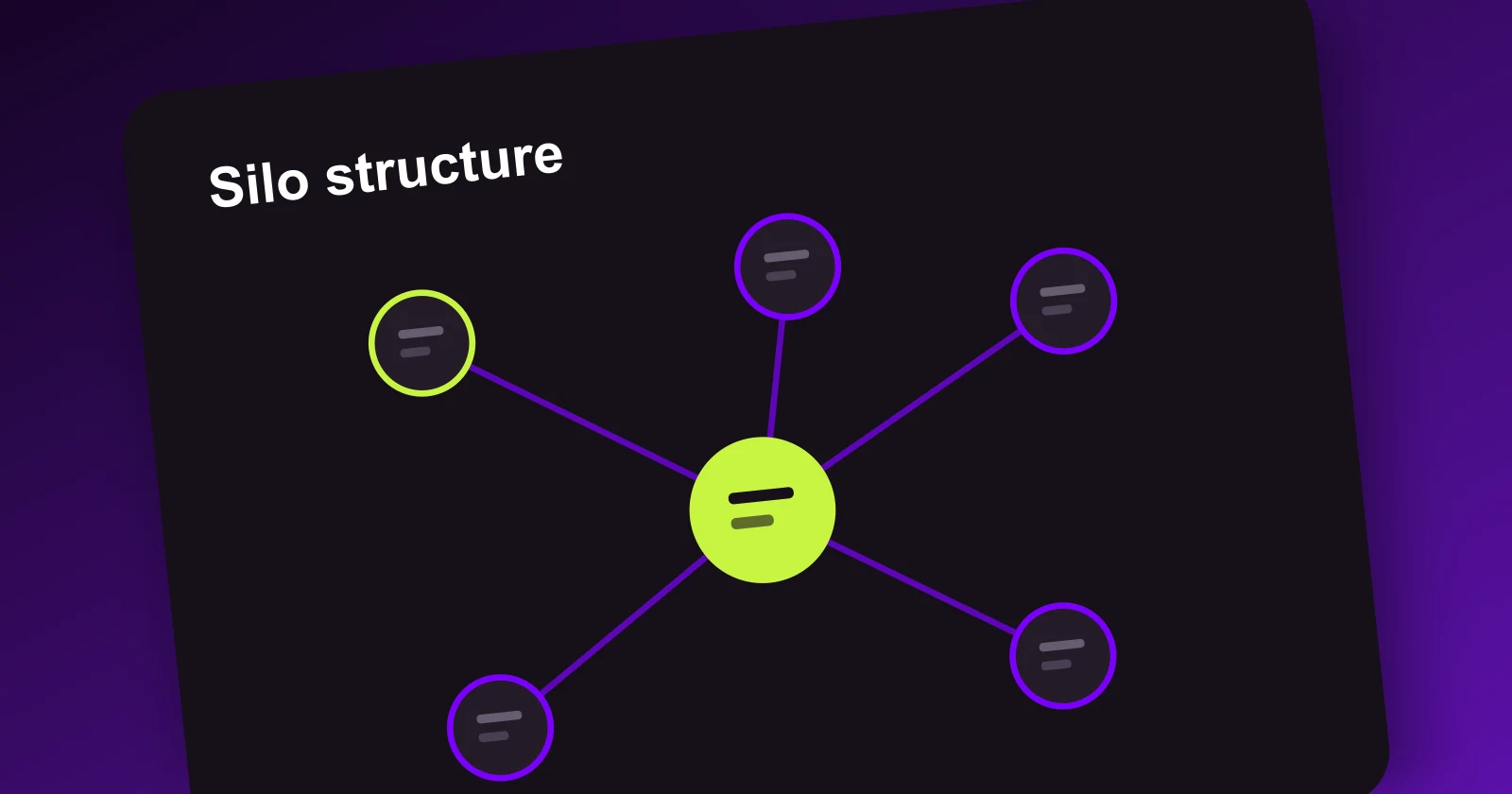
A silo structure is how you turn a pile of blog posts into something Google reads as expertise. Instead of 40 scattered articles, you have a handful of topics, each with one pillar page and a tight group of supporting pages that all link together. Google sees the cluster, understands what you are an authority on, and ranks you for it.
The name comes from grain silos, keep one topic's content together and separate from the others. Below is what a silo actually does for your rankings and the rules to build one that works, in order.
Understand what a silo does
1. It tells Google what you are an authority on
Google does not rank pages in isolation, it assesses whether your site is a credible source on a topic. A silo concentrates enough depth on one subject to make that case.
Do this: pick the topics you want to be known for, and commit to covering each one fully rather than publishing one post across twenty unrelated subjects. Depth on few topics beats one post each on many.
2. It concentrates authority where you want to rank
Internal links pass authority. In a silo, supporting pages funnel authority up to the pillar, so your money page gets stronger every time you add to the cluster.
Do this: point every supporting page's contextual links back to the pillar it belongs to. Full mechanics in the internal linking guide.
3. It kills keyword cannibalization
When several thin pages target the same term, they split signals and compete with each other. A silo gives each keyword exactly one owner.
Do this: map one primary keyword per page. If two pages target the same term, merge them or make one clearly the pillar and the other a subtopic that links up.
Build the structure
4. Define one clear topic per silo
A silo with a fuzzy boundary confuses both readers and Google. Each silo should map to a subject you could write a book about.
Do this: name each silo in plain language ("link building", "technical SEO") and write down what belongs inside it and what does not, before you create a single page.
5. Build one pillar page per silo
The pillar is the broad, authoritative page for the whole topic, the one you most want to rank. Everything else supports it.
Do this: create a comprehensive pillar page that overviews the topic and links out to every supporting page. In Meeeters, open Improve my site: the audit lists the highest-priority pages to create for your topic, which is your pillar-and-spokes map.
6. Match the URL path to the silo
A clean URL structure reinforces the topic to Google and to users. Content in a silo should live under one path.
Do this: use /topic/subtopic URLs (for example /seo/internal-linking-for-seo) so the path itself signals which silo the page belongs to. Keep it shallow and readable.
7. Link supporting pages up to the pillar
The core silo move is upward linking: every supporting page links to its pillar with a descriptive anchor. This is what funnels authority.
Do this: on each supporting page, add a contextual link to the pillar using an anchor that describes the pillar, not "click here". One strong upward link per page beats five vague ones.
8. Link supporting pages across to each other
Pages in the same silo should reference their siblings where relevant. This tightens the cluster and helps Google map the relationships.
Do this: from each supporting page, link to 2 to 4 sibling pages in the same silo where it genuinely helps the reader. Keep cross-silo links rare and deliberate.
9. Fix orphan pages first
A page nothing links to is invisible to the silo and barely crawled by Google. Orphans are pure wasted authority.
Do this: the Meeeters audit shows your site structure and clusters, so you can spot pages with no internal links in. Link every orphan into the right silo before you write anything new.
10. Keep money pages within three clicks of the homepage
Depth dilutes authority. A page buried five clicks deep gets crawled less and ranks worse than the same page two clicks in.
Do this: make sure your pillars are linked from the homepage or main navigation, and no important page sits more than three clicks from home.
Reinforce the silo from outside
11. Point backlinks at the pillar, then distribute
Silos concentrate internal authority, but the authority has to come from somewhere. Backlinks to a pillar flow down to the whole cluster through your internal links.
Do this: earn links to your pillar pages, then let internal linking spread that authority to the supporting pages. On competitive topics, this is usually the difference between a well-structured silo that ranks and one that just sits there. Earn those links without a footprint through Meeeters' non-reciprocal network.
12. Audit the silo as it grows
Silos rot. New posts get dropped in the wrong place, links break, orphans reappear. A structure you never re-check stops working.
Do this: re-run your free SEO analysis periodically to see the current structure and clusters, and fix drift before it spreads.
Why this matters
Without a silo, a site is a flat list of pages competing with each other and asking Google to figure out the relationships on its own. Authority scatters, similar pages cannibalize each other's rankings, and new posts take longer to get indexed because nothing signals where they belong. The cost is not one lost ranking, it is a whole topic you never own despite writing plenty about it. A silo is how the same content, organized, ranks for the topic instead of nibbling at the edges of it.
Meeeters vs manual site mapping
You can map silos by hand in a spreadsheet, and plenty of SEOs do, but you are guessing at your real structure: which pages Google actually groups, which are orphaned, where authority leaks. Crawlers like Screaming Frog show you links but not priority or topical fit. Meeeters analyzes your live site, shows your existing structure and clusters, flags orphan pages, and lists the pages your topic is missing, so you build silos from what your site actually is rather than a diagram of what you hoped it was. Then it closes the loop that structure alone cannot: the external links a pillar needs to rank.
Build silos that actually rank
Start where rule 9 said: analyze your site for structure and orphan pages to see your real clusters and where authority leaks. Then tighten each silo with the rules above, and point relevant backlinks at your pillars so the structure has authority to distribute.
Frequently asked questions
Quick answers to the questions people ask most about this topic.
A silo is a group of related pages organized around a single topic, with one pillar page and several supporting pages that link up to it and across to each other. It signals topical authority to Google and concentrates link equity where you want to rank.
Yes. The name is old but the principle, tight topical clustering with clear internal links, is exactly how Google's topic understanding and how AI engines assess authority both work. What is dead is keyword-stuffed doorway silos, not topical structure.
They are the same idea under two names. Silo emphasizes the URL and category structure; topic cluster emphasizes the internal linking. A good silo is a topic cluster with a clean URL path. Build both together.
Enough to cover the topic, typically one pillar plus 5 to 15 supporting pages. The test is coverage, not count. Every real question in the topic should have a page, and every page should link into the silo.

I built Meeeters to make link building safe and simple: real, relevant backlinks with no reciprocal footprint and no black-hat shortcuts.