Anchor Text for Link Exchanges: The Safe Distribution (With Examples)

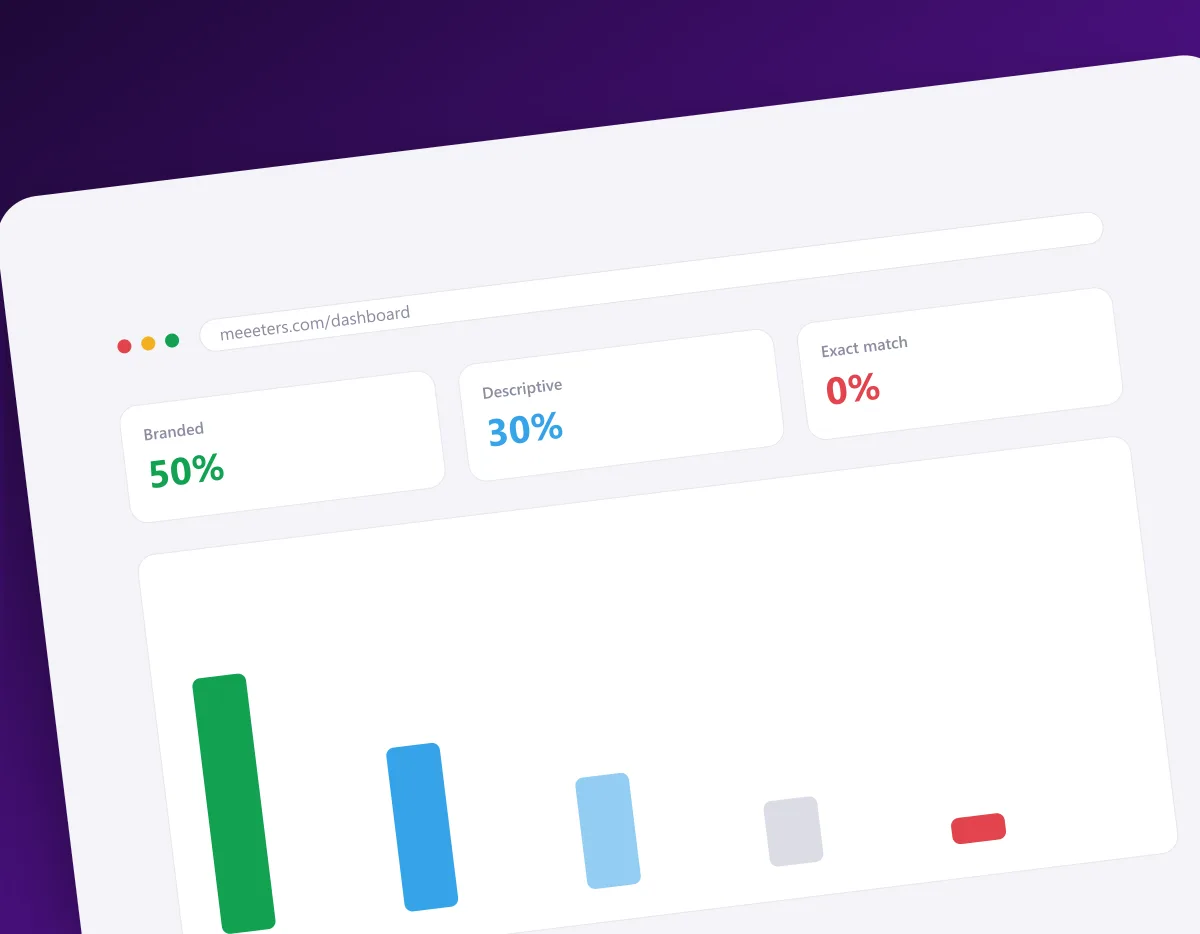
Anchor text is where careful link builders undo themselves. You can structure a perfect three-way exchange with a vetted, relevant partner, and then request the anchor "best CRM software" and hand Google the one signal that screams arranged link. Here is what natural anchor distribution looks like and how to apply it to exchanges.
Why anchors are the loudest signal
When Google's Penguin systems targeted manipulated links, over-optimized anchors were the primary marker, real people linking naturally almost never use your money keyword as the link text. They write your brand name, or "this guide," or the bare URL. A profile where new links keep arriving with commercial keywords in the anchor is statistically impossible to produce naturally, which is why it is so cheap to detect. Ahrefs' anchor text study found the same thing in the data: natural profiles are overwhelmingly branded and generic.
The anchor types, ranked by safety
| Anchor type | Example | Share of exchanged links |
|---|---|---|
| Branded | "Meeeters" | ~45–55% |
| URL / naked | "meeeters.com" | ~10–15% |
| Descriptive / natural phrase | "this breakdown of link velocity" | ~25–30% |
| Partial match | "a link exchange platform" | ~5–10% |
| Exact match | "best link exchange platform" | ~0% on exchanges |
| Generic | "here", "this site" | fill as needed |
These ratios are a defensible pattern, not magic numbers. The direction is what matters: branded-heavy, exact-match-absent.
The three rules for exchanged links specifically
1. The placing site picks the final anchor. An editorial link is one the publisher controls. Suggest two or three options ("our brand name, or something like this guide to X") and let your partner choose what reads naturally in their sentence. If a partner demands an exact-match anchor from you, that is a red flag about their profile, not a favor.
2. Never repeat a keyword anchor across trades. Five exchanged links all anchored "affordable project management tool" is a footprint even if every link is one-directional. Branded repetition is fine, that is how real profiles look.
3. Match the anchor to the landing page, loosely. Descriptive anchors should describe the page they point to, in the placer's words. A vague anchor into a relevant page beats a keyword anchor into the same page.
What to do if your existing anchors are already over-optimized
If past link building left you with a keyword-heavy profile, do not panic-disavow. Dilute: your next 20–30 links should be branded and descriptive, which shifts the ratios faster than removals. Check your current distribution with any backlink checker, and read the toxic backlinks guide before touching the disavow tool.
How this works on Meeeters
On Meeeters, anchors follow the editorial rule by design: the member placing the link writes it into their own content, so anchors come out branded and descriptive naturally, one less way to sabotage a good link.
Getting started
Run the free SEO analysis and start earning links whose anchors look like the profile Google expects, because real site owners wrote them.
Frequently asked questions
Quick answers to the questions people ask most about this topic.
Branded anchors (your site name) and descriptive phrases that fit the sentence. Avoid exact-match keyword anchors, they are the strongest paid-link signal Google has.
The site placing the link should have the final say, that is what makes it editorial. Suggest two or three options and let them pick what fits their sentence.
Branded anchors can repeat freely, that is natural. Keyword-bearing anchors should almost never repeat across exchanged links, repetition across new links is a pattern.

I built Meeeters to make link building safe and simple: real, relevant backlinks with no reciprocal footprint and no black-hat shortcuts. Questions about your site? Write to me directly.
Email us