How to Get Backlinks and Mentions from Images and Illustrations

A backlink is easier to ask for when the other site has already used something of yours. That is the whole method: put original photos or illustrations on Unsplash, wait until sites download them, then find those pages with Google Lens and ask for a credit that links back to you.
It is not a marketplace, it is not a swap, and it is not buying links. It is the visual version of an unlinked mention. The other site already chose the file. You are asking them to name the author.
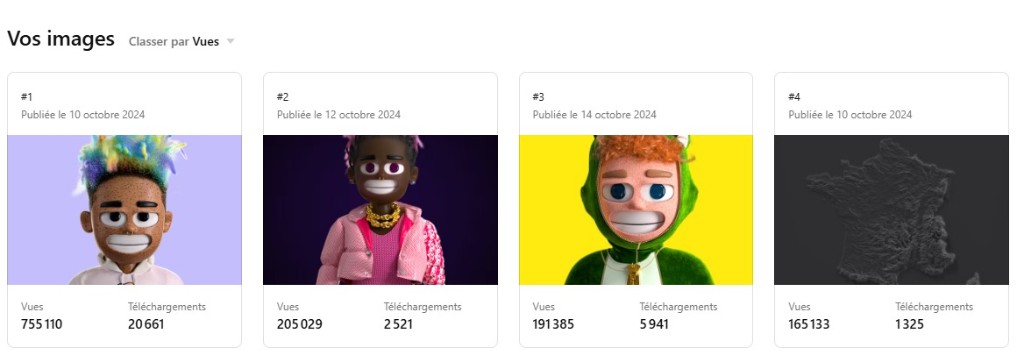
I run this on my own files. Here is the Unsplash dashboard for four illustrations I uploaded in October 2024, sorted by views.
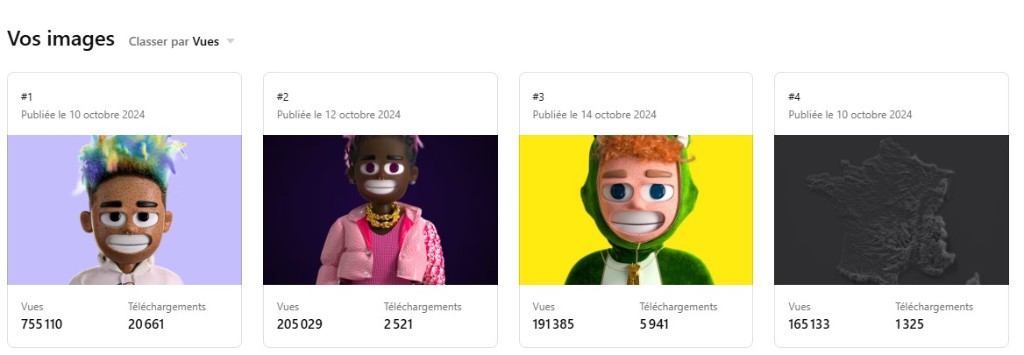
| File | Uploaded | Views | Downloads |
|---|---|---|---|
| 3D character, rainbow hair | 10 Oct 2024 | 755,110 | 20,661 |
| 3D character, pink braids | 12 Oct 2024 | 205,029 | 2,521 |
| 3D character, green hood | 14 Oct 2024 | 191,385 | 5,941 |
| 3D map of France | 10 Oct 2024 | 165,133 | 1,325 |
Those download counts are the prospect list. Each download is a site that might have put the file on a live page. Lens is how you find which ones did.
Why images produce mentions other tactics miss
Writers need pictures. They drop a photograph or an illustration into an article, they rarely add a credit, and they almost never link the source. The page still names a topic, still ranks, still has a caption field sitting empty.
That empty caption is the opening.
Three properties make the channel worth a monthly slot:
- The hard part already happened. You are not pitching a stranger to write about you. They already picked your file out of millions.
- The sites come to you. You do not scrape blogs hoping they need a visual. Unsplash distributes the file. Lens only has to show you where it landed.
- The topic follows the image. A map of France lands on French law, regional finance and management articles. Handshake stock lands on everything and nothing. That is why the 30 files have to match your site, not your mood board.
A credit with a URL is a mention. If the URL is a dofollow link inside the caption or the article body, it is also a dofollow backlink. Take both. A named credit with no followed link is still a brand mention on a real page. That is already more than most cold emails produce.
Unsplash licenses files for use without attribution. The sites you will email are usually allowed to use the picture. The email works because it is short, specific and polite. Frame it as "you used my illustration, a credit would help readers", never as "you stole this".
Step 1: Upload about 30 real photos or illustrations
The bank is unsplash.com. Create a contributor account, fill the profile with your name and the URL of the site you want linked later, then upload.
What to make
Photos you took, or illustrations you drew or modelled. Product-adjacent objects, places, diagrams, maps, tools of the trade, real people in the work, details from the niche. A gardening site uploads soil, pruning, varieties, regional allotments. A French legal or finance site would rather have a map of France than a generic 3D toy, which is exactly what the Lens results later confirmed.
Volume: about 30 files, not 3, not 300. Thirty is enough for Lens to keep surfacing new pages. Three files die after the first sweep. Three hundred is a weekend you will not repeat.
Stay on topic. Random beautiful pictures get downloads, they just get them from wallpaper blogs and Pinterest boards you cannot turn into a link. On-topic files get used in articles about your subject. Those are the emails that make sense.
What not to upload
- AI generations. They look like every other generation. Lens cannot tell your file from the lookalike, and Unsplash does not want them. If you did not shoot it or draw it, skip it.
- Client work you do not own. You need the right to publish the file under the Unsplash license.
- A logo or a screenshot of your product UI as "editorial art". Those get used as decoration, not as a citable visual, and they look like spam in the library.
- The same picture cropped five ways. Google treats them as one file. Thirty near-duplicates is still one chance.
Write a proper title and tags on Unsplash, in the language of the sites you want to appear on. A French map tagged in English will still get used, a French map titled and tagged in French will get used in the right neighbourhood.
Then leave them there. Unsplash is the distribution. Your job at this step is to supply files Google can later recognise as yours.
Step 2: Reverse-search every file with Google Lens
Wait until a file has downloads. Then take the original file, or the Unsplash preview, and run it through Google Lens.
On a phone, that is the Google app: Lens, point it at the image, or upload the file. On a desktop, open Google Images, the camera icon, upload the file. Open the Exact matches tab (in French interfaces it is labelled Correspondances exactes). Visually similar is the wrong list. You want the pages that used this file, not files that look a bit like it.
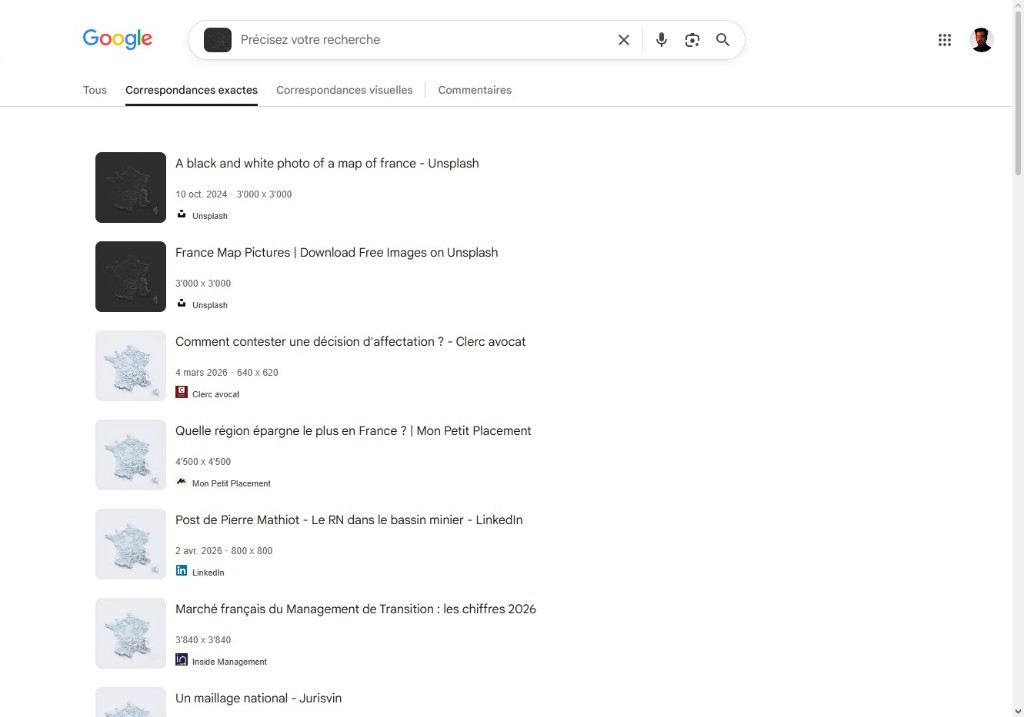
That screenshot is the method in one picture. The same map, downloaded 1,325 times from Unsplash, is sitting on:
- a law-firm article about contesting an assignment decision
- a piece on which French region saves the most
- a LinkedIn post on political numbers
- a 2026 market report on management de transition
- a wine-law article about national coverage
Skip your own Unsplash URLs, skip other stock hosts, skip wallpaper aggregators. Keep editorial pages. Put each one in a sheet: URL, title, date, the file they used, whether the image already has a credit.
You now have a list of sites that have already published your work. That is the warmest outreach list you will ever export, and it costs nothing.
Step 3: Email the sites and ask for a credit
For each editorial URL, find a contact. Author byline first, editor or a generic editorial address if the author is gone. One page, one email, one ask.
The email is short on purpose. Same rules as any mention reclaim: name the page, name the file, ask for one credit, offer a costless no.
Subject: The illustration on [article title]
Hi [name],
I made the [short description of the image] you used in [article title]. Glad it fitted the piece.
If you are still updating the page, would you add a short credit with a link to [your URL]? Illustration by [your name], [your URL] is enough.
Totally fine if not, and thanks for using it either way.
[your name]
Ask for a credit that points at your site, not only at your Unsplash profile. Unsplash already has the traffic. The backlink that is worth something is the one on the article, next to the image, pointing at a page you care about. Brand name as the anchor is the natural wording. Do not send them an exact-match money keyword and do not ask them to add rel=dofollow. If they credit you, the rest follows how that CMS already handles outbound links.
Send from a real person. One follow-up after five to seven days, two lines, then close the row.
Let Claude draft the batch
The find-and-ask part is slow if you write 20 emails by hand. The drafting is the part Claude can take.
Workflow that stays honest:
- From the Exact matches list, copy the editorial URLs, the page titles and the file each one used.
- Paste that list into Claude with your name, your site URL, and the template above.
- Ask for one short email per row, under 100 words, no legal language, the article title in the first sentence.
- Read every draft. Cut the ones that sound like a demand. Cut the wallpaper blogs. Send the rest yourself.
Claude writes. You send. Mass-mailing the drafts without reading them is how this method turns into spam, and spam is how you train inboxes to bury the next 30 asks. The point of the assistant is speed on a warm list, not a spray.
If a page is gone, if the image was cropped past recognition, or if the site already credited Unsplash, skip it. You are harvesting easy yeses, not litigating.
Recheck the same files every month
Unsplash does not stop distributing a file after your first Lens sweep. The France map will keep appearing on new articles. The 3D characters will keep being downloaded. A one-off hunt leaves most of the value on the table.
Monthly loop, 30 minutes:
- Open Unsplash stats. Note new download counts. A file that jumped is the one to Lens first.
- Reverse-search all 30 files again. You are only looking at the new domains since last month.
- Add new editorial URLs to the sheet. Send the asks that week, while the article is still being edited.
- Mark credits that landed. Spot-check that the link still points at you, the same way you would monitor any backlink.
- Retire a file only if Lens has gone quiet for several months and downloads have flattened. Replace it with a new on-topic picture so the set stays near 30.
This is a compounding habit, not a launch. Two good credits a month from images beats a heroic weekend you never repeat. How many you need overall is a different question, covered in how many backlinks you need to rank. This channel just has a cheap way to keep adding a few.
What this method is not
It will not replace a link profile. Image credits land on whatever site happened to need a picture that week. Some of those sites are excellent. Some are thin. You do not control the neighbourhood the way you do when you choose a relevant partner on purpose.
It is also not a loophole around buying links. If someone replies "we can add the credit for 150 euros", decline. That is the same paid placement you would already skip; see is buying backlinks worth it. A free credit you were offered as a courtesy is editorial. A priced caption is not.
Do not:
- upload AI images and hope Lens sorts them out
- email Unsplash itself, or the other stock hosts, asking for a backlink
- send a copyright complaint on a file you put under a license that allows use without credit
- stuff 30 near-duplicate crops to fake volume
- automate the sending. Drafts, yes. A bot hitting 40 editorial inboxes, no.
Keep the files unique, keep the list editorial, keep the ask human.
The realistic plan
Make 30 on-topic photographs or illustrations. Put them on Unsplash with your name and your site in the profile. Once downloads appear, Lens the files, keep the Exact matches that are real articles, and ask for a caption that links to you. Let Claude write the batch, you hit send. Repeat every month.
That is a free source of mentions and the occasional editorial link, sitting next to whatever else you already do. If you want the other half, verified dofollow backlinks from scanned sites in your niche, run the free SEO analysis and let Meeeters find those. The images can keep working in the background while the network covers the links this method will never choose for you.
Frequently asked questions
Quick answers to the questions people ask most about this topic.
Yes. Sites download the files and put them in articles. Google Lens then shows you those pages. A short email asking for a credit with a link to your site is the same family of ask as reclaiming an unlinked mention: they already used your work, you are asking them to finish the citation.
No. Attribution is optional under the Unsplash license, and the sites using your files are usually within their rights. Unsplash itself says credit is not required but always appreciated. That is the tone of the email: a courtesy, never a legal threat. Threatening copyright on an Unsplash file will get you ignored, or worse.
No. Upload real photographs or illustrations you actually made. AI images look like thousands of other AI images, so reverse search returns noise instead of the specific sites that used your file. Unsplash also restricts AI content. Unique files are what Google Lens can fingerprint.
About 30, all related to the topic of your site. A handful of random pictures will not give you a list worth emailing. Thirty on-topic files give Lens enough volume to keep finding new pages month after month.
Once a month. Unsplash keeps distributing the same files. New downloads mean new pages. A monthly Lens pass on the same 30 files is a 30-minute habit, not a campaign you run once and forget.

I built Meeeters to make link building safe and simple: real, relevant backlinks with no reciprocal footprint and no black-hat shortcuts.