How to Trade Backlinks in 2026 (Step-by-Step, Without the Penalty)

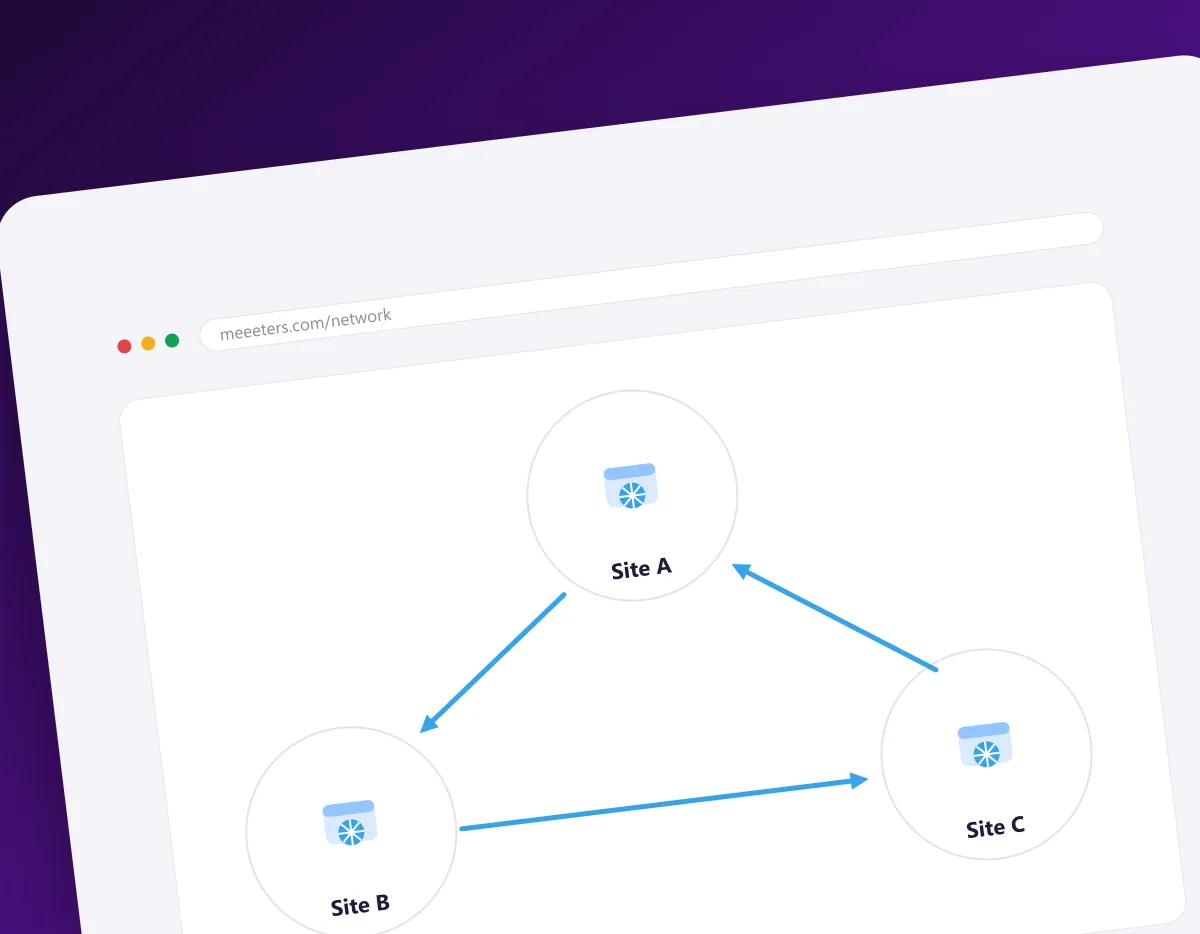
Trading backlinks means giving a link to another site and receiving one in return. Done the naive way, both links form a visible reciprocal pair that Google has detected for two decades. Done right, every link in the trade is one-directional and editorial, and nothing distinguishes it from a naturally earned link. This tutorial covers the right way, step by step.
Step 1: Know what you are offering
Before contacting anyone, be honest about the value of your link. Three things matter to a potential partner:
- Real organic traffic. Not your Domain Rating. DR is easy to fake; traffic is not.
- Topical relevance. A link from a marketing blog to a fitness site is worth little to either side.
- Placement quality. A dofollow link inside an existing, indexed article beats a link in a footer or a "partners" page every time.
Pull your organic traffic from Search Console so you can share a screenshot when asked. Serious partners will ask.
Step 2: Find partner sites in adjacent niches
Avoid trading with direct competitors: you would be strengthening the site that outranks you. Look one niche over instead, a bookkeeping tool trades with an invoicing blog, not with another bookkeeping tool. We wrote a full guide on finding link exchange partners, but the short version:
- List 10 topics adjacent to yours.
- Search each topic and note the sites ranking 5–20 (they want links as much as you do).
- Vet each one: real traffic, clean outbound link profile, no toxic signals.
Step 3: Structure the trade as three-way, not reciprocal
This is the step most people skip, and the reason most trades get devalued. Never do "you link to me, I link to you." Instead, use the ABC model: you link to site B, and site B arranges your return link from site C. The mechanics are explained in our three-way link exchange guide. Google's spam policies explicitly name excessive reciprocal exchanges, the three-way structure is what removes that pattern.
Step 4: Agree on the details before placing anything
A trade without written terms ends badly. Agree on:
| Term | What to specify |
|---|---|
| Placement | Inside editorial content, not footer or sidebar |
| Attribute | Dofollow (rel empty or absent) |
| Anchor text | Descriptive, not exact-match money keywords |
| Timing | Both links live within an agreed window |
| Duration | Links stay live permanently, verified quarterly |
| Or skip the negotiation | On Meeeters placement, dofollow, anchor and verification are set by default |
For anchors, keep them natural, our guide on anchor text for link exchanges shows the safe distribution.
Step 5: Verify, then keep verifying
Roughly a third of manually traded links disappear or get switched to nofollow within six months. Check the placed link on day one, then monthly: page still indexed, link still present, still dofollow. A backlink checker automates this.
The honest problem with manual trades
Manual trading works, and the ROI is hard to beat, but it has a trust problem: you place your link first and hope a stranger delivers. That is the exact problem Meeeters removes. It is an AI-powered SEO tool that finds you dofollow backlinks in your niche, from network members that are scanned and eligible, placement, dofollow status and uptime verified automatically. No reciprocal links, no PBNs or spammy sites.
Getting started
If you want to trade backlinks without the outreach and the trust issues, create a free account: you get an SEO analysis of your site, then dofollow backlinks in your niche from network members that are scanned and eligible.
Frequently asked questions
Quick answers to the questions people ask most about this topic.
Excessive link exchanges made purely for ranking are named in Google's spam policies. What gets detected is the reciprocal pattern. One-directional, relevant, editorial links carry none of those signals.
Use a three-way structure. You link to site B, and your return link comes from a different site, C. No reciprocal pair exists.
A manual trade takes one to three weeks between outreach, negotiation and placement. A platform with automated matching cuts this to days.

I built Meeeters to make link building safe and simple: real, relevant backlinks with no reciprocal footprint and no black-hat shortcuts.