Reciprocal Links and SEO: Are They Bad for You?

Short answer: a few natural reciprocal links are fine. A pattern of them, built deliberately to trade rankings, is named in Google's link spam policies and gets devalued. The fix is not to stop collaborating, it is to remove the reciprocal footprint.
What a reciprocal link is
A reciprocal link is when site A links to site B, and site B links back to site A. It happens naturally all the time: partners, suppliers, and related projects reference each other. That kind of incidental cross-linking is not a problem.
The problem starts when the links exist only to pass ranking value, and when there are many of them.
When reciprocal links hurt
Google's documentation lists "excessive link exchanges" as link spam. The link graph makes the pattern easy to spot:
- Reciprocal pairs (A to B and B to A) are trivial to detect at scale.
- Timing: two links appearing within days of each other in both directions.
- Anchors: both sides using commercial, keyword-rich text.
- Neighborhoods: sites full of reciprocal pairs cluster together and get discounted together.
The usual outcome is not a dramatic penalty. It is silent devaluation: you did the outreach and receive no ranking value for it.
The safe alternative: break the reciprocity
The insight is simple: the problem is the pair, not the trade. If A links to B, and B's return link comes from a different site C, no reciprocal pair exists anywhere in the graph. Each link is one-directional, editorial and relevant.
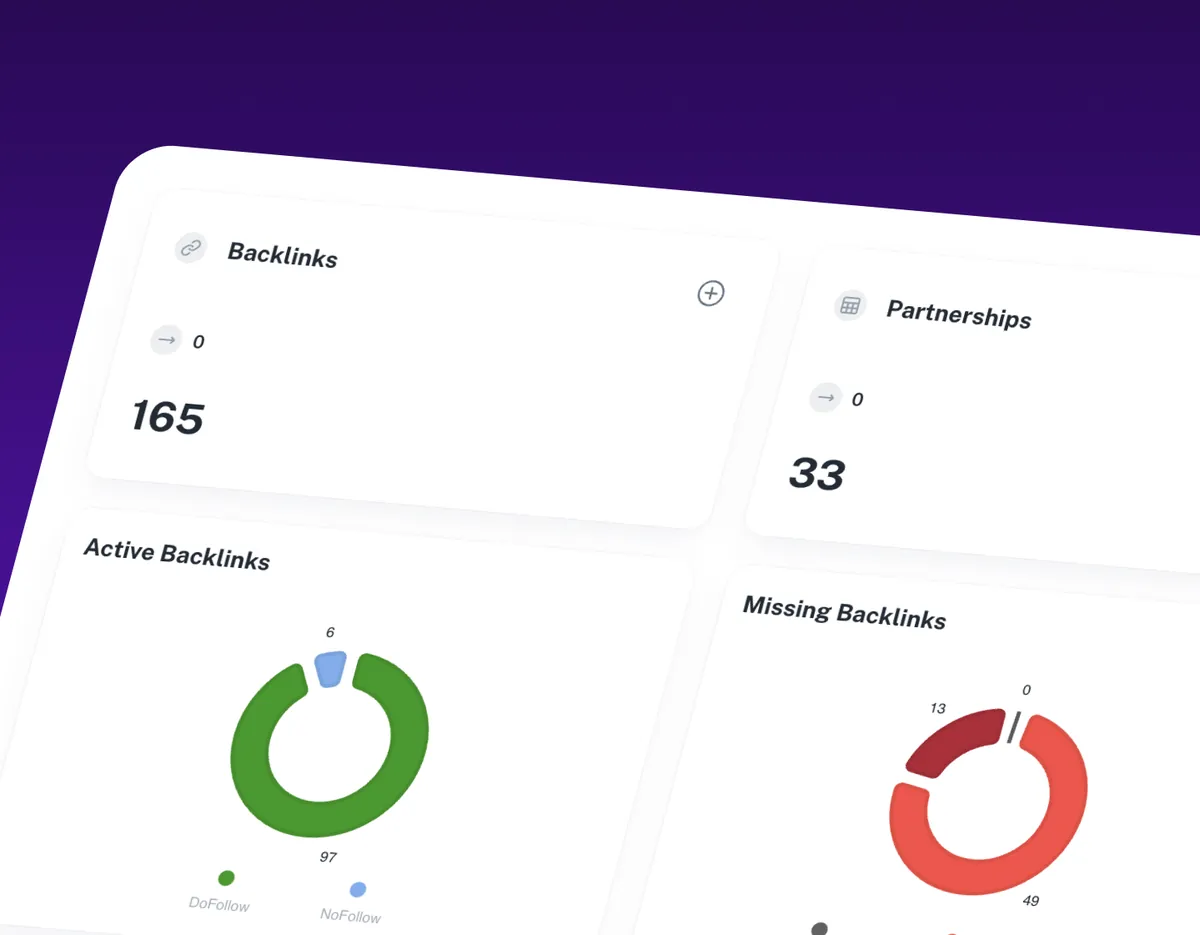
This is the three-way link exchange model. The Meeeters network is an AI-powered SEO tool that finds you dofollow backlinks in your niche, from network members that are scanned and eligible, your backlink coming from a different member, never the site you linked to. No reciprocal links, no PBNs or spammy sites.
How to audit your own reciprocal links
Check both directions for every partner link you have. If a site you link to also links back with a commercial anchor, that is a pair worth reviewing. For the full risk breakdown, read are link exchanges safe.
The bottom line
Reciprocal links are not evil, but building them at scale is a waste at best and a liability at worst. Keep the value of collaboration, drop the footprint, and see how Meeeters works for the non-reciprocal version.
Frequently asked questions
Quick answers to the questions people ask most about this topic.
Excessive link exchanges meant to manipulate rankings are named in Google's link spam policies. Occasional natural ones are fine.
When they are systematic, large-scale and clearly built for SEO rather than genuine relevance between the two sites.
A three-way model: you link to one site and receive your link from a different one, so no reciprocal pair exists.
There is no published threshold, and anyone quoting a number is guessing. What matters is the pattern rather than the count. One or two cross-references built up over time between genuinely related sites look like the ordinary web. A steady stream of them between the same two domains is exactly the footprint the policies describe. If you find yourself counting, you are already in the zone worth avoiding.
The useful question is not a percentage of your profile, it is whether a reciprocal pair exists at all for a given partner. A profile where most links have a matching link back reads as a scheme whatever ratio you calculated. Remove the pair, by receiving your link from a third site, and the ratio question stops mattering.
It depends on whether the page exists for readers or for links. A short curated list of tools you genuinely use, on a page people actually visit, is normal. A long list of partners assembled to host outgoing links, especially when those sites link back, is the case Google names directly as partner pages built exclusively for cross-linking.
Link to them if the link genuinely helps your reader, and treat that as the end of it rather than as a trade. If you want a link back, ask them to place it from a different property they own, or use a network that assigns you a one-directional link, so it never comes from the site you linked to. Declining the pair costs you one link and protects the whole profile.

I built Meeeters to make link building safe and simple: real, relevant backlinks with no reciprocal footprint and no black-hat shortcuts.