Fallbeispiel
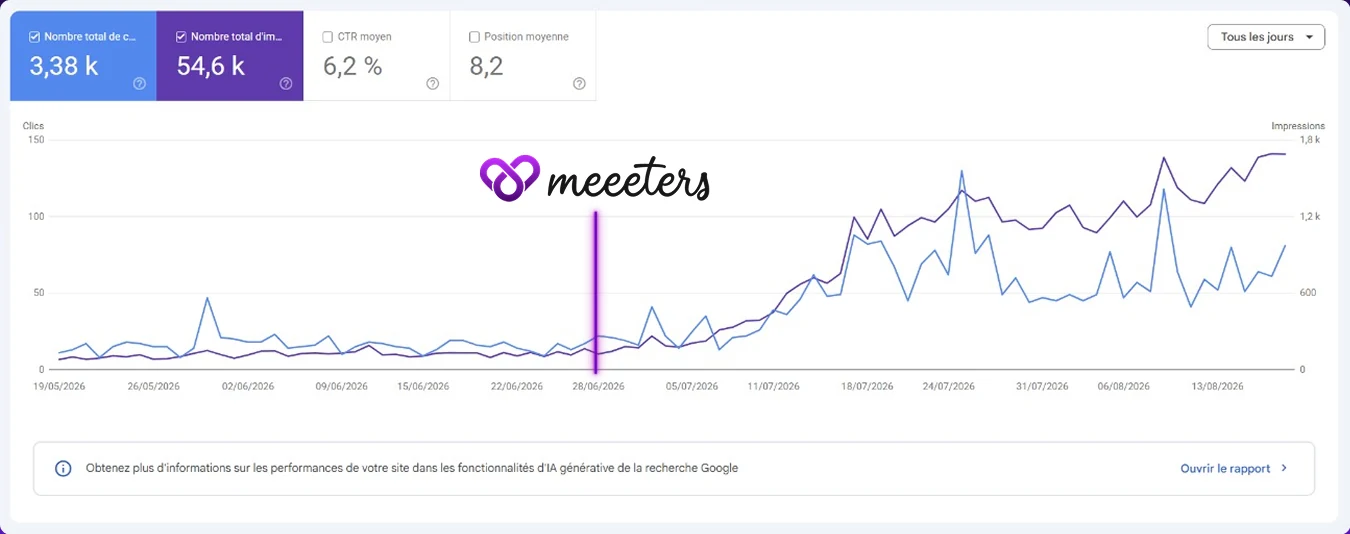
Von 89 Klicks im Monat auf 3.380 in zwei Monaten.
taada.top, betrieben mit Meeeters. Die violette Linie markiert den Starttag.
- 54,6 Tsd. Impressionen
- 6,2 % CTR
- Position 8,2
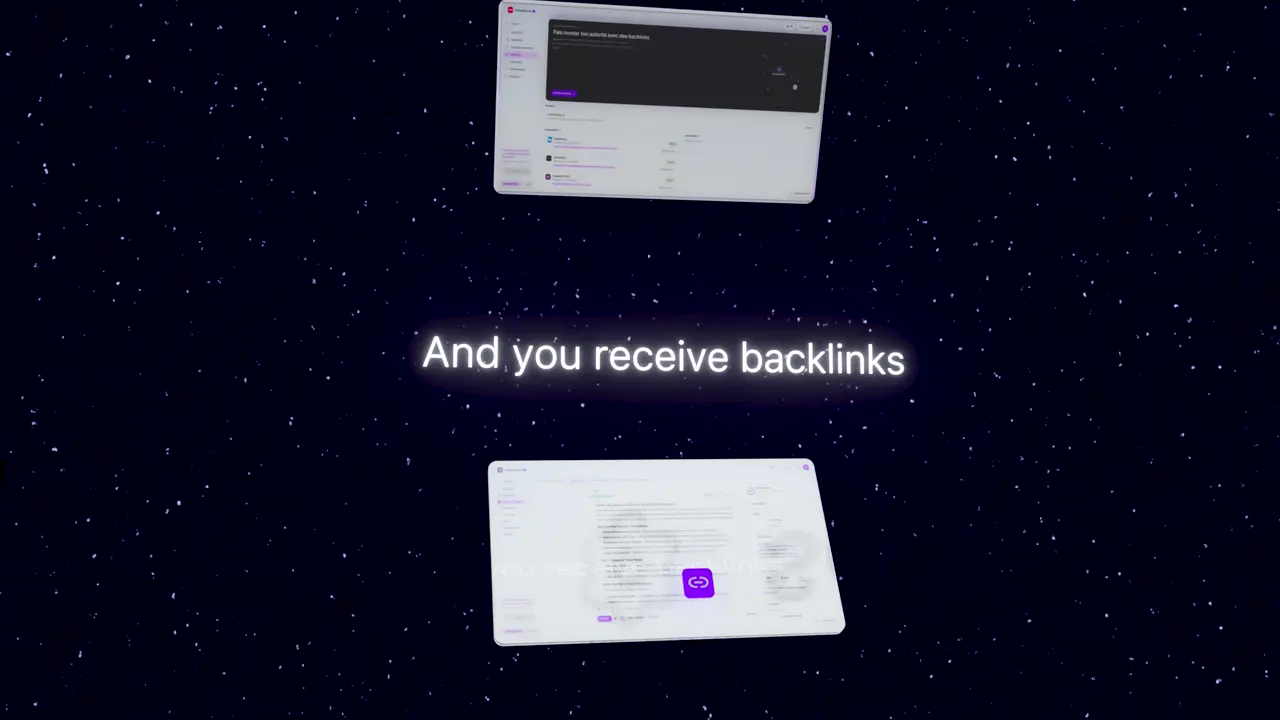
Die SEO-Inhalte Ihrer Website, von Meeeters für Sie erstellt, einem leistungsstarken KI-SEO-Tool.
Funktioniert mit
[ Ergebnisse ]
Echte Websites, die mit Meeeters laufen, mit ihren eigenen Search-Console-Zahlen. Dieselbe Methode für Ihre: Scan, Plan, Artikel, Backlinks.
Fallbeispiel
taada.top, betrieben mit Meeeters. Die violette Linie markiert den Starttag.
Fallbeispiel
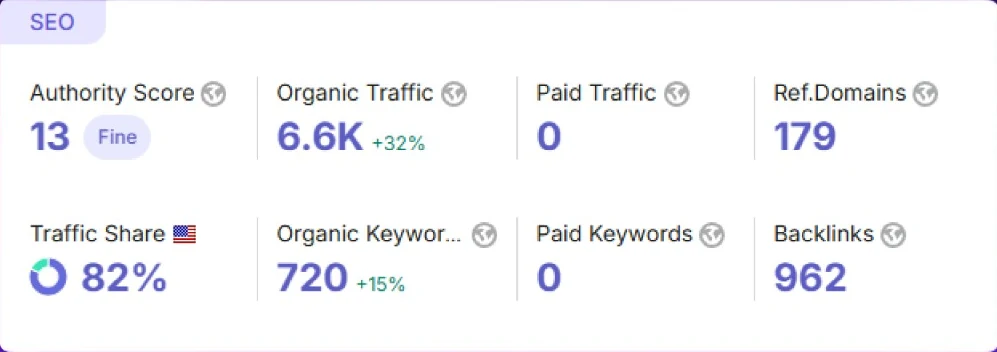
ferrstudio.ch, läuft mit Meeeters. Organischer Traffic, verweisende Domains und Backlinks.
Fallbeispiel
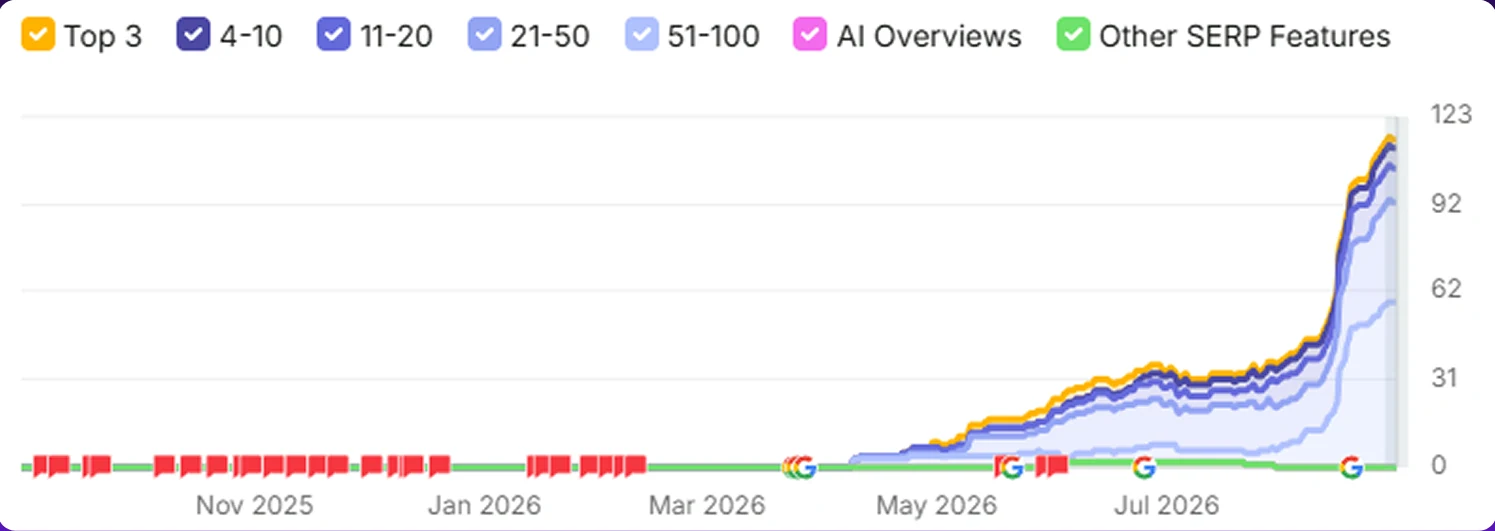
bereach.ai, betrieben mit Meeeters. Positionen in Google und den AI Overviews, Monat für Monat.
Fallbeispiel
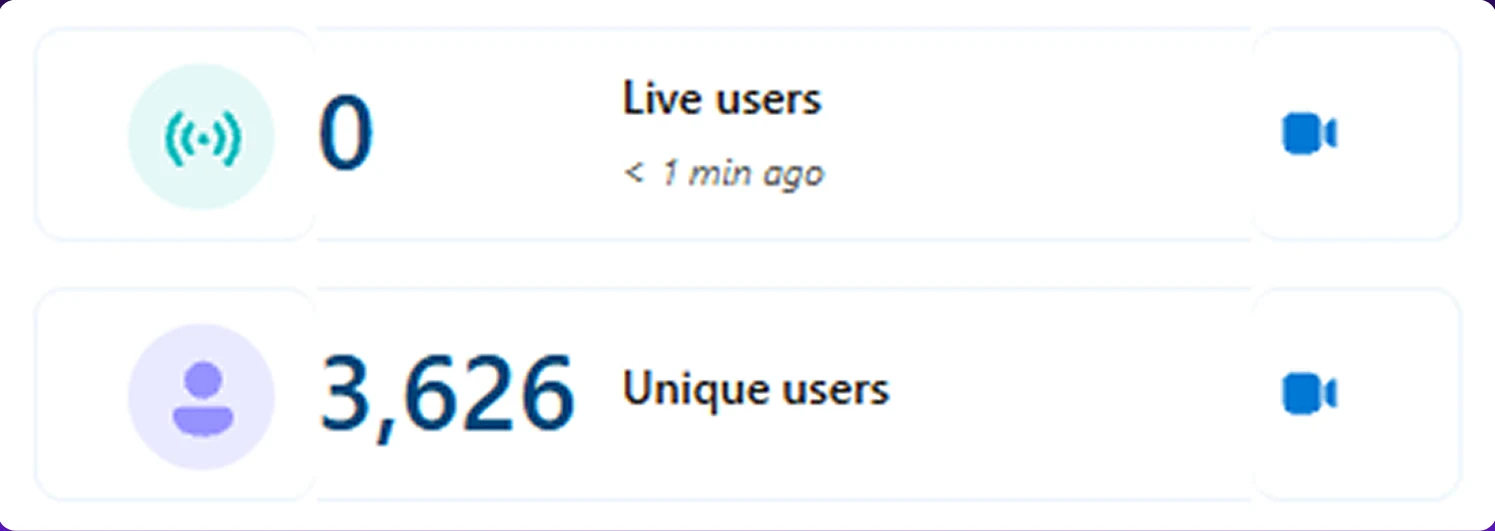
meeeters.com, unsere eigene Website. Echte Nutzer, live gezählt.
[ Probleme und Lösung ]
Ihr Problem
Unsere Lösung
[ Funktionen ]
Artikel, Backlinks und Live-Prüfungen. Sie geben die Entwürfe frei und setzen Ihre Links, und derselbe Plan läuft auch über Claude, wenn Sie lieber chatten.
Überschriften, Schema und interne Links fürs Ranking. Sie veröffentlichen ihn selbst.
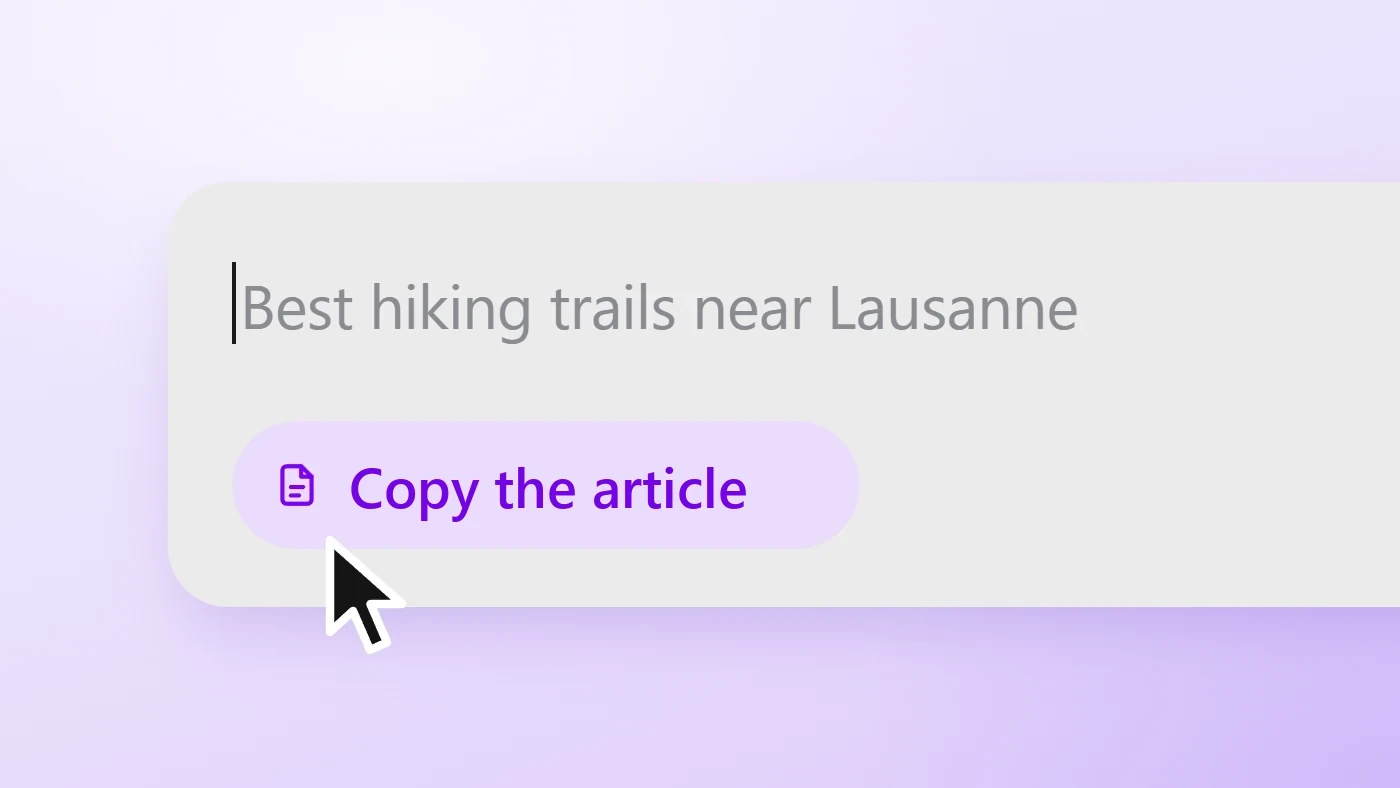
Mitglieds-Websites Ihres Themas und Ihrer Sprache, passend zu Ihnen. Kein Linktausch, keine Linkketten, keine PBNs.
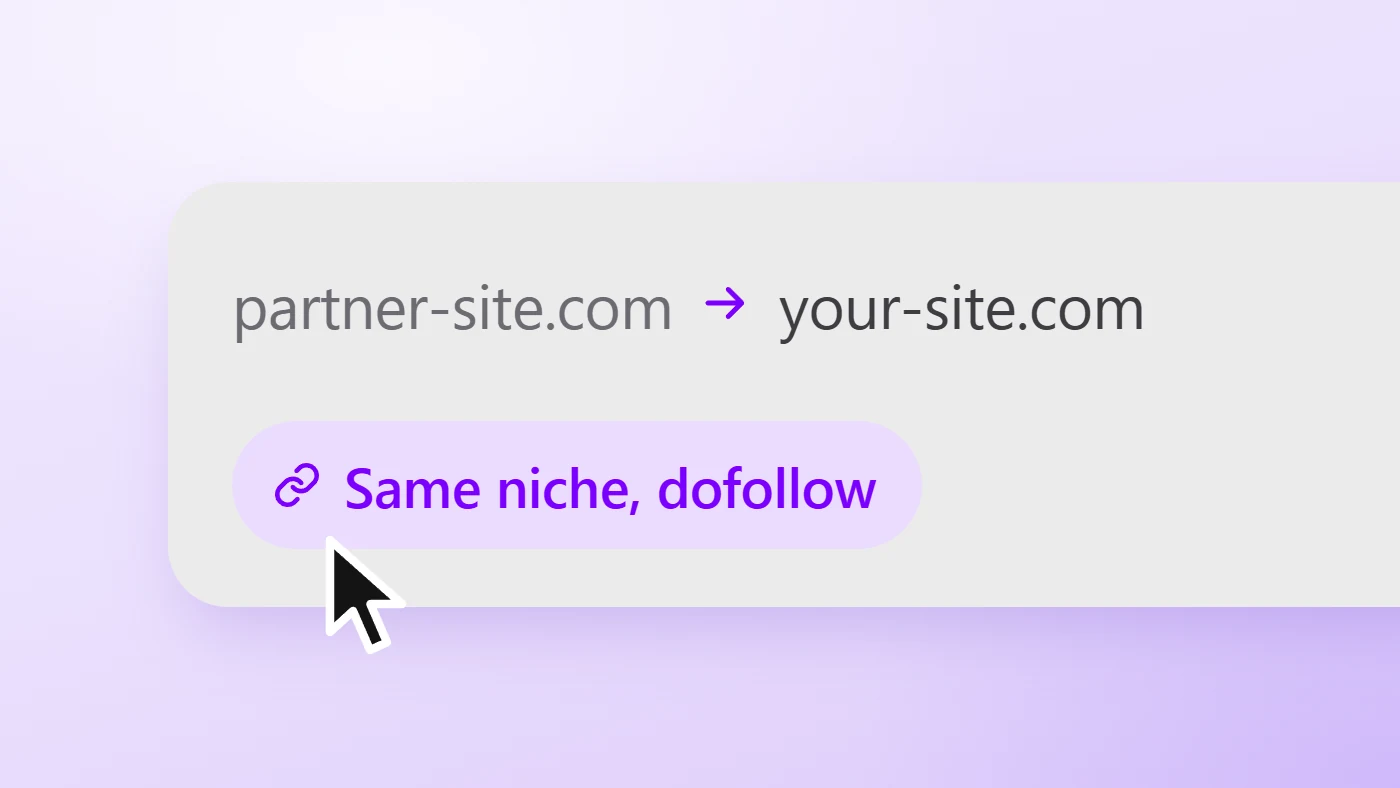
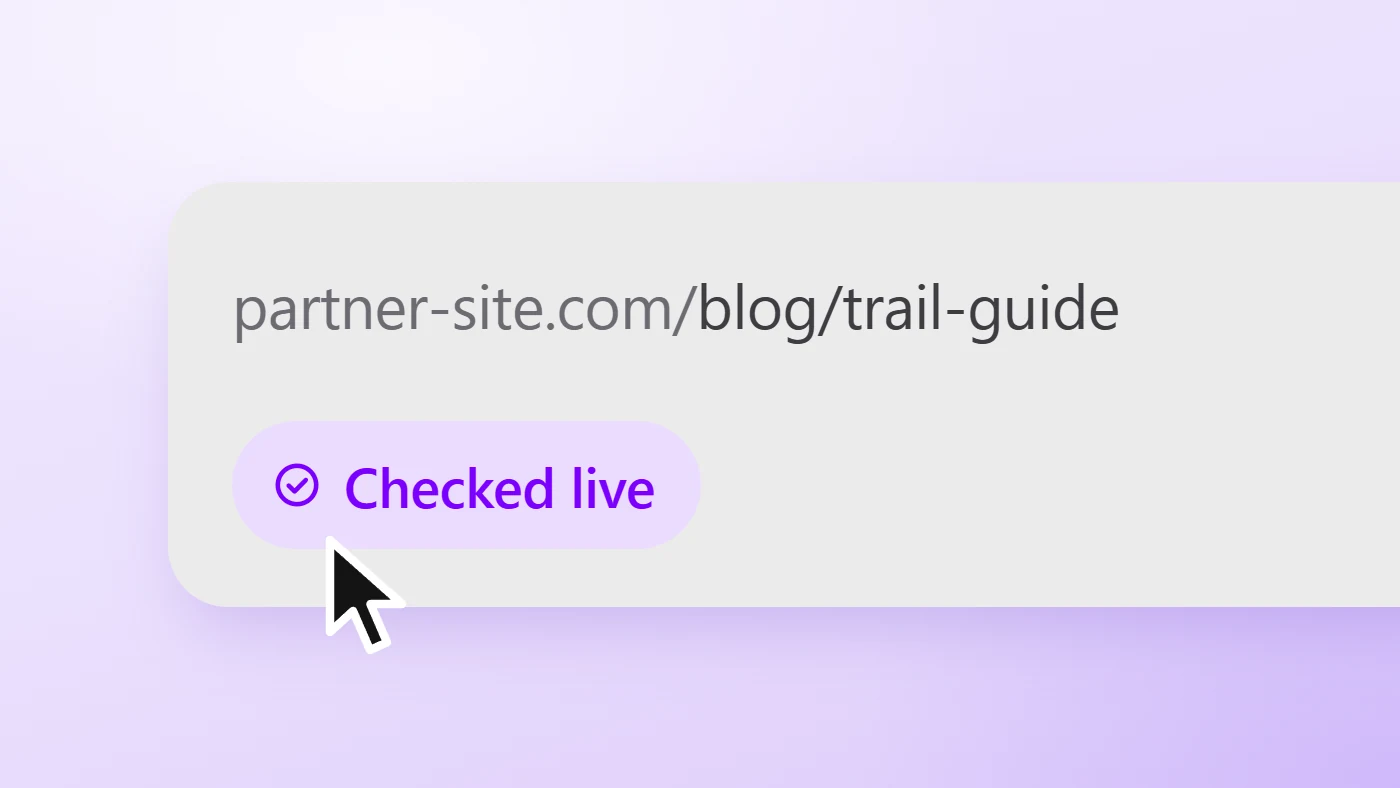
Ein Link zählt, sobald die Seite online ist, der Ankertext vorhanden ist und das rel-Attribut dofollow ist.
[ Bewertungen ]
Echte Trustpilot-Bewertungen der ersten Meeeters-Mitglieder.
[ Ratgeber ]
Alles, was wir darüber wissen, wie man bei Google und in KI-Antworten gefunden wird, in fünf ausführlichen Leitfäden.
Fügen Sie eine Adresse in Claude ein und fragen Sie in einfachen Worten: Claude liest Ihre Website und Ihre Search Console.
In Claude
Start the Meeeters method[ Schreibbeispiele ]
Geschrieben für Ihre Nische und Ihre Interessenten am Anfang des Funnels, mit den Fakten, die eine KI-Antwort aufgreifen und zitieren kann
Ask ChatGPT, Perplexity or Google a question in 2026 and you often get a written answer with a handful of citations instead of ten blue links. Generative engine optimization, GEO, is the discipline of making sure your site is one of those citations. This article is the plain-English definition: what GEO is, where the term comes from, how it relates to SEO and AEO, why it suddenly matters, and which levers actually move it.
Generative engine optimization is the practice of optimizing your content and your site so that AI systems cite, quote, paraphrase or recommend you inside the answers they generate. The "generative engine" is any system that answers a query by writing a response rather than listing links: ChatGPT with search, Perplexity, Google AI Overviews and AI Mode, Microsoft Copilot, and the growing set of AI assistants embedded in browsers and apps.
The goal shifts in one important way. Classic SEO optimizes for a position in a list, and the user chooses which result to click. GEO optimizes for inclusion in a synthesized answer, where the engine chooses which two to five sources to lean on and everyone else is invisible. A results page distributes attention across ten links; a generated answer concentrates it on the few sources it cites.
That concentration is why GEO gets discussed with such urgency, and it is also why the fundamentals have not changed as much as the hype suggests. The engines choose their sources from what they can retrieve, and what they can retrieve is largely what already ranks. Most assistants run a live search behind the scenes, read the top results, and write an answer grounded in them.
The term was coined in an academic paper titled "GEO: Generative Engine Optimization," published in November 2023 by researchers from Princeton University, Georgia Tech, IIT Delhi and the Allen Institute for AI, and later presented at KDD 2024. The paper is publicly available on arXiv.
Two things in that paper matter for practitioners. First, it formalized the idea of a generative engine: a system that ingests retrieved web sources and synthesizes an answer, citing some of them. Second, it ran experiments on which content modifications increased a source's visibility inside those answers. On their benchmark, changes like adding citations to credible sources, including quotations, and including statistics improved visibility substantially, with the paper reporting gains of up to roughly 40 percent for the best-performing methods on their test set.
Treat the exact numbers with care: the benchmark used specific engines and query sets, and real assistants have evolved since. But the direction of the finding has held up in practice. Content that carries evidence (numbers, quotes, named sources) and is structured so a model can lift a clean passage gets cited more than content that says the same thing vaguely. We see the same pattern on the sites we work with: the pages that earn citations are almost always the ones that state a checkable fact in a self-contained paragraph.
After the paper, the acronym escaped the lab. By late 2024, "GEO" had become the umbrella term in the industry for AI-answer visibility work, competing with a half-dozen other labels.
The terminology is genuinely messy, so here is the honest version: GEO, AEO and SEO are overlapping practices, not rival ones, and most of the work is shared.
SEO (search engine optimization) is the parent discipline: making pages crawlable, indexable, relevant and authoritative so they rank in search results. Every other acronym stands on top of it.
AEO (answer engine optimization) predates the current AI wave. It originally described optimizing to be the answer rather than a result: featured snippets, People Also Ask boxes, voice assistant responses. When AI chat answers arrived, many people stretched AEO to cover them too.
GEO (generative engine optimization) is the newest and most specific term: optimizing to be cited or recommended inside answers written by generative AI. In everyday use, GEO and AEO now describe mostly the same work, and you will also see LLMO, AI SEO and "LLM optimization" used interchangeably. Do not overthink the labels; the inputs matter more than the acronym.
| SEO | AEO | GEO | |
|---|---|---|---|
| Goal | Rank in a list of results | Be the direct answer | Be cited inside a generated answer |
| Surface | Search results pages | Featured snippets, PAA, voice assistants | ChatGPT, Perplexity, AI Overviews, AI Mode, Copilot |
| Key metric | Rankings, organic clicks | Snippet ownership, answer share | Citation frequency, AI referral traffic, share of voice in answers |
| Main levers | Crawlability, relevance, backlinks, content quality | Question-shaped content, concise answers, schema | Retrievability, quotable structure, entity clarity, authority |
Read the bottom row again and notice the overlap. Authority appears everywhere. Structure appears everywhere. That is the core insight of this whole field: most of what works in SEO transfers, and the budget question is where to put the rest.
The term is from 2023, but three product launches turned it from a paper into a budget line.
Google AI Overviews went mainstream. Google rolled out AI Overviews to US users in May 2024 and expanded them to more countries and more query types through 2024 and 2025, followed by AI Mode, a fully conversational search experience. When AI-written answers started appearing at the top of the world's largest search engine, every site owner suddenly had a stake in how those answers choose their sources. Google has stated that these AI features are built on its core ranking systems, and its guidance for AI features in Search says plainly that standard SEO best practices are the foundation.
Weitere Anleitungen im Blog. Zum Blog
[ Preise ]
Der Plan des Monats, 3 Artikel und bis zu 3 Backlinks.
Keine Kreditkarte
Meine Website analysieren10 Artikel und bis zu 10 Backlinks für eine Website.
Karte erforderlich · jederzeit kündbar
Pro wählenDer Pro-Plan für bis zu fünf Websites.
Jederzeit kündbar
Jetzt startenKurze Antworten auf die häufigsten Fragen zu diesem Thema.
Nein. Meeeters liest Ihre öffentlichen Seiten und Ihre Search Console. Es hat keinen Zugriff auf Ihr CMS: Sie kopieren jeden Artikel und veröffentlichen ihn selbst, also ändert sich auf Ihrer Website nichts ohne Sie.
Die Analyse liest nur Ihre öffentlichen Seiten, genau wie der Crawler von Google: kein Login, kein Admin-Zugang, kein Code auf Ihrer Website. Artikel und Links setzen Ihre Google Search Console voraus: Meeeters liest sie mit einem Zugriff, den Sie jederzeit widerrufen können.
Nein. Auf Ihrer Website wird nichts installiert und Meeeters hat keinen Zugriff auf Ihr CMS. Sie kopieren jeden Artikel und veröffentlichen ihn selbst.
Nie. Meeeters hat keinen Zugriff auf Ihre Website. Sie lesen jeden Artikel, kopieren ihn, bearbeiten ihn nach Wunsch, und Sie klicken immer selbst auf Veröffentlichen.
Es ist ein Geben und Nehmen, und das sagen wir offen. Jeden Monat gibt Ihnen Meeeters bis zu 3 Links, die Sie in Ihren eigenen Artikeln setzen, zu Mitgliedern Ihrer Nische. Jeder online gesehene Link bringt Ihnen einen zurück, von einer anderen Website. Zwei Websites verlinken sich nie gegenseitig: keine reziproken Links, keine PBNs. Eine Website, die nicht mehr setzt, erhält auch keine mehr.
Ja, jeder platzierte Link wird automatisch geprüft: Die Seite ist erreichbar, der Link und sein Ankertext sind vorhanden und das rel-Attribut ist dofollow. Nofollow-Links zählen nie zu Ihrer Gesamtzahl, ein Link zählt also erst, wenn alle Prüfungen bestanden sind.
Ja, in jedem Plan. Sie fügen eine Adresse als benutzerdefinierten Connector in Claude ein und bitten Claude, die Meeeters-Methode zu starten. Claude liest Ihre Website und Ihre Search Console, schreibt den Artikel des Monats mit seinem zu setzenden Link und prüft den Link, sobald der Artikel veröffentlicht ist.
Nein. Meeeters arbeitet an Ihrer Website: Artikel und Backlinks. Für das Google-Unternehmensprofil haben wir ein eigenes Tool gebaut, Posipin. Es schreibt Ihre Antworten auf Bewertungen und Ihre Beiträge und listet auf, was am Profil zu korrigieren ist (Kategorien, Beschreibung, Öffnungszeiten). Es gibt es auf Französisch und Englisch.
Kostenlos starten, ohne Karte: 3 Artikel und bis zu 3 Backlinks pro Monat. Pro kostet $100 USD pro Monat für 1 Website oder $350 USD pro Monat für bis zu 5 Websites. Beide sind jederzeit kündbar.
SaaS, Onlineshops, Agenturen, Blogger und Gründer. Das Matching bringt Sie mit relevanten Websites gleicher oder höherer Autorität zusammen.