
How Much Does GEO Cost? Real Price Ranges for 2026

Christopher Fernandes
Christopher Fernandes · Founder
Last updated on July 13, 2026
Cost breakdown of GEO approaches from DIY to agency retainers
In short
GEO costs range from nearly free to five figures a month depending on who does the work. Typical 2026 market ranges: DIY runs $0 to $300/mo in tool subscriptions plus your time, dedicated AI visibility trackers run $99 to $500+/mo, and GEO consultants and agencies charge retainers of $2,000 to $10,000+/mo, often rebranded SEO retainers. The real cost driver is never the tracking: it is content production and authority building, because backlinks and brand mentions gate who gets cited. For a small site the right spending order is: fix retrievability for free, produce answer-first content, invest in links, and only buy a tracker once there is something to track.

Ask what GEO costs and you will get quotes from $29 a month to $15,000 a month, all technically honest. The spread exists because "GEO" is sold as three different things: a software subscription, a consulting service, and a rebadged SEO retainer. This is the money article: what each approach actually costs in 2026, what you get for it, and the order in which a small site should spend.

One framing note before the numbers, because it changes how you read every price tag below: the expensive part of GEO is not measuring AI visibility, it is earning it. Assistants cite pages that rank and brands they have seen described across trusted sites. Both are bought with content and authority, not with dashboards. Whoever you pay, that is where the money ultimately has to go.

The short answer: typical 2026 price ranges

ApproachTypical costWhat you getWhen it makes sense
DIY$0 to $300/mo in tools, plus your timeFree foundation fixes, entry-level tracking, content you write yourselfSmall sites, founders with more time than budget, anyone starting from zero
AI visibility trackers$99 to $500+/mo (entry tools from ~$29/mo, enterprise on request)Mention rates, citation sources, competitor share of voice across assistantsOnce you have citations to measure and competitors to benchmark
GEO consultantCommonly $1,000 to $5,000/mo or project-basedStrategy, audits, prioritized fixes; execution varies by engagementTeams with in-house execution who need direction
GEO agency retainerCommonly $2,000 to $10,000+/moReporting plus (in good cases) content and authority work; often a rebranded SEO retainerCompanies with budget who verify what is actually delivered
Hybrid platform (Meeeters)Free analysis; paid plans on /pricingAudit, AI article drafts into your CMS, verified links from a non-reciprocal networkSmall teams that want the inputs (content plus authority) without agency pricing

All figures are typical market ranges we see in 2026, not quotes; every vendor prices differently and enterprise deals go far higher.

DIY: roughly $0 to $300 a month, paid mostly in hours

The direct answer: a motivated founder can run a legitimate GEO program for the price of one or two tool subscriptions, because most of the foundational work is free.

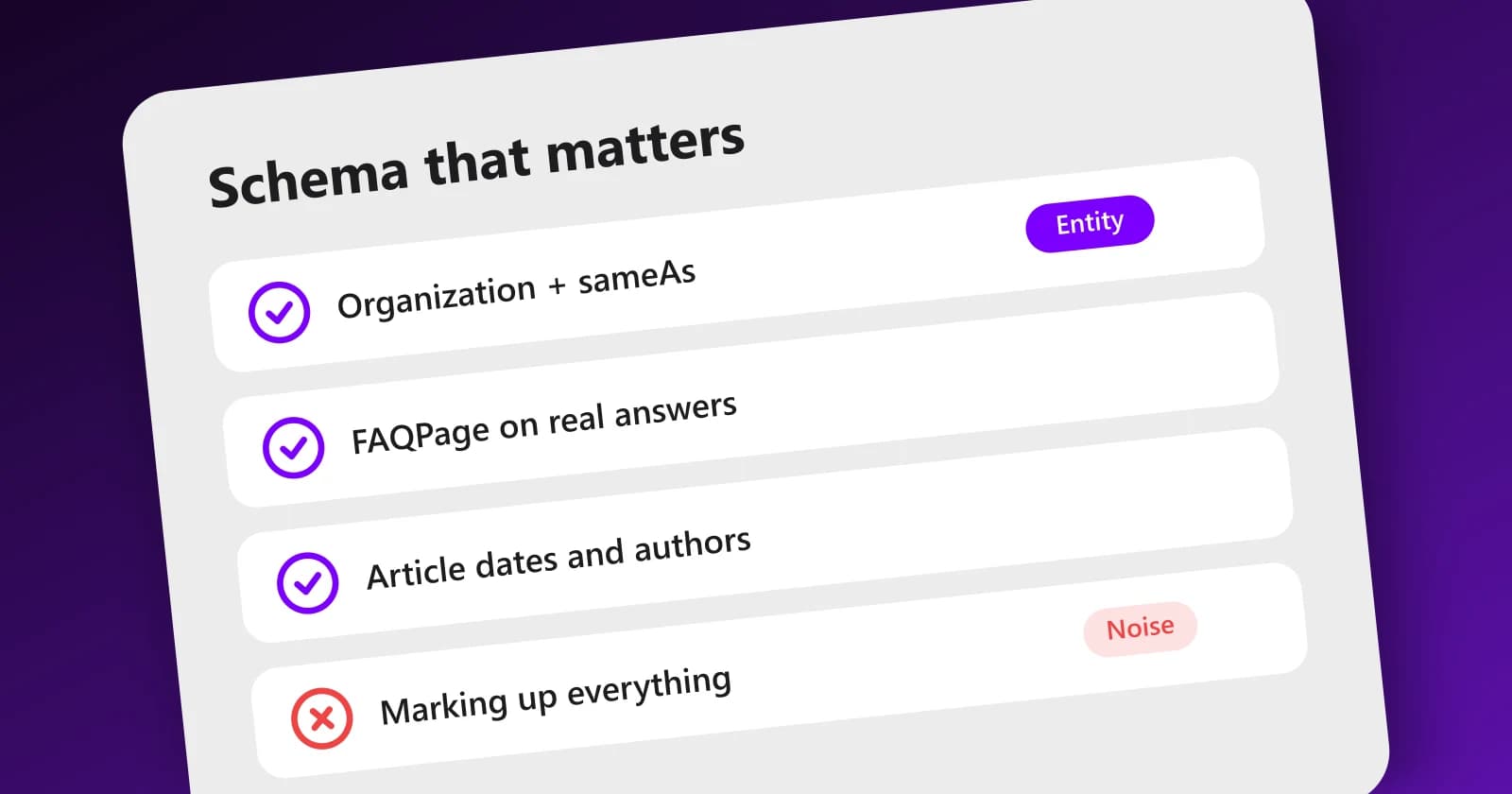
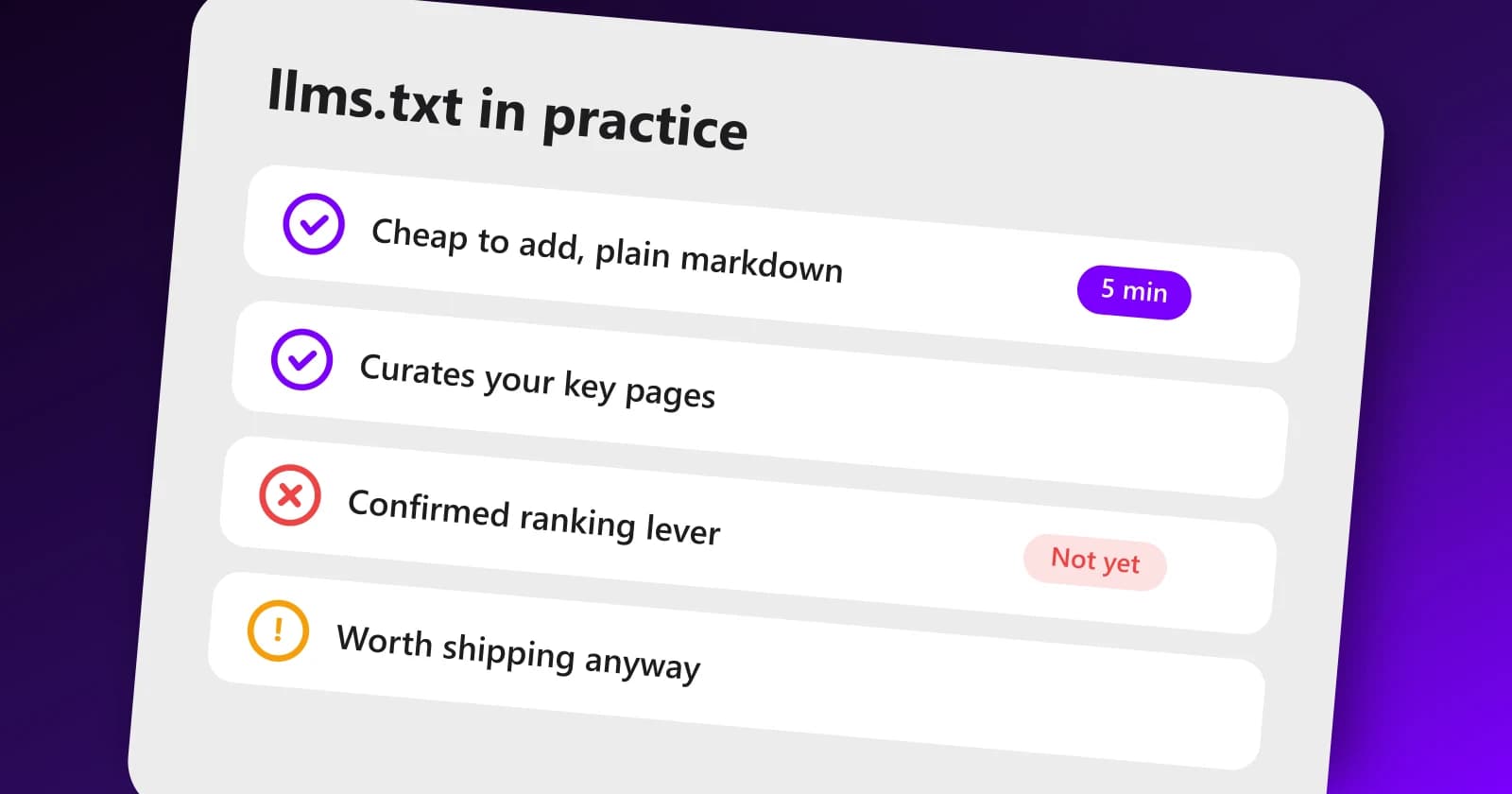
What costs nothing but an afternoon each: opening robots.txt to the AI crawlers you want (GPTBot, PerplexityBot, Google-Extended stay or go by your choice), publishing Organization schema and a consistent one-line entity description everywhere, adding FAQ blocks with schema to money pages, writing an llms.txt, and manually asking ChatGPT, Perplexity and Google's AI features your ten money questions once a month, logged in a spreadsheet. That manual prompt log is a genuinely serviceable tracker at zero dollars.

What the $0 to $300 in subscriptions covers: an entry-level visibility tracker (from ~$29/mo), perhaps the AI add-on of an SEO suite you already pay for, and writing assistance if you use it. The full tool landscape, category by category, is in best GEO tools.

The honest cost of DIY is time: expect several hours a week for content production alone, indefinitely. And DIY hits the same wall everyone hits: you can structure and publish alone, but you cannot link to yourself. Authority is the input that does not scale with your own hours, which is why even committed DIY sites end up budgeting for it.

AI visibility trackers: $99 to $500+ a month, typically

The direct answer: dedicated tracking platforms commonly run $99 to $500 per month at mid-market depth, entry tools start around $29, and enterprise platforms like Profound price on request.

What the money buys: automated prompt runs across ChatGPT, Perplexity, Google AI Overviews and others, mention and citation rates over time, sentiment, and competitor share of voice. Tools like Peec AI (from ~€90/mo) and Otterly.AI (from ~$29/mo) anchor the accessible end; Semrush's AI Toolkit (from ~$99/mo) and Ahrefs Brand Radar bolt similar data onto suites many teams already pay for.

What the money does not buy: movement. A tracker is a thermometer, and a thermometer has never cured a fever. The classic overspend we see in audits is a small site paying $200 a month to watch a mention rate sit at zero, money that would have bought two solid articles or a month of link building. The measurement stack, including its free tier, deserves its own decision, and the practical rule is: buy tracking when the number it tracks is no longer zero.

Consultants and agencies: $2,000 to $10,000+ a month, read the deliverables

The direct answer: GEO retainers in 2026 commonly run $2,000 to $10,000+ per month, consultants somewhat less, and a large share of these engagements are SEO retainers with a new label. That is not automatically a scam, because the work overlaps almost entirely; it becomes one when the label carries a premium for the same deliverables.

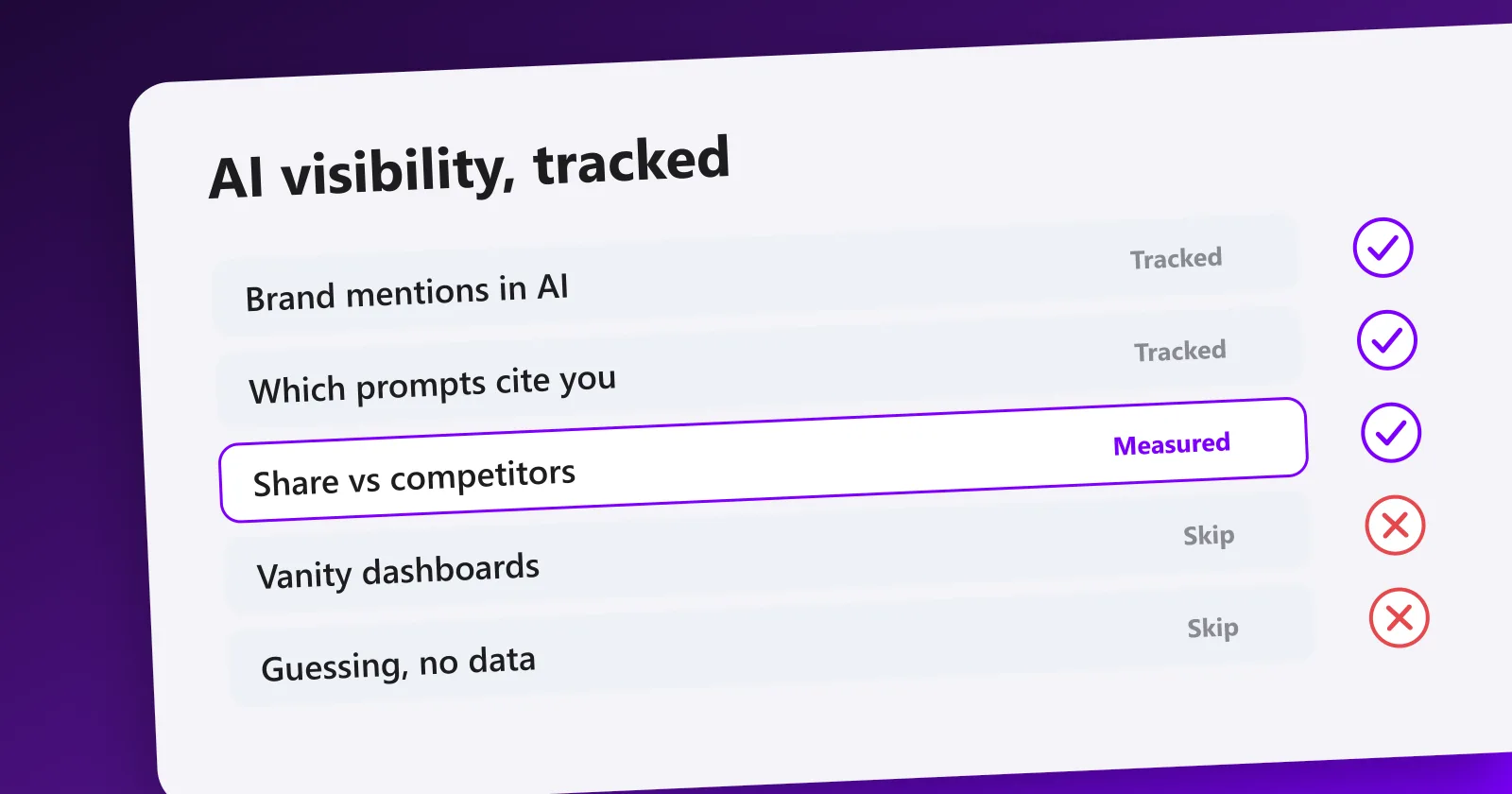
Here is the test that separates the two kinds of engagement. Ask the agency: of the retainer, how much goes to producing content, earning links and mentions, and fixing site structure, versus reporting on AI visibility? The first bundle is the work that moves citations, whatever name it wears; GEO vs SEO breaks down exactly how much of the discipline is shared, and the honest answer is most of it. The second bundle is a $99 to $500 tool plus a slide deck.

Fair reasons an agency retainer can be worth it: you have no in-house execution, your niche is competitive enough that content and digital PR need professional hands, or you need someone accountable for a number. Bad reasons: the pitch leans on GEO as a mysterious new science, promises guaranteed citations (nobody controls an assistant's answer), or prices "AI optimization" as a premium line item on top of unchanged deliverables.

What actually drives GEO cost

The direct answer: content production and authority building are the cost centers; everything else is rounding.

Content is a recurring cost wherever it comes from. Answer-first pages, comparison tables, FAQ coverage, a citable asset with original data: whether you write them, hire freelancers (commonly $100 to $500+ per article depending on depth and niche), or generate drafts from an audit, someone pays in hours or dollars, every month.

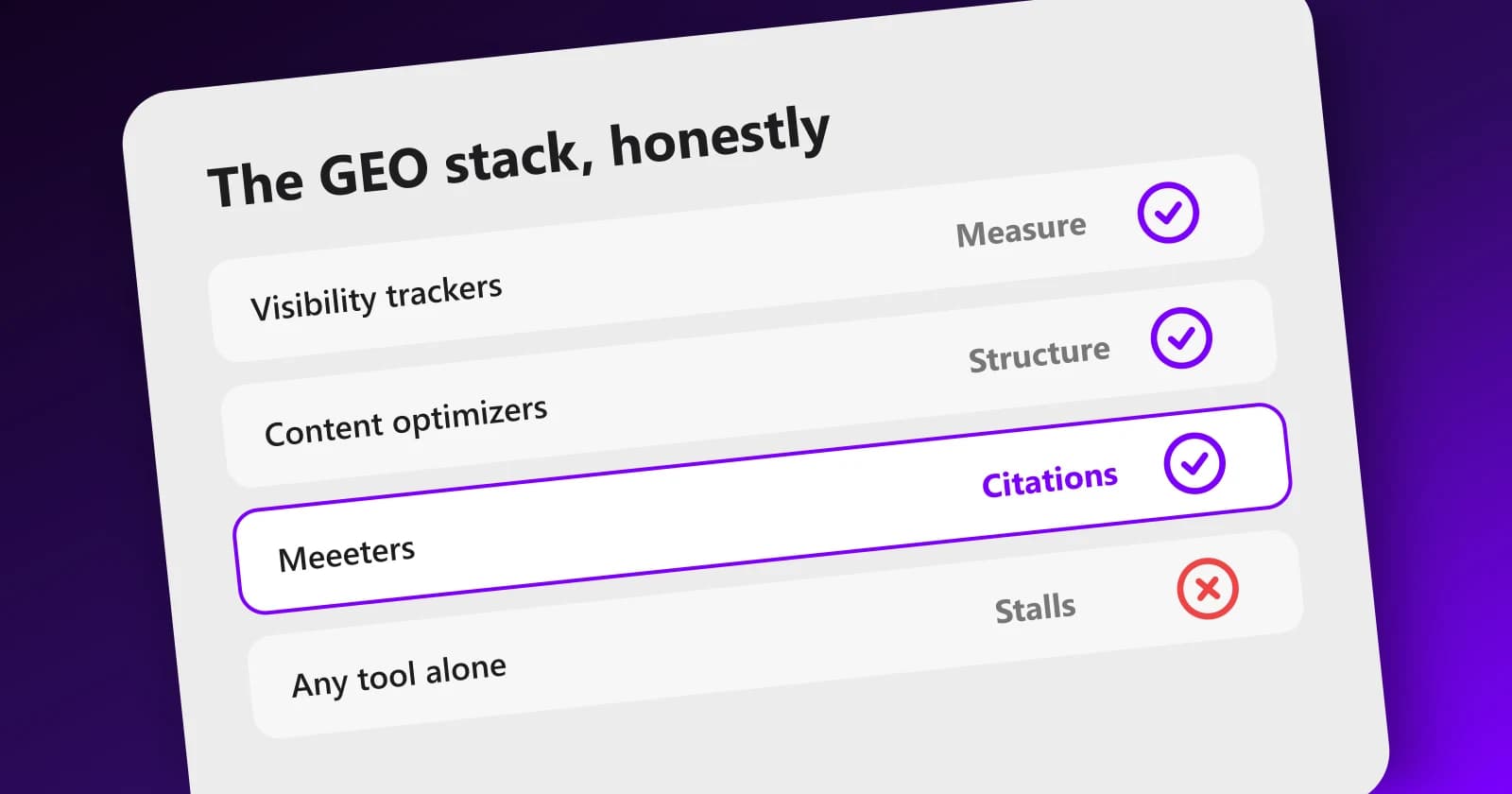
Authority is the slow, expensive, decisive variable. Backlinks and brand mentions gate who gets cited, and they are the hardest input to fake or rush. Priced individually, editorial links commonly trade in the hundreds of dollars each on the open market, and digital PR campaigns run into the thousands. This is precisely the cost structure Meeeters was built to compress: the network is non-reciprocal (you give an editorial link to one site, a different site links back to you), so members earn verified, relevant links as a subscription instead of paying per-link agency prices, from the same dashboard that produces the content.

Tracking is the cheap part. It just happens to be the part that is easiest to productize, which is why it dominates the "GEO tools" conversation.

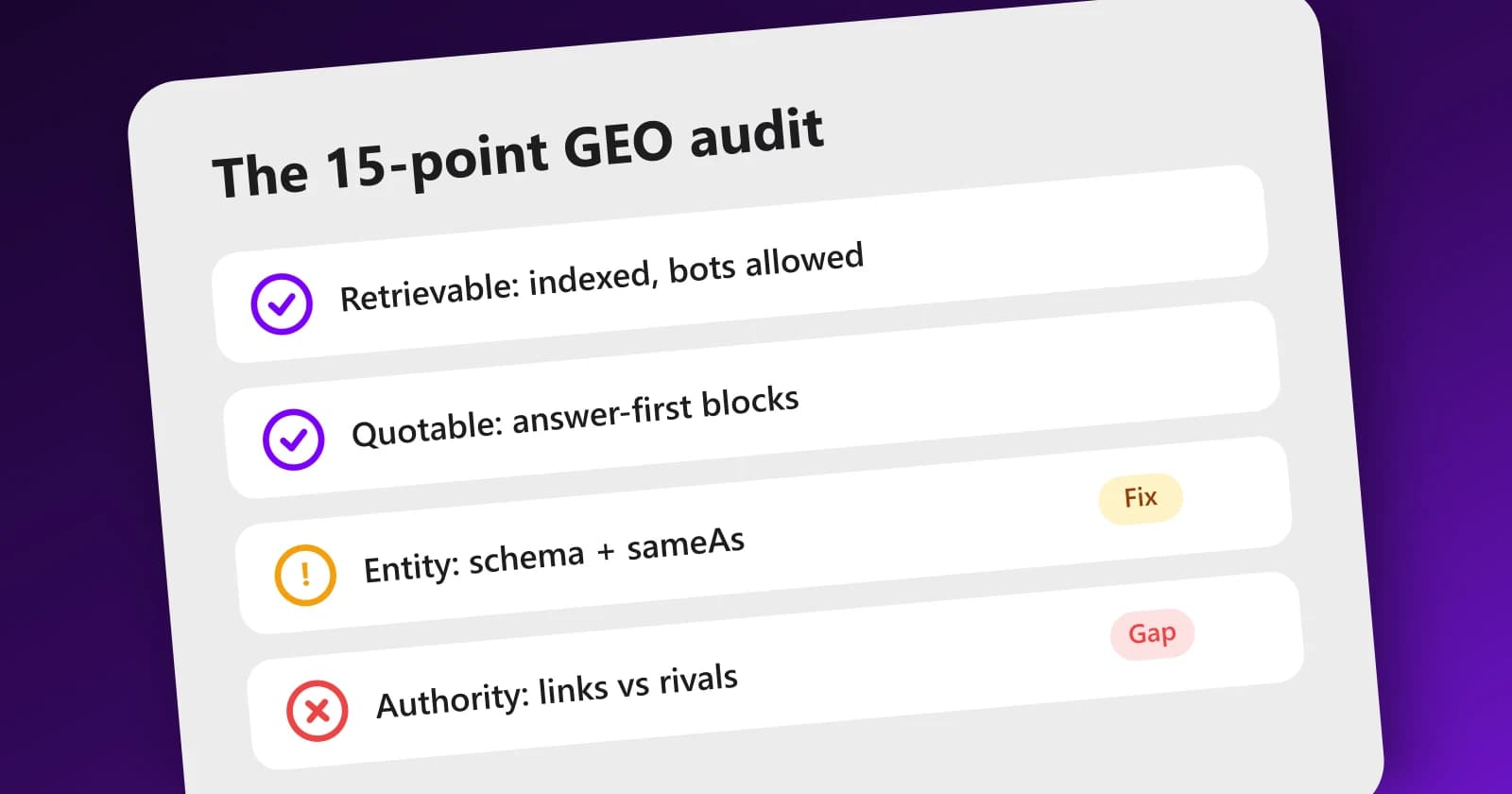
Retrievability is nearly free. Crawler access, schema, entity consistency, clean structure: one-time work measured in afternoons. The best cost-to-impact ratio in the whole discipline, and the reason it comes first in the spending order below.

Meeeters
First automated GEO traffic for your website
Get cited by AI engines on autopilot. Free plan, no credit card.
Start free

The right spending order for a small site

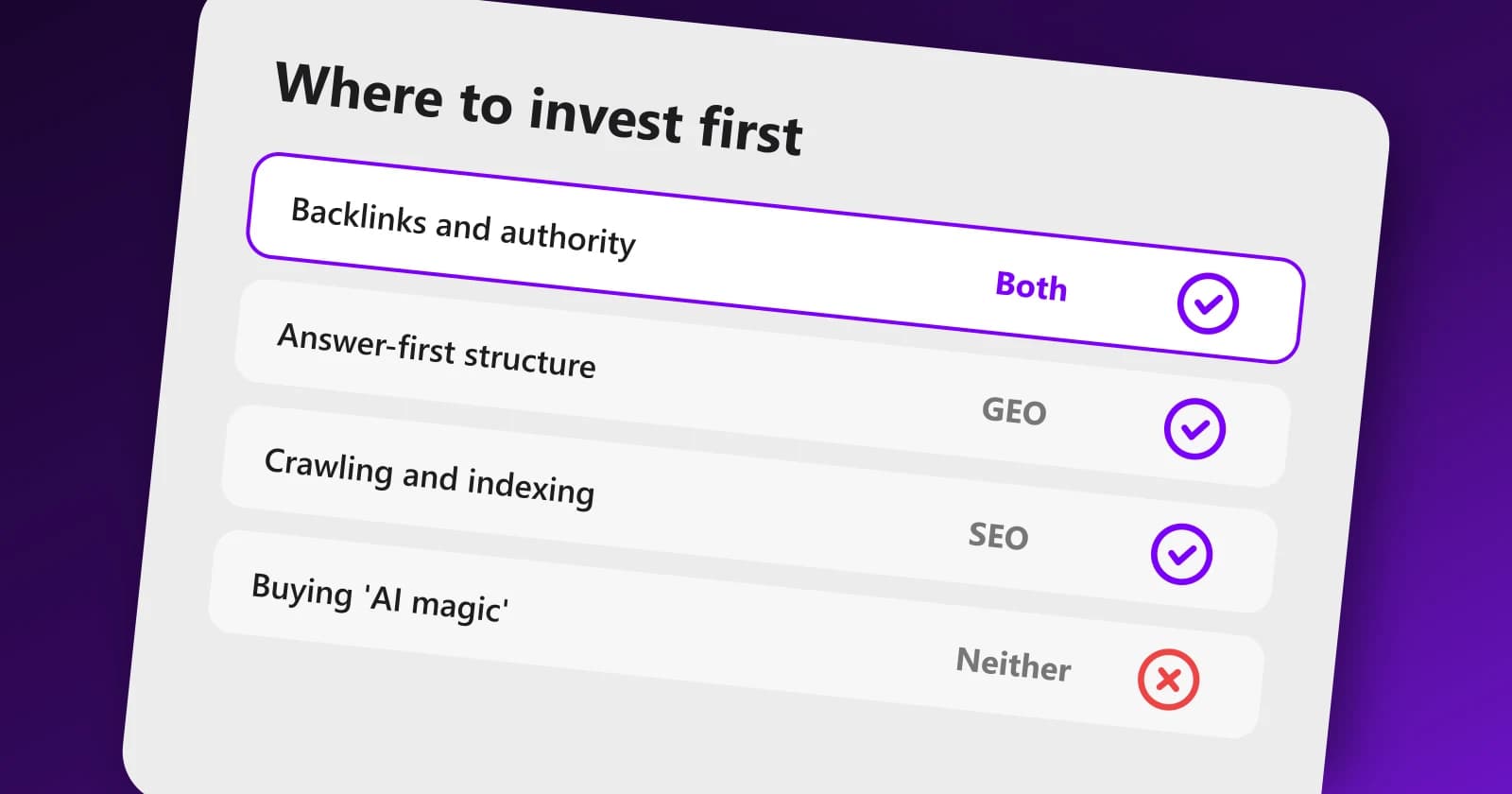
The direct answer: retrievability first (free), content second, authority third, tracking last. Most small sites spend in exactly the reverse order, because dashboards are easier to buy than discipline.

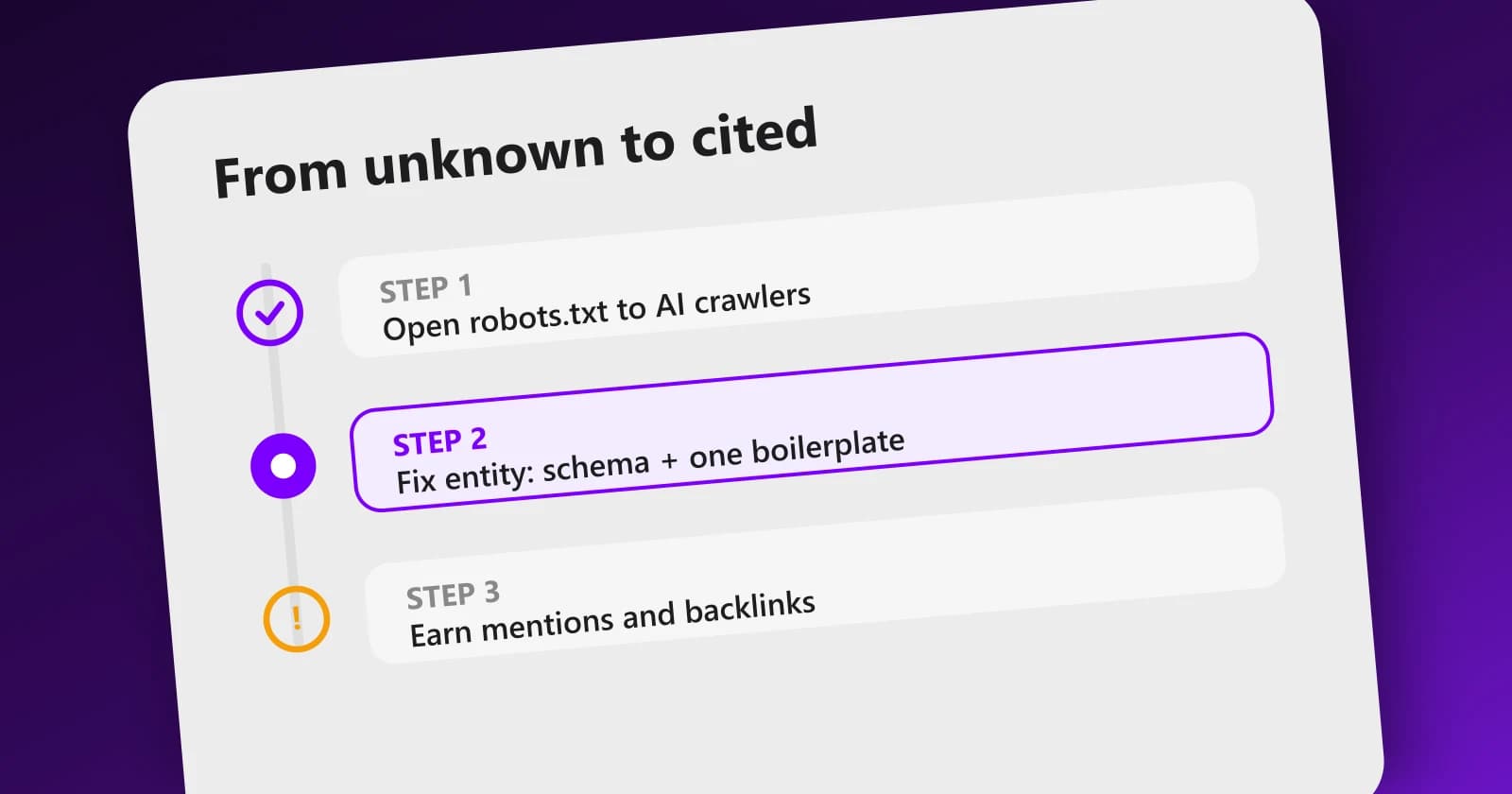
  1. Fix retrievability for $0. Robots.txt open to the AI crawlers you want, indexation on Google and Bing (ChatGPT's browsing leans on Bing's index), Organization schema, one consistent entity sentence used everywhere. An afternoon or two. If your site is young, the full sequencing lives in GEO for new websites.
  2. Produce answer-first content on one tight cluster. Your first real recurring spend. Depth on one topic beats coverage of ten; assistants cite the site that owns a question, and the mechanics of getting retrieved and quoted are the pillar's territory: how to rank in AI search.
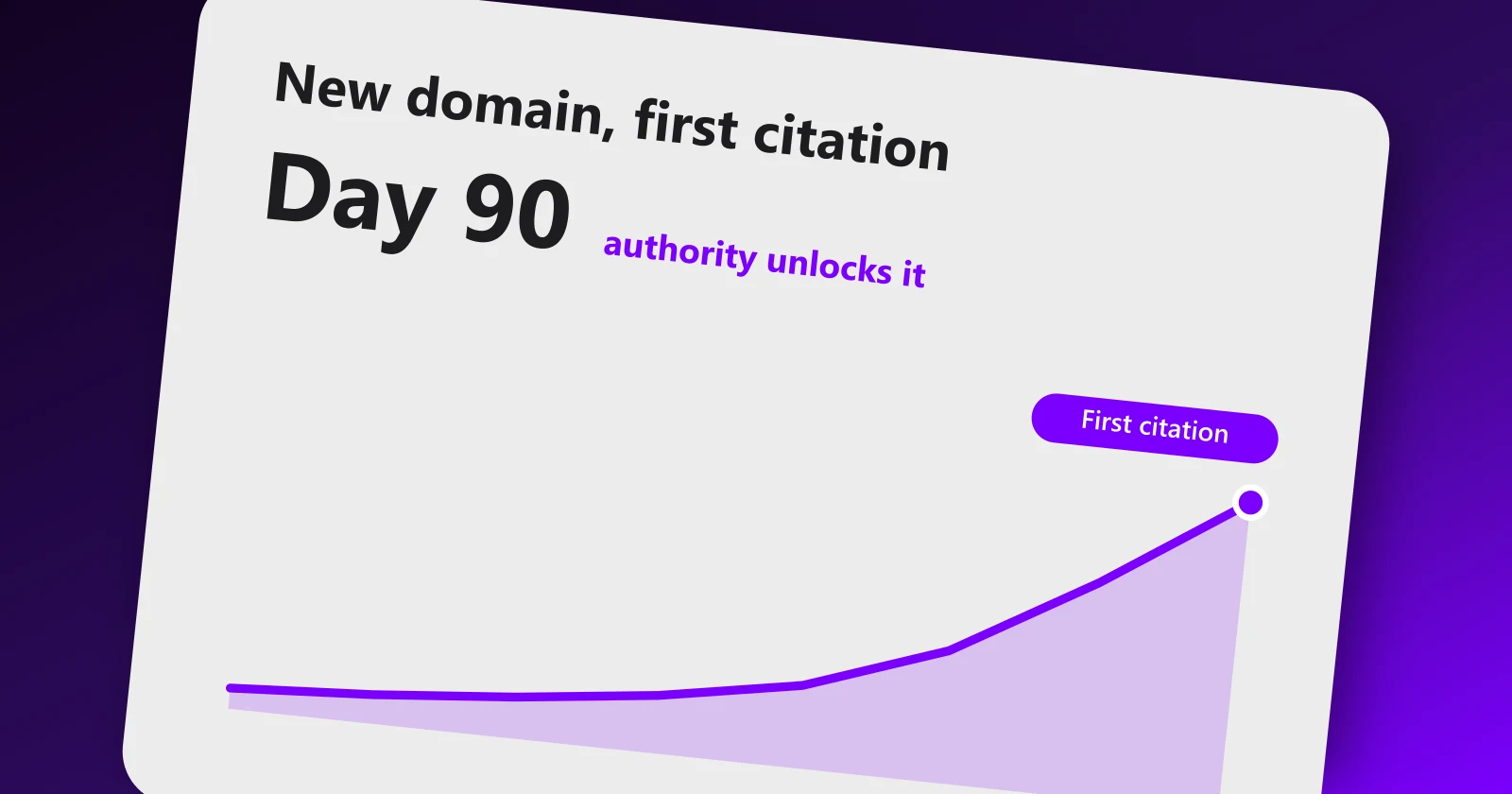
  3. Invest in links and mentions. The gate. Without authority, steps 1 and 2 produce a perfectly structured site that assistants never pick. With it, the same pages start appearing as sources.
  4. Buy a tracker once there is something to track. When your manual prompt log shows first mentions, graduate to a paid tracker and let it prove the trend.

Three sample budgets that actually work

Ranges are useful; worked examples are better. Here are three budget profiles we see succeed, with the caveat that every niche prices differently and these are typical compositions, not prescriptions.

The bootstrapped founder: $0 to $100 a month. All foundations done by hand in the first month. Content written personally, one or two answer-first pieces a week on a single cluster. Authority from directories, communities and one citable asset (a small dataset or free calculator), promoted personally. Tracking is a spreadsheet of ten prompts asked monthly by hand. The only subscription, if any, is an entry-level tracker once first mentions appear. This profile is slow and entirely viable; its binding constraint is the founder's hours, not the budget.

The small team taking it seriously: $300 to $1,500 a month. Foundations audited rather than guessed (this is where a free analysis earns its place). Content partially produced or drafted by tooling, always human-reviewed, at a steady cadence the team can genuinely edit. A real allocation to authority: a link network membership, occasional digital PR around the citable asset, guest contributions. One mid-tier tracker, added in month two or three rather than day one. This is the budget band where most SMBs get the best return per dollar, because every line maps to an input that gates citations.

The competitive niche: $3,000 to $10,000+ a month. At this level you are choosing between an agency retainer and an in-house program with tools, and the deliverables test from earlier decides which. The spend skews heavily toward content depth (original research, comparison assets, expert review) and authority (digital PR, sustained link acquisition), with enterprise tracking as reporting infrastructure. The uncomfortable truth at this tier: the same money buys wildly different amounts of actual input depending on the vendor, so the ratio of production to reporting is the entire negotiation.

The hidden costs nobody itemizes

Two cost lines never appear on proposals and decide more outcomes than the visible ones.

Review time. Every content workflow, cheap or expensive, needs a human who reads the drafts, cuts the generic, and verifies the factual before anything ships. Budget ten focused minutes per page, forever. Skipping this line does not save it; it converts it into a quality debt that compounds across the domain.

The cost of waiting. Authority compounds, and the sites being cited today are feeding the mentions that keep them cited tomorrow. A year of deferring the authority budget does not cost one year, it costs the compounding you ceded to competitors who started. This is the strongest financial argument for spending on links and mentions early and modestly rather than late and heavily.

Where Meeeters fits, honestly

We built Meeeters for steps 2 and 3 of the spending order, the two cost centers this article keeps pointing at, because they are harder to productize than dashboards. Priced against the ranges above, the positioning is simple: both inputs, content plus authority, in one subscription designed to stay under what agencies charge for either one alone. What that buys, concretely:

  • Step 1 costs you nothing: the free analysis crawls your site, maps your structure and silos, detects your schema and JSON-LD, and lists the missing pages and quick wins. No card required.
  • Content production without per-article freelance rates: articles are generated from that real audit rather than generic prompts, each draft targeting a gap in your own structure, in your site's language.
  • The hidden review cost stays visible and small: every piece arrives in your CMS as a draft (native Webflow connector, or a webhook via Make, Zapier or n8n), a human always reviews and publishes, nothing auto-publishes.
  • Authority as a subscription instead of a per-link market: the three-way network is non-reciprocal (you link to B, C links back to you), the links are dofollow from real, vetted sites, and casinos, adult and directory sites are banned from the pool.
  • Predictable link velocity through the give-first credit system: give one verified link, the network owes you one back, matched by language and audience so links come from sites whose readers can become your visitors.
  • Tracking included rather than itemized: the Google Search Console integration reports clicks, impressions and almost-page-1 queries in the same dashboard as the content and the links.

Plans scale from a free tier to Starter with monthly articles and Pro with daily articles, more matches and full metrics; we keep exact numbers out of articles because plans evolve, so current figures live on /pricing. Start where every member starts, with the free SEO analysis, and let the audit tell you which input your site is actually missing.

The takeaway

GEO costs whatever the missing input costs. If your structure is broken, it costs an afternoon. If your content is thin, it costs a writing habit or a content budget. If nobody links to or mentions you, it costs authority work, the one line item no tracker replaces. Price every offer, ours included, against that question: which input does this actually buy? Dashboards are $99 to $500 a month, agencies are $2,000 to $10,000+, and the foundations are free. Spend in that order, reversed.

Frequently asked questions

Quick answers to the questions people ask most about this topic.

?
How much does generative engine optimization cost per month?

Typical 2026 ranges: $0 to $300/mo if you do it yourself with entry-level tools, $99 to $500+/mo for dedicated AI visibility tracking platforms, and $2,000 to $10,000+/mo for consultant or agency retainers. Content production and link building usually cost more than any tool, whichever route you choose.

?
Is GEO more expensive than SEO?

Not meaningfully, because it is mostly the same work. The inputs that earn AI citations (crawlable structure, answer-first content, backlinks and brand mentions) are classic SEO inputs. The genuinely new line item is AI visibility tracking, which adds roughly $29 to $500/mo depending on depth. Agencies charging a large GEO premium are usually repackaging an SEO retainer.

?
Can I do GEO for free?

The foundations, yes. Opening robots.txt to AI crawlers, adding schema and FAQ blocks, tightening your entity boilerplate, and asking assistants your money questions by hand all cost nothing but time. The parts that are hard to get free are the same as in SEO: consistent content production and authority. Links and mentions are earned, and earning them takes either time or budget.

?
Are GEO agencies worth it?

Sometimes, with a hard filter: ask what they do beyond reporting. An agency that produces content, earns real links and fixes structure is doing the work that moves citations, whatever they call it. An agency whose deliverable is a mention-rate dashboard plus recommendations is charging retainer prices for a $99 tool and a PDF.

?
What should a small website spend on GEO first?

Spend nothing on tracking at first. Fix retrievability and structure for free, then put the first real money into answer-first content on one tight topic cluster, then into backlinks and mentions, because authority gates citations. A tracker earns its subscription only once assistants have started mentioning you.

Christopher Fernandes, founder of Meeeters
Founder of Meeeters

I built Meeeters to make link building safe and simple: real, relevant backlinks with no reciprocal footprint and no black-hat shortcuts. Questions about your site? Write to me directly.

Email us
We reply fast, usually within a few hours.
Put this into practice
Free SEO analysis of your site, then earn your first verified backlink.
Get your free SEO analysis