DeepSearch and AI Research Assistants: How to Be a Cited Source

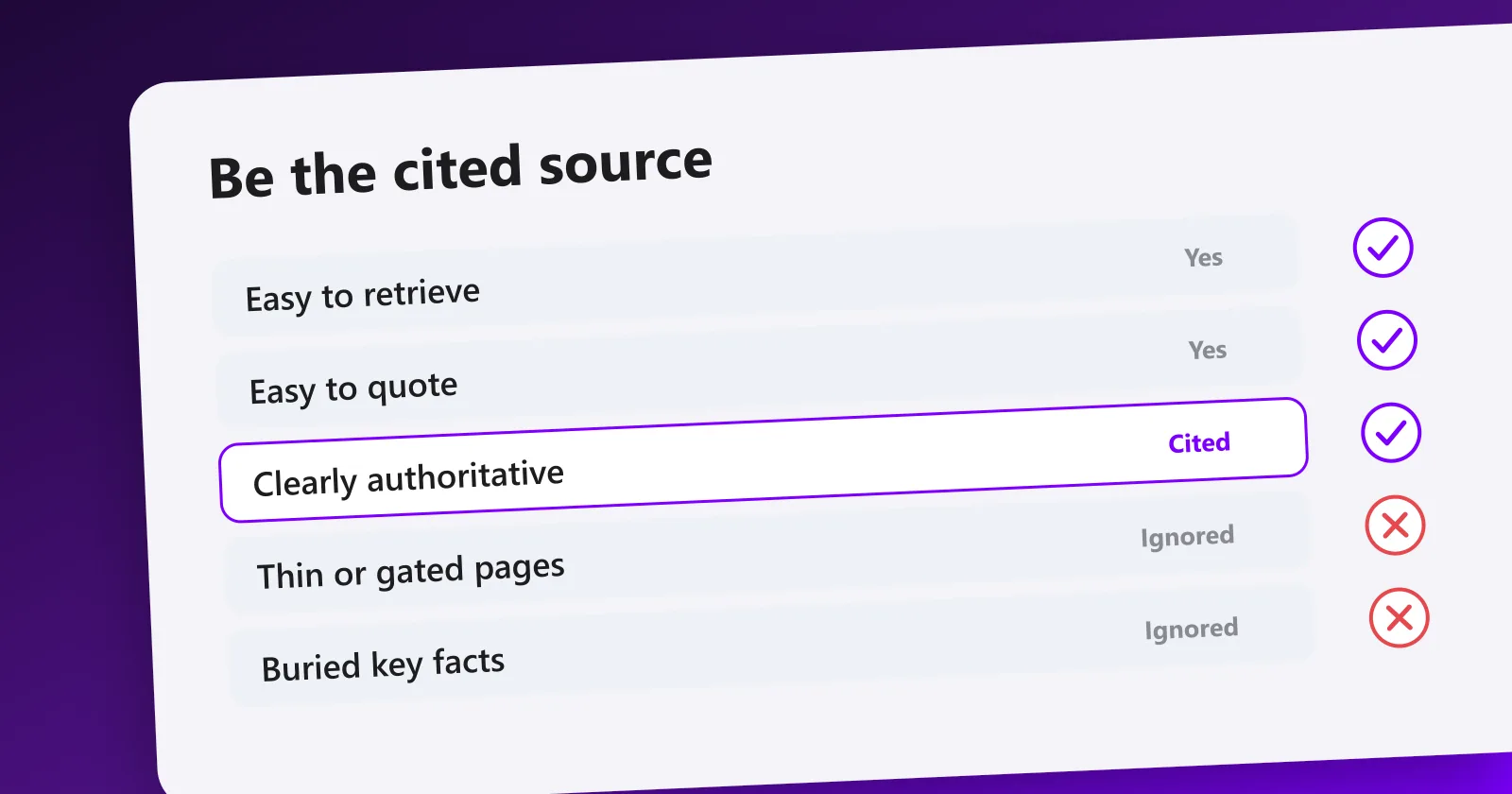
The fastest-growing mode in AI search is not the snap answer, it is deep research. Instead of replying from memory, the assistant plans a set of sub-questions, runs many live searches, reads dozens of pages, and writes a longer answer with its sources shown. Grok's DeepSearch, ChatGPT's deep research, and Perplexity's deeper modes all work this way. That behavior changes what gets cited, and it tilts in favor of substance.
How deep research actually works
A deep-research run has a rough shape:
- Decompose. The assistant breaks your question into sub-questions.
- Retrieve. It runs live searches for each, pulling candidate pages.
- Read and filter. It reads the candidates and keeps the ones that answer a sub-question clearly and credibly.
- Synthesize. It writes the answer, citing the sources it leaned on.
Two things follow from this. First, retrieval still gates everything: a page that cannot be found or read never enters the pool. Second, because the assistant reads many pages rather than one, thorough specialist content that a snap answer would skip gets a real chance to be cited.
Why deep research favors structured, specific pages
When the assistant filters candidates, it keeps sources it can lift cleanly and trust. That means:
- Self-contained sections. A passage that answers a sub-question without needing the whole article around it. Lead with the answer, then support it.
- Concrete facts. Numbers, dates, named examples, ranges. Models quote specifics and skip adjectives.
- Clear authority. Among pages that all answer the sub-question, it leans on the ones other trusted sources reference. This is the same authority layer that decides every AI citation.
The GEO audit checklist turns this into a page-level pass, and schema markup for AI search helps the assistant parse what your page is about.
The retrievability floor
None of the above matters if the assistant cannot read your page. Deep research relies on live retrieval, so the same technical basics that gate GEO apply: crawlable, indexable, server-rendered content, no JavaScript walls hiding your text. If your key content only appears after client-side rendering, a research agent may never see it.
How to show up: a short playbook
- Publish one focused page per real question in your category, not one sprawling page trying to cover everything.
- Open each page and section with the direct answer.
- Back every claim with a specific fact a model can quote.
- Make sure the page is retrievable and technically clean.
- Earn mentions and links from sources the models already trust.
- Track whether it works with AI search traffic monitoring.
Where Meeeters fits
Deep research rewards a library of thorough, well-structured, authoritative pages, which is slow to build by hand. That is the loop Meeeters automates: the SEO automation pipeline finds the question-shaped pages your category needs and drafts them answer-first, while the network earns the authority that gets them into the trusted set. To see where your gaps are, start with a free SEO analysis.
Frequently asked questions
Quick answers to the questions people ask most about this topic.
A mode where the AI does not answer from memory but runs a chain of live searches, reads many pages, and synthesizes a longer, cited answer. Examples include Grok DeepSearch, ChatGPT deep research, and Perplexity's deeper modes. Because it reads widely and shows its sources, being one of those sources is a concrete, winnable goal.
They retrieve pages that match the sub-questions they generate, then favor sources that are self-contained, specific, and authoritative. Pages that answer a precise question directly, with facts a model can lift and trust, get cited. Thin or vague pages get read and discarded.
Be retrievable (crawlable, indexable, fast), be quotable (answer-first sections with concrete facts), read as a clear entity (consistent name and claims, structured data), and be authoritative (links and mentions from trusted sources). Deep research reads more pages than a snap answer, so depth and specificity are rewarded, not penalized.
Same principles, longer loop. Deep research issues more queries and reads more sources, so it surfaces good specialist content that a one-shot answer might skip. That favors thorough, well-structured pages over shallow ones, which is good news if your content actually has substance.

I built Meeeters to make link building safe and simple: real, relevant backlinks with no reciprocal footprint and no black-hat shortcuts. Questions about your site? Write to me directly.
Email us