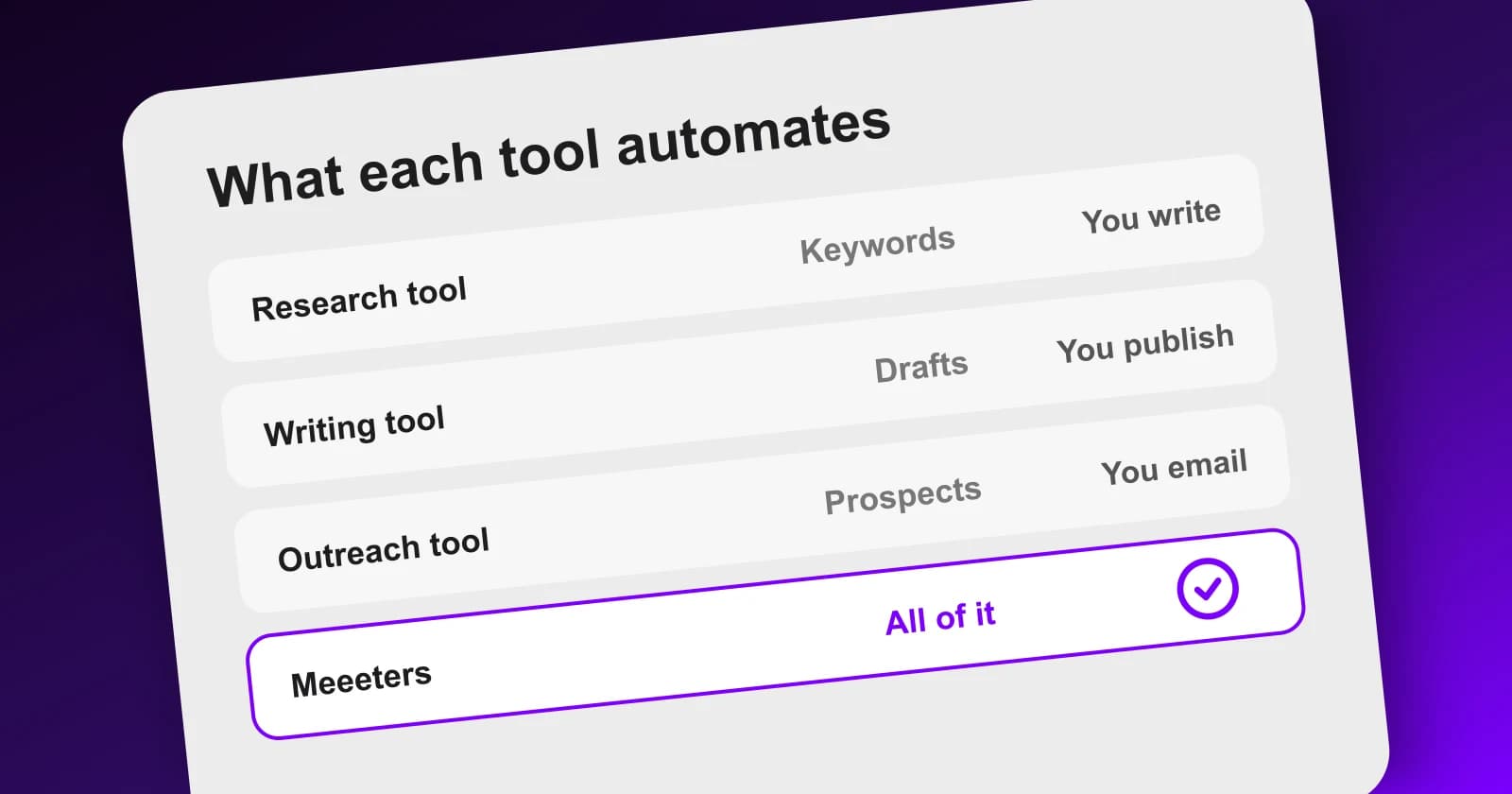
Ranked articles, without hours spent on every draft.
AI Tool for SEO Content Writing: Workflow That Ranks
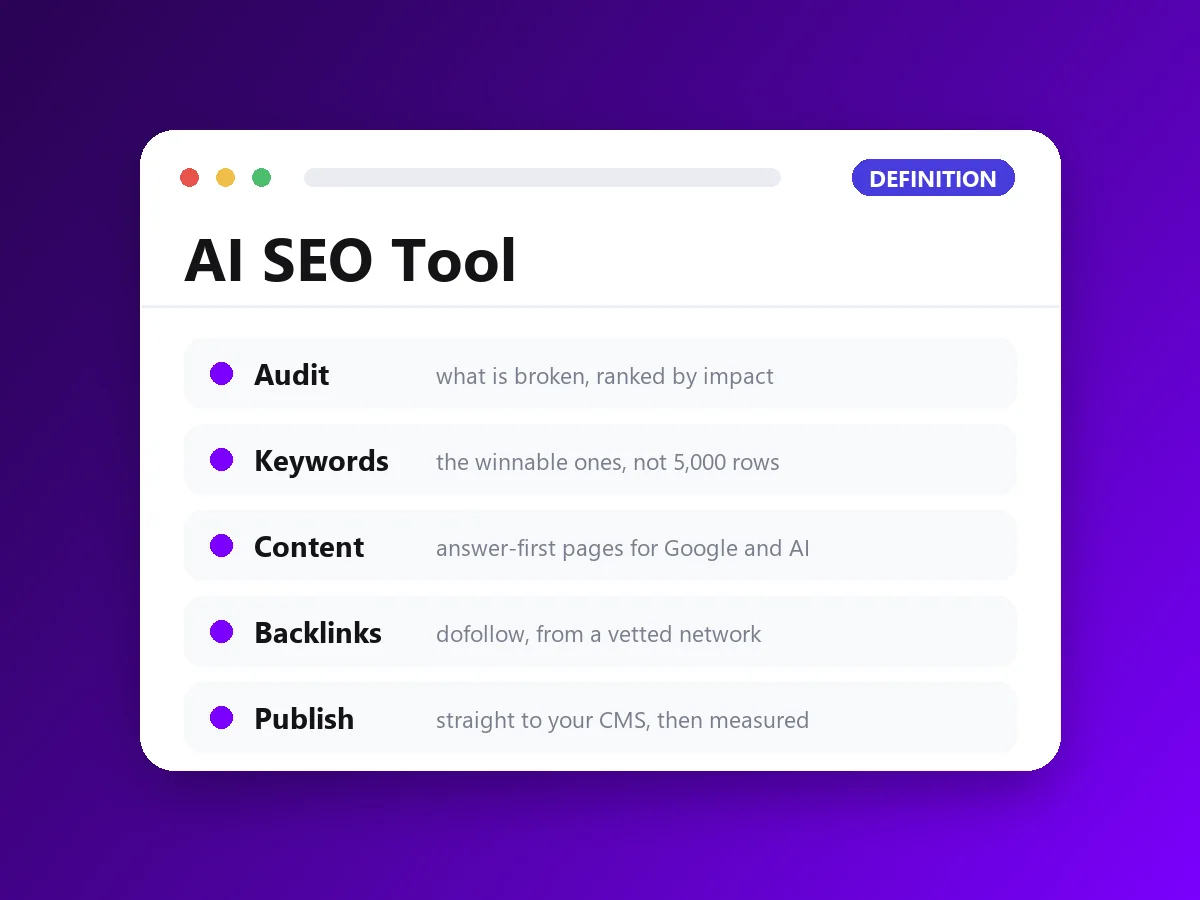
One AI SEO tool that automates content and backlinks together: audit, winnable keywords, answer-first drafts published to your CMS, and dofollow links from vetted sites.
Google, ChatGPT, Claude, WordPress and Webflow, already connected
In short.
- An AI tool for SEO content writing needs a clear brief, a target keyword, and editorial guidelines.
- Best workflow combines AI draft generation with human review for accuracy, tone, and E-E-A-T.
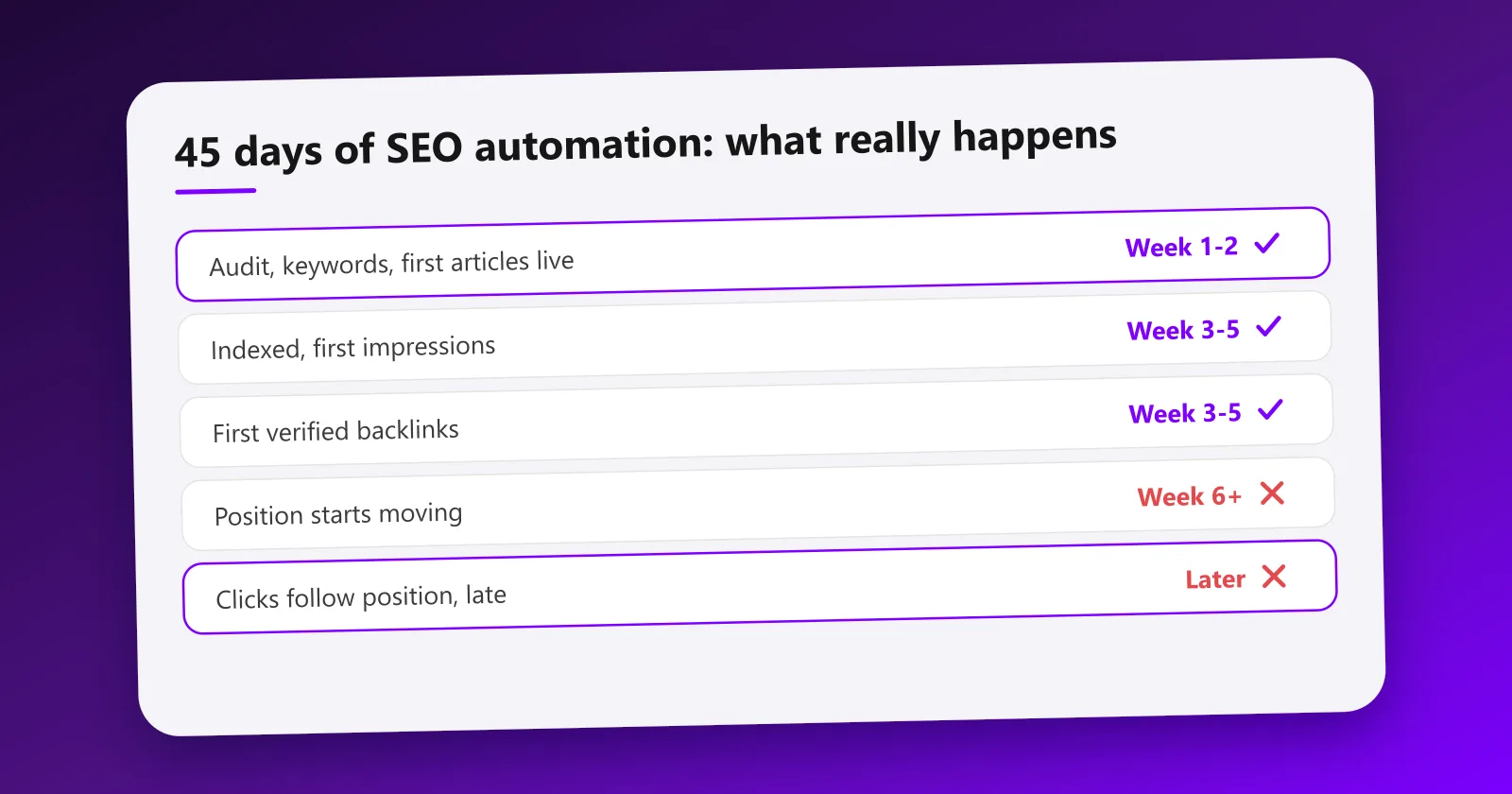
- Measure success with rankings and engagement rather than word count.
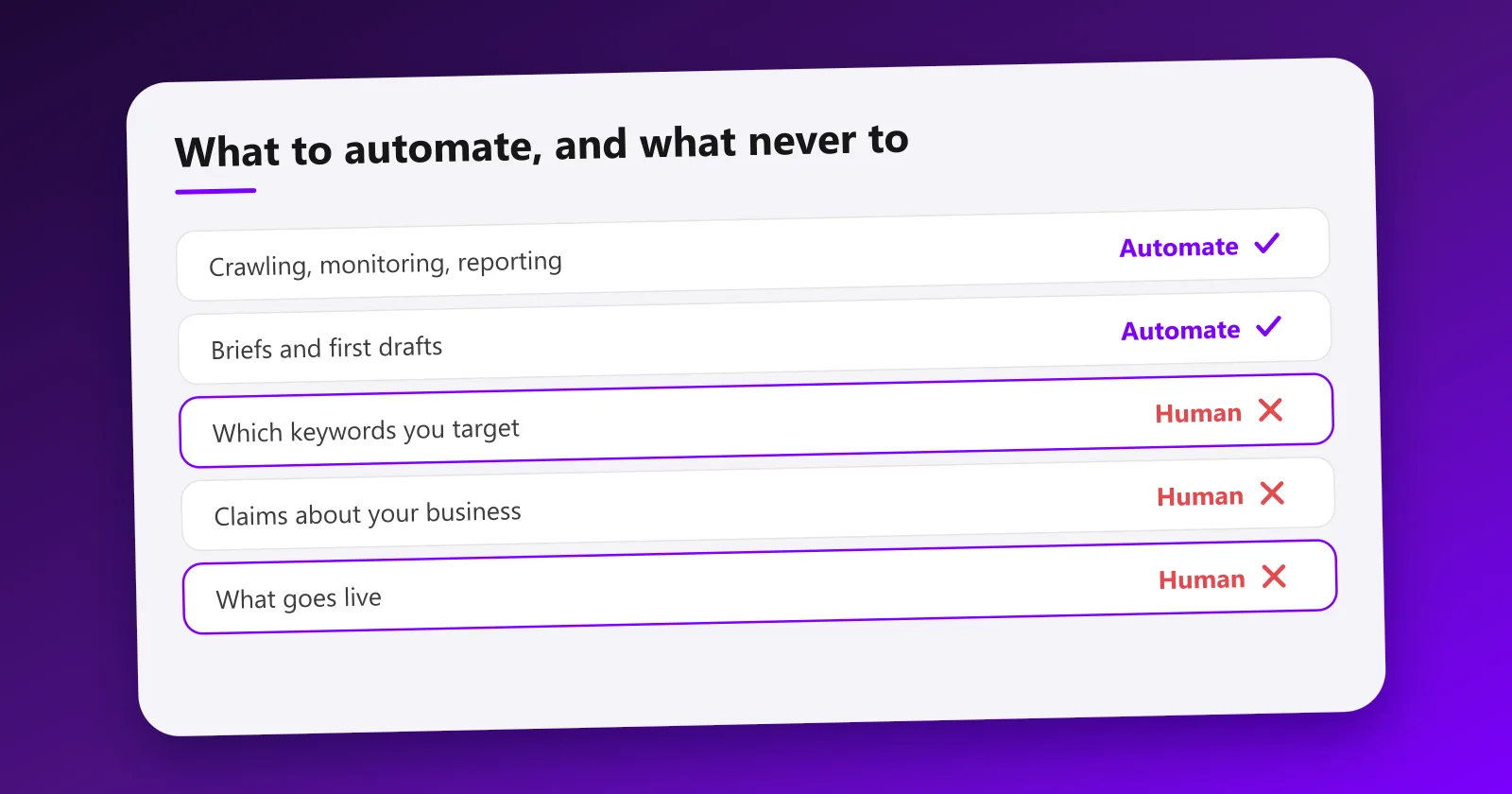
- Use AI to speed up, not replace, your editorial process.
- Avoid keyword stuffing and unverified facts.
Outlines, paragraphs, and headlines you then refine.
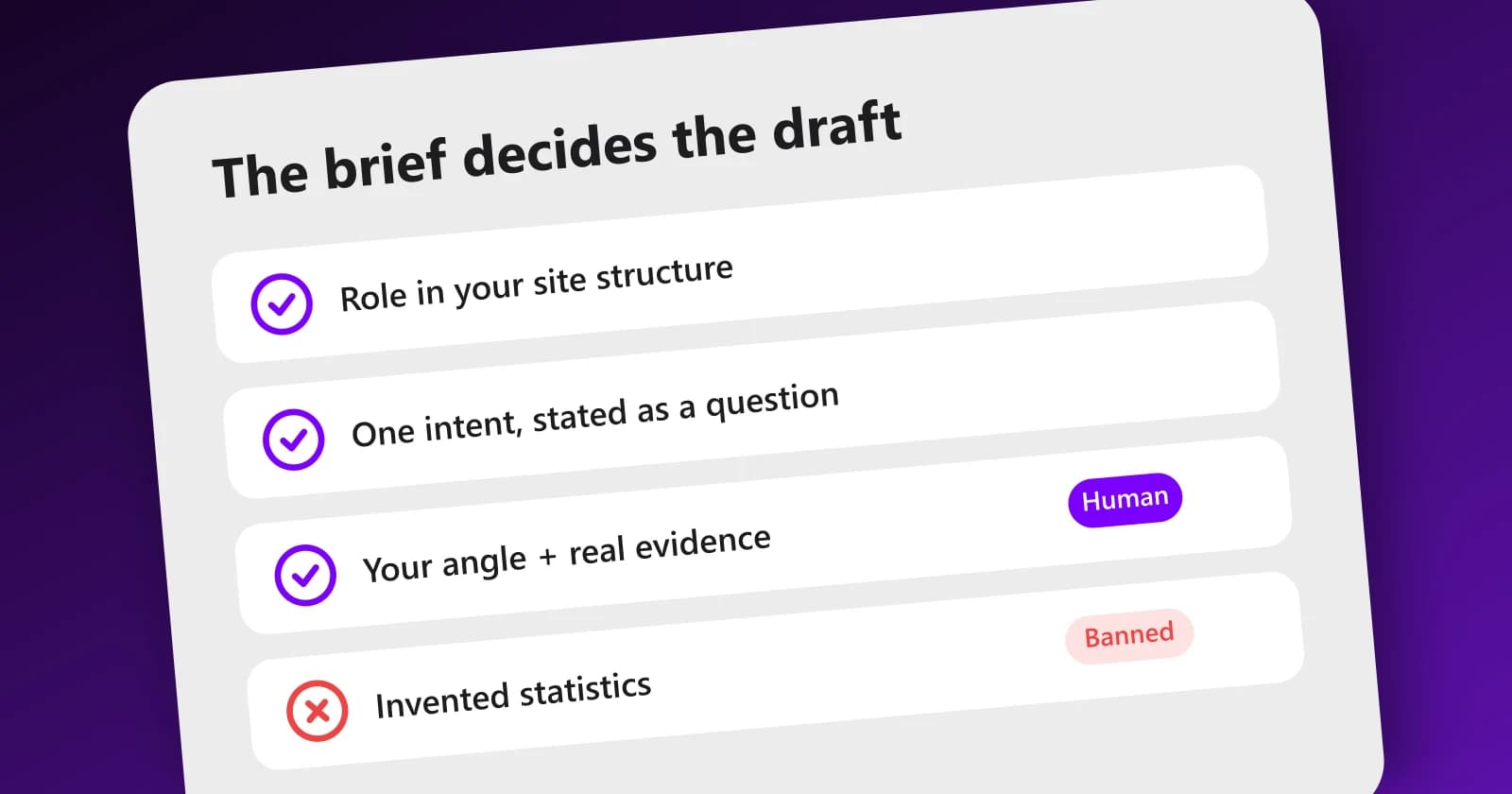
Vague briefs go generic. Detail makes a draft you edit.
[ WHAT IT DOES ]
What an AI Tool for SEO Content Writing Actually Does
It uses natural language processing to generate text from your input. It provides a starting point that you refine, not a replacement for your judgment.
Analyse my websiteAnalyse my websiteYour free website analysis provides
- →Search intent and audience
- →Primary and secondary keywords
- →Editorial guidelines and brand voice
- →Required facts and source material
- →Pages to link internally
- →Human judgment and experience

AI accelerates
- ✓Headline suggestions
- ✓H2 and H3 outline
- ✓Section-by-section drafts
- ✓Meta descriptions and title tags
- ✓Contextual anchor suggestions
- ✓A starting point you refine
- Blog posts
- Product descriptions
- Landing pages
- Meta tags
How to Use an AI Tool for SEO Content Writing: A Step-by-Step Method
A repeatable workflow gives you more control than generating an entire article from one prompt.
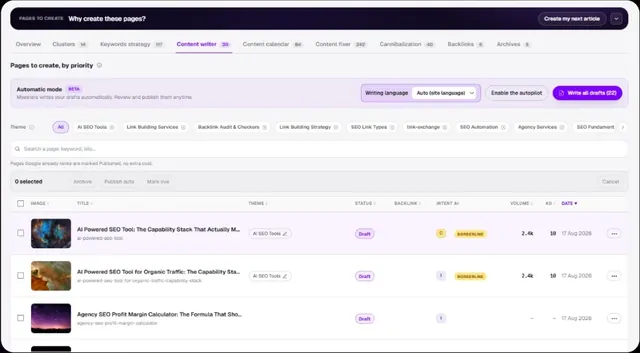
IMAGE + TITLEAI Tool for SEO Content Writing: The Workflow That Turns Drafts Into Rankingsai-tool-for-seo-content-writing
THEMEAI SEO Tools
STATUSDraft
INTENT AI
TBORDERLINE
VOLUME2.4k
KD10
DATE17 Aug 2026
Common Mistakes to Avoid When Using AI for SEO Content
The tool is rarely the problem. Rankings suffer when the workflow skips intent, evidence, or review.
| Mistake | Why it hurts | What to do instead |
|---|---|---|
| Keyword stuffing | Repeating the keyword unnaturally can trigger spam signals. | Use it only where it fits. |
| Ignoring user intent | The page answers a different question from the search. | Match the expected format. |
| Publishing unedited AI output | Hallucinated facts and bland prose reduce trust. | Edit and fact-check. |
| Neglecting E-E-A-T | The page shows no experience, expertise, authority, or trust. | Add evidence and insight. |
| Forgetting internal links | Related pages stay disconnected and harder to discover. | Add contextual links. |
If the page uncovers site-level issues, continue with the technical SEO audit guide.
The Counterintuitive Benefit: AI Helps You Write More Like a Human
AI handles the repetitive parts, leaving you more time for perspective, stories, evidence, and examples. Treat it as a collaborator, not a replacement. The same principle matters when writing for GEO.
- AI handles the repetitive parts
- You add original research
- Generate options, then choose
- Turn writer's block into ideas
- Keep judgment human
[ PRICING ]
Two plans. The complete workflow.
$100 USD per month for 1 site with a 3-day trial, or $350 USD per month for up to 5 sites with no trial.
Pro
$100 /mo
Card required · cancel anytime
- 1 site
- 30 articles / month
- Up to 10 verified dofollow backlinks
- Monthly keyword & silo audit
- DR / traffic
- Direct messaging
Multi-site
$350 /mo
No trial · cancel anytime
- Up to 5 Pro sites on one account
- 30 articles / site / month
- Up to 10 verified dofollow backlinks / site
- Monthly keyword & silo audit
- Switch sites from one dashboard
SEO automation tools.
Continue with the part of the workflow you need next.
AI article generator
Drafts written from your own keyword dataset, not from a generic prompt.
See how it works →AI silo builder
The site tree first: which pages to create, in which cluster, linked to which.
See how it works →AI SEO consultant
What to fix and in what order, from a real scan of your site.
See how it works →SEO integration
WordPress, Webflow, Ghost, Notion, Shopify and a signed webhook for the rest.
See how it works →Frequently asked questions
Quick answers to the questions people ask most about this topic.
No. AI can generate drafts and suggest optimizations, but it lacks the judgment, creativity, and real-world experience that a human brings. It is best used as an assistant to speed up the writing process, not as a sole author.
Look for tools that offer customization, integrate with your workflow, and produce content that matches your brand voice. Test several with the same sample brief, then compare output quality, editing time, pricing, and ease of use.
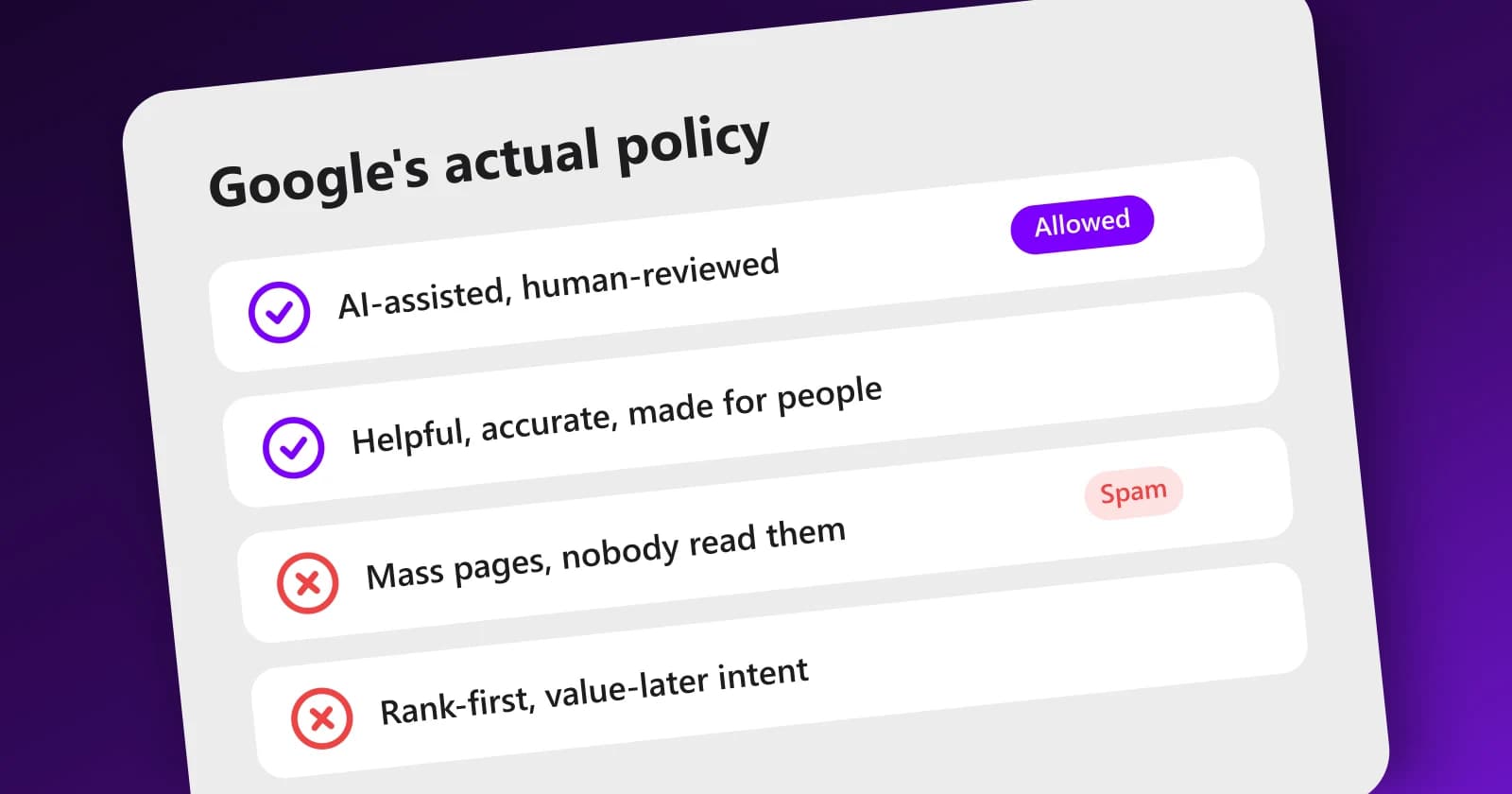
Google's guidelines focus on content quality, not how it is produced. Helpful, original content that demonstrates E-E-A-T can rank. Spammy or low-quality content may be penalized whether AI or a human produced it.
Add your own research, case studies, and personal anecdotes. Use AI for structure and initial drafts, then rewrite sections in your own voice and add insights only you can provide.
Research and define intent, create a detailed brief, generate an outline, draft section by section, edit and fact-check, optimize for SEO, and finish with a human review.
Yes. AI can generate meta titles and descriptions based on your content. Review them to ensure they are compelling, accurate, and aligned with the search intent.
No answer? Write to hello@meeeters.com
Use AI for the skeleton. Keep the thinking human.
The time saved on drafting becomes time invested in originality.
“AI handles the repetitive parts, so you can spend more time adding your unique perspective, stories, and examples.”
More time for originality
“Generate several opening options, choose the strongest one, then add a compelling anecdote or original data point.”
A stronger introduction
“A generated paragraph can spark a better idea when you are stuck. It is a starting point, not the finished answer.”
Less writer's block
“Treat AI as a collaborator, not a replacement. The draft provides the skeleton. Your experience gives it personality.”
Human by design