Most SEO advice starts at keywords. Google starts earlier: it has to reach the page, understand it, and only then decide whether it deserves to rank. Everything on this page is about that first part, the one nobody checks until traffic stalls for no visible reason.
Architecture is where a page lives. Internal linking is what reaches it. They are not the same thing, and a site can score perfectly on the first while failing completely on the second.
Site architecture is not internal linking
Folders only
Same URLs, same folders, nothing connects them
/crmhub
Pricing guide
Best tools
How-to
Google may never reach them
With internal linking
Authority flows from the hub to the pages, and between them
/crmhub
Pricing guide
Best tools
How-to
Google follows the links
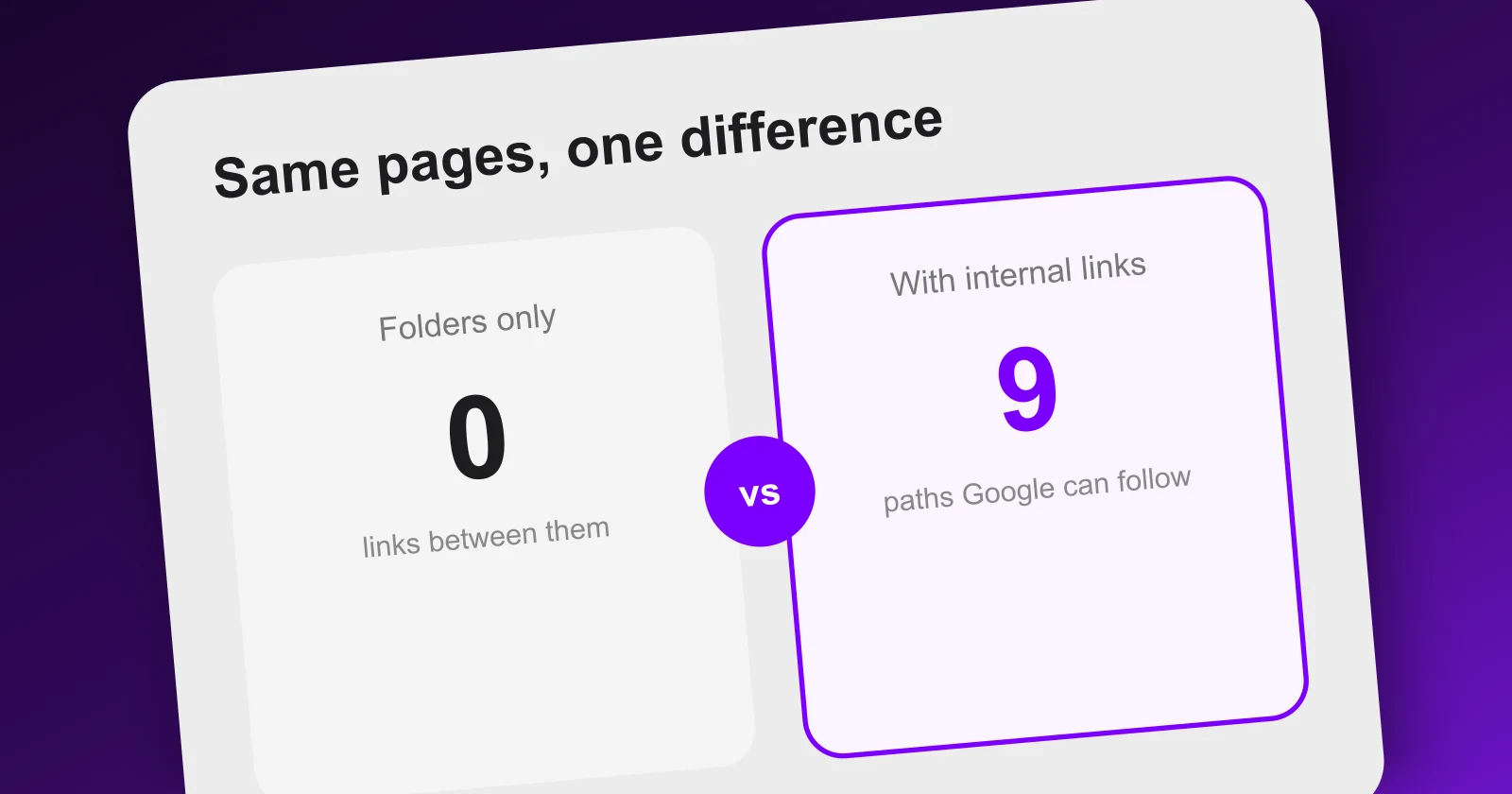
Both sides have the exact same URLs and the same folders. Only the right one passes authority. Architecture is where a page lives; internal linking is what reaches it.
Both sides of that illustration have identical URLs and identical folders. Only one of them passes authority. This is why a clean-looking site can sit on page five: the pages exist, they are simply never reached, or reached with nothing behind them.
Start where Google starts
Crawl, then index, then rank. Each step filters the one before it, so a page that fails at the first can never reach the third, however well written it is. The guides below go through each step, what breaks at each one, and what good actually looks like.
Quick answers to the questions people ask most about this topic.
?
What is site structure in SEO?
Two things people usually merge into one. Architecture is how your URLs are organised into folders and sections. Internal linking is which pages actually link to which. Google follows links, not folders, so a tidy architecture with no internal links still leaves pages unreachable.
?
Is site architecture the same as internal linking?
No, and confusing them is the most common structural mistake. You can have a perfect folder hierarchy where no page links to another. The folders describe where a page lives; the links decide whether Google ever gets there and how much authority arrives.
?
What is a semantic silo?
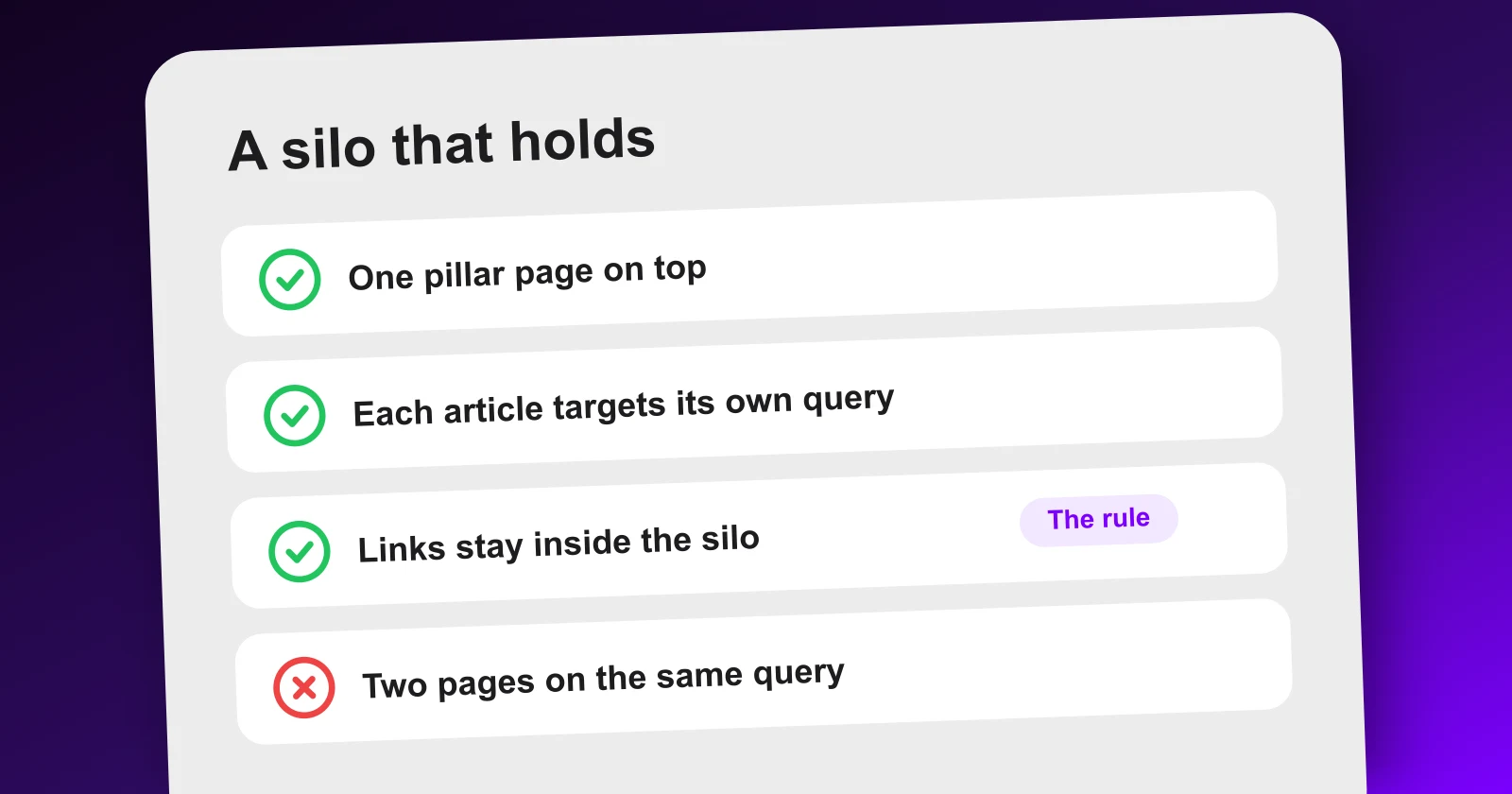
A group of pages covering one topic, with a pillar page at the top, articles underneath that each target their own query, and links between them. Pages inside a silo link to each other and to the pillar, and not across to unrelated silos, so the topic reads as one coherent block.
?
How do I know if Google can crawl my site?
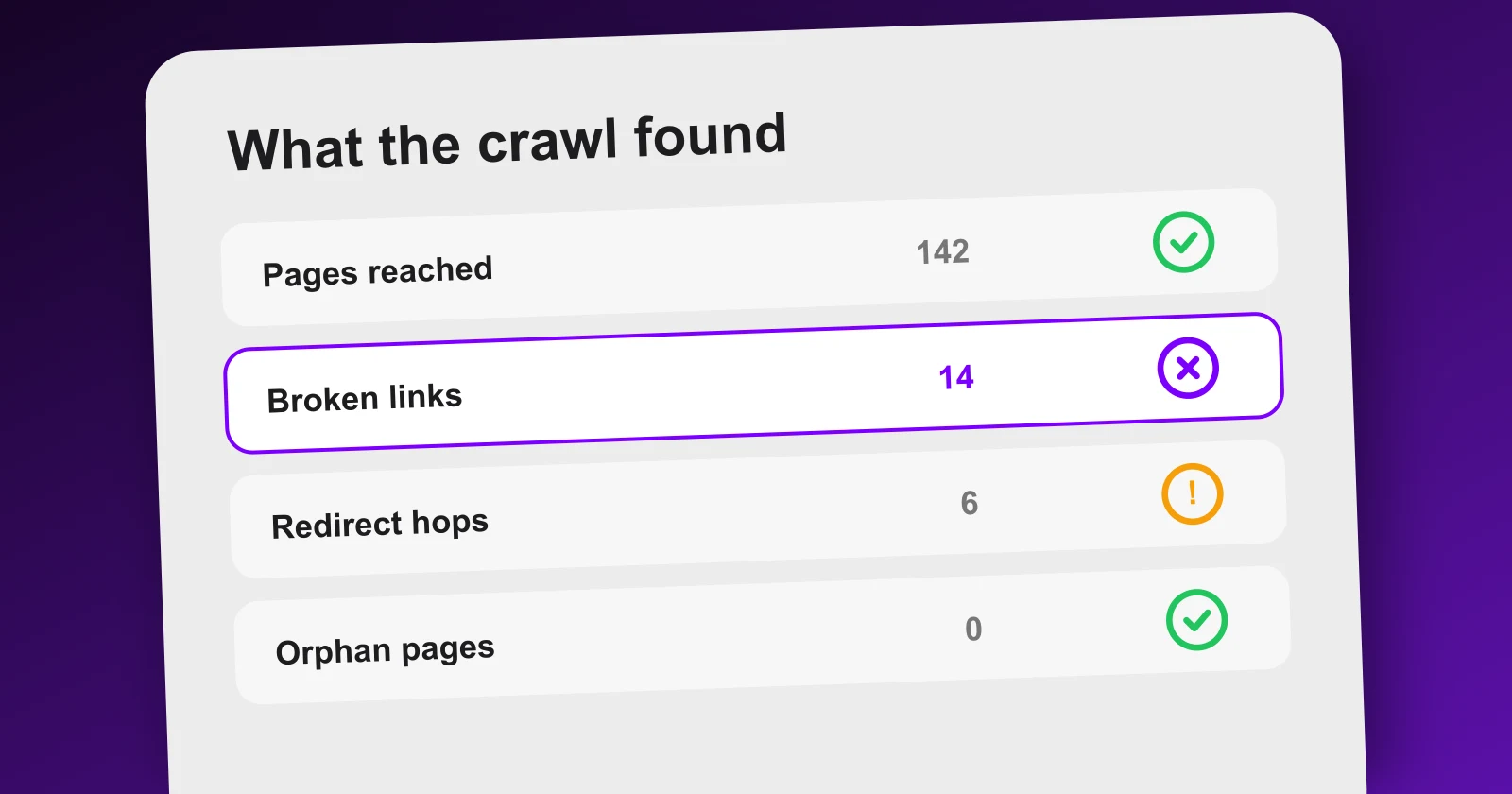
Crawl it yourself. A crawler follows your internal links exactly like Googlebot and reports the HTTP status of every page it reaches, the links pointing at pages that no longer exist, and the ones going through a redirect. Anything it never reaches is a page Google is unlikely to reach either.