Ecommerce SEO is the one category where the competition is genuinely hard, and where paid acquisition costs have climbed to the point that organic is no longer optional. The stores that win are not the ones with the best products, they are the ones whose category pages and buying guides answer the search better than anyone else. Meeeters builds that layer on autopilot.
In short
The ecommerce SEO cluster is worth about 16,100 searches a month, with a difficulty of 33 out of 100, meaningfully harder than local service niches. The lever is not more product pages, it is category pages and buying guides that capture research intent and pass authority down to products. Meeeters writes and publishes that layer, plus earns backlinks, from $40 a month.
What the numbers say (our scan, July 2026)
16,100 searches / month
across the ecommerce SEO cluster. It is one of the largest topics we measured, which also means the most crowded.
Difficulty 33 / 100
the highest of any sector in our scan. Ecommerce is where real competitors do real SEO, so authority matters more here than in any local niche.
$13.80 per click
lower than service industries because margin per order is thinner. That is precisely why paying for every click stops working at scale and organic becomes the only sustainable channel.
Automate your SEO now
Enter your website and the AI scans it: your real authority, your quick wins and your first article ideas land in your dashboard.
Free·No password·Straight to your dashboard
Why ecommerce SEO usually goes wrong
Product pages cannot carry the site
Product pages target the narrowest possible intent, someone who already knows exactly what they want. The searches with volume happen earlier, at the category and comparison stage, and most stores have nothing there.
Thousands of near-identical pages
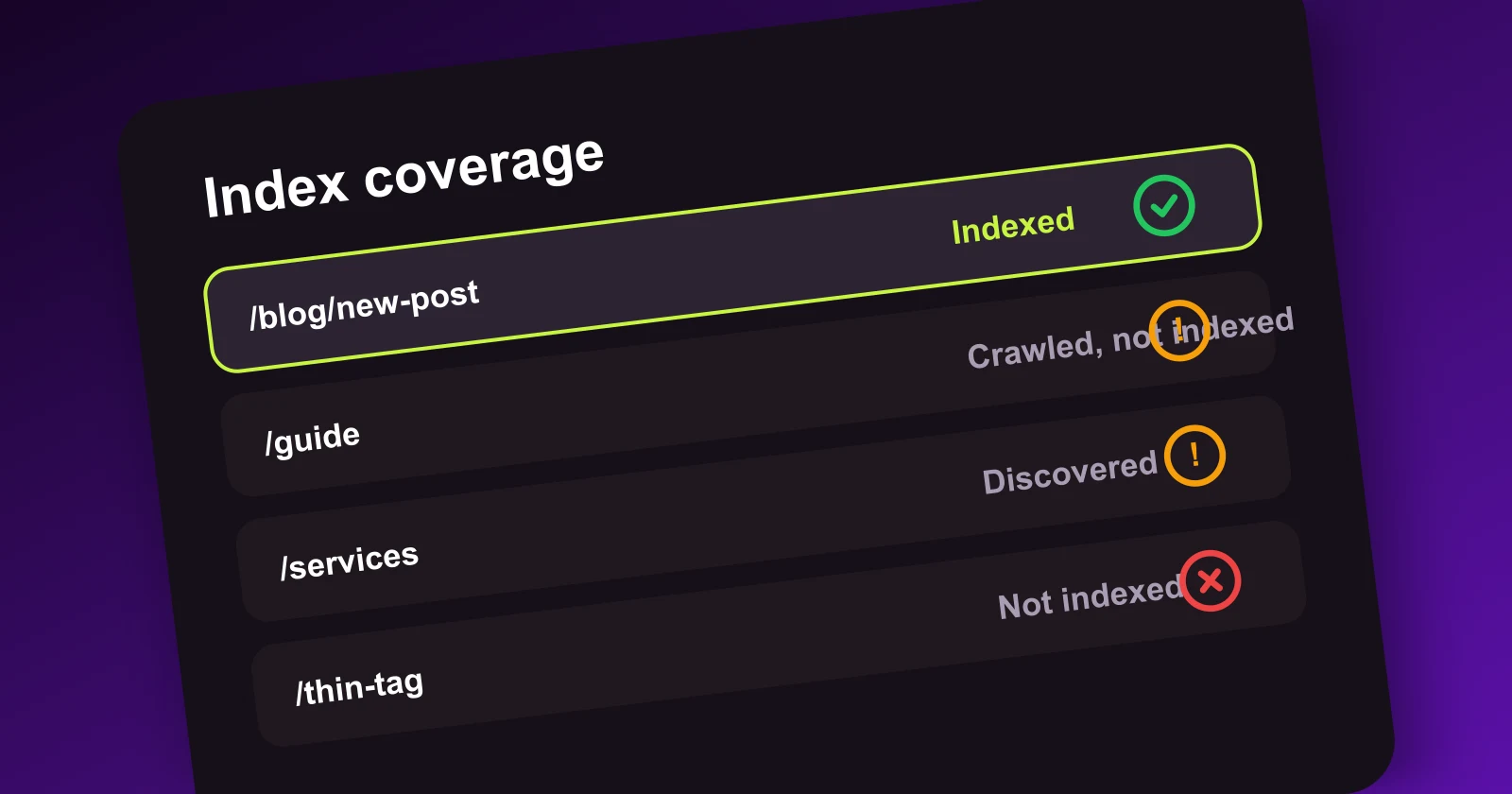
Variants, filters and pagination generate huge numbers of near-duplicate URLs. Google crawls them, finds nothing distinct, and quietly stops caring about the whole site.
Paid acquisition eats the margin
Ad costs rise every year while conversion does not. Stores that never built organic discover the problem at the exact moment they can least afford to fix it.
How Meeeters works for online stores
1
Analyze
Free audit of your store: which categories already rank, where near-duplicate pages are diluting you, and how your authority compares to the stores above you.
2
Publish
Meeeters writes and publishes the layer most stores skip: category pages with real editorial content, buying guides, and comparison articles that capture research intent and link down to your products.
3
Earn links
Place one contextual link, earn one credit, receive a verified dofollow backlink from a real site. At difficulty 33, this is the part that decides whether your pages move at all.
Category pages are where ecommerce SEO is won
A product page answers 'I want this exact thing'. A category page answers 'I am choosing between things', and that is where the volume sits. Adding a few hundred words of genuine editorial content to a category page is one of the highest-return actions in ecommerce SEO, and almost nobody does it.
At difficulty 33 you are competing against stores that already have authority. Content alone will not close that gap. Referring domains will, which is why the content layer and the link layer have to run together rather than one after the other.
Frequently asked questions
Quick answers to the questions people ask most about this topic.
?
Should I optimize product pages or category pages first?
Category pages, almost always. They target the research stage where the volume is, they are far fewer, and authority earned there passes down to the products underneath them.
?
How do I handle duplicate content from product variants?
Canonical tags pointing variants to the main product, and noindex on filtered and sorted URLs that add no unique value. The goal is fewer, stronger URLs rather than more of them.
?
Is a blog worth it for an online store?
Only if it answers buying questions. Comparison pieces, buying guides and how-to-choose articles pull research traffic and pass links to categories. A company news blog does neither.
?
How many backlinks does an ecommerce site need?
There is no fixed number, only a gap against the stores already ranking for your categories. Measure their referring domains, compare to yours, and judge how many months of steady link acquisition it takes to close it.
?
Can SEO replace paid ads for ecommerce?
Not immediately, and rarely completely. What it does is lower blended acquisition cost over time, so the paid budget stops being the only thing holding revenue up. Stores that build both end up far less fragile.
Insights
Go deeper on link buildingguides from our blog
Tutorials, comparisons and honest breakdowns from the Meeeters network.